ANGLOFUTURISM
The Future of Great Britain

“We do not merely study the past: we inherit it, and inheritance brings with it not only the rights of ownership, but the duties of trusteeship. Things fought for and died for should not be idly squandered. For they are the property of others, who are not yet born.” - Sir Roger Scruton
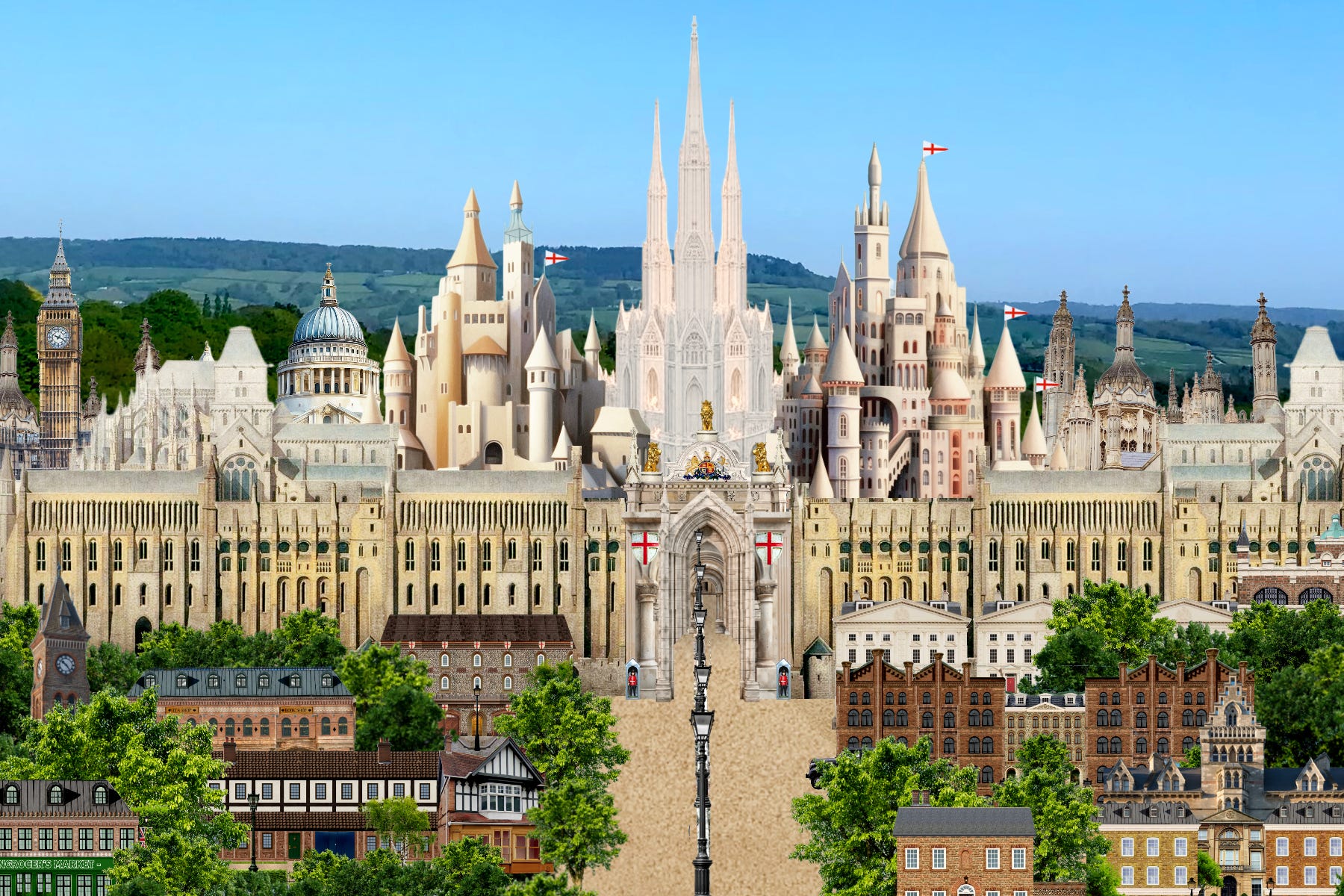
Anglofuturism is a term, like England itself, with its actual origin point shrouded in the mystery of time, with nobody really knowing when it first appeared. I first mistakenly attributed this to journalist Aris Roussinos, who helped popularise the term in a 2022 essay for UnHerd, “It’s Time for Anglofuturism.” But when I asked Roussinos, he told me that he actually did not coin the term at all, but attributed it to Drukpa Kunley, the alias of an online commentator best known for coining the terms “Yookay Aesthetics” and “the Boriswave”.
I made the reasonably assumption that he had coined this too. This intro is an amendment to the original article written some days later after Anglofuturist enthusiast, the writer Alexander D’Albini, actually informed me that the first known mention of the term he could find was actually not by Drukpa Kunley, but by an anthropologist known as Justin Pickard in 2012, in which he stated whether such a concept was possible without it descending into “swivel eyed techno-nationalism.”
From looking at what happened to the Anglofuturist movement since, answer is clearly no. But there’s nothing wrong with swivel eyed techno-nationalism, other than the fact that the techno will be hidden behind heritage aesthetics so that you aren’t forced to look at disgusting modernity. Anglofuturist technology is much like a swan, what you see is beautiful and graceful, not what’s actually doing the work underneath.
And as to Pickard’s concerns that it would be “swivel eyed”, it doesn’t get more mad, whimsical or swivel eyed than this article. However, I intend to explain how such a future is actually achievable, and at any rate, however outlandish and swivel eyed it is, it is a more positive and desirable vision of the future than what its critics are offering.
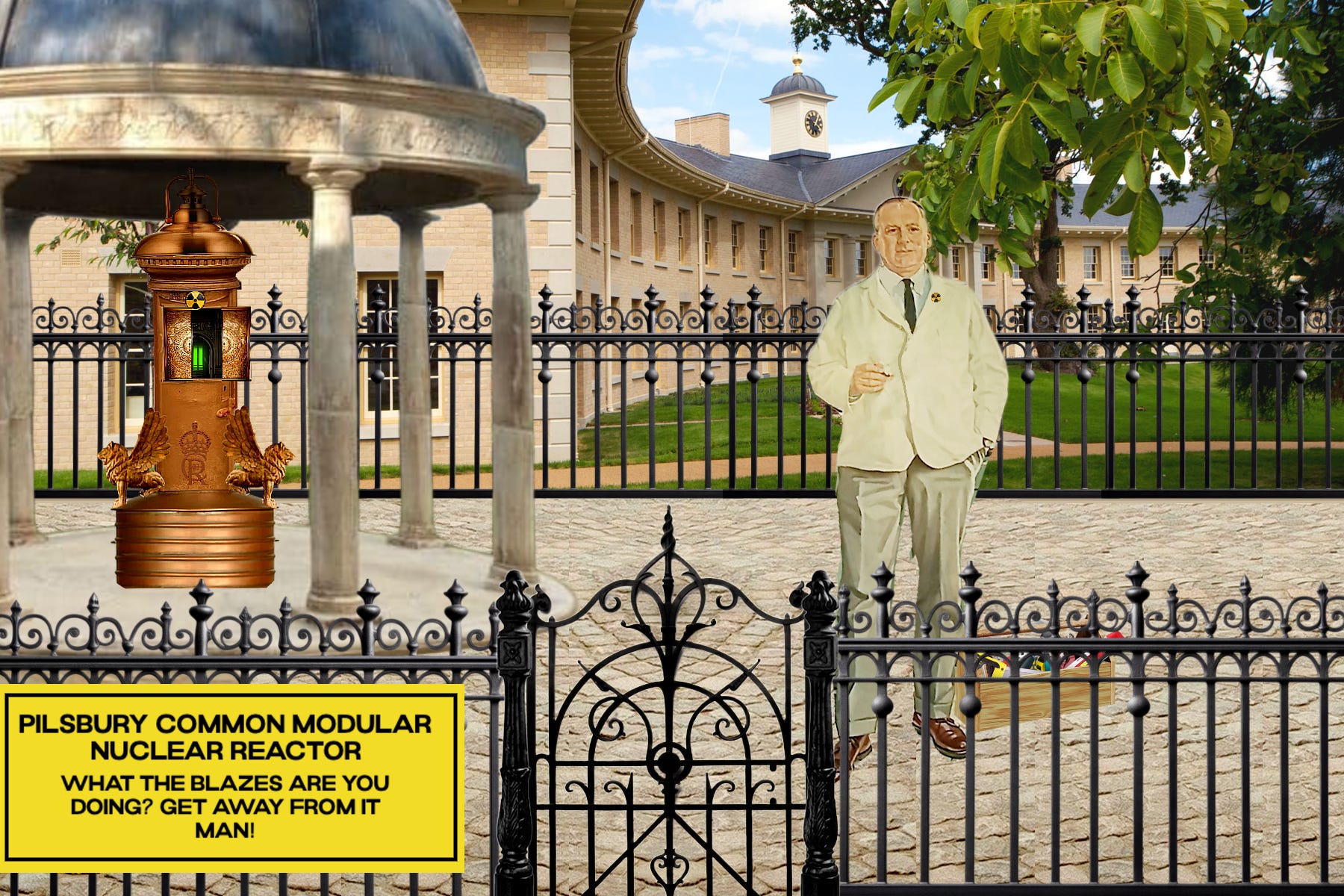
The techno-nationalism in action. The town modular nuclear reactor, with its inner machinations hidden from view, so all the public see is a ringed off Victorian looking public sculpture that will kill you if you touch it. I don’t know if that actually would happen or not or how nuclear physics works enough to say. Perhaps stick it inside a small, locked building such as a gothic folly, a Victorian bandstand or a windmill instead?
After Justin Pickard mentioned it, the term then basically vanished until it was picked up a decade later by the likes of Drukpa, Aris and Alexander. But what is it?
“A Nation Proud of its History and At Ease with Itself - Ready to Expand.” – Drukpa Kunley
Essentially it boils down to a rejection of accepting the inevitability of British industrial and cultural decline as our political governing class has done for at least the past 30 years.
Roussinos describes Anglofuturism as a cultural nationalist project, which draws upon an idealised and reinterpreted vision of the past to fix decline and create a forward-looking optimistic movement embracing technological innovation to spark national regeneration, whilst also promoting British heritage and culture as a major selling point. He notes that Anglofuturism is a rejection of the grim sense of decline and national lack of self confidence and low self esteem that has beset our nation.
Roussinos rejects hyper-neoliberalism, low wage immigration and offshoring industry in favour of prioritising infrastructure and energy independence, referencing post-war social democratic Britain as an era of unparalleled peace and prosperity and also of an optimism and self-confidence. He states that things from that period like Concorde as an example of Anglofuturism.
Even though Anglofuturism is predominantly discussed by the right, there is no reason it has to be a right wing project. I could see the “Blue Labour”/Social Democratic Party cohort like that Roussinos belongs to running with it eg. Maurice Glasman, William Clouston etc. In fact I think the two party duopoly of Labour and the Conservatives is the main part of the problem. The right sold the soul of Britain for money, the left gave it away for free.
“Rooting our vision of the future in the best of our past, and Britain’s unique natural and cultural gifts, perhaps we can emerge from this crisis richer, happier and healthier than we have ever been.” – Aris Roussinos
Since the term was first used other people have used the term and laid out their own vision of it.
Andrew Orlowski much agrees with Roussinos’s overall vision but is concerned at the concept’s co-option by toxic online ethno-nationalist right activists as well as urbanist policy wonks in the Westminster bubble who don’t really understand the cultural revival spirit of it, only the cold economic side, which is important, but almost secondary to the spiritual renewal of Britain.
“If this populist position can be captured, steeped in Anglo aesthetics & historical reverence - then, Anglofuturism will tap a vein of frustration in all capable young men in the UK. Namely, the sheer under-utilisation of the innovator of our age, the Englishman.” – Michael Reiners
Conservative councillor and journalist, Tom Jones (not to be confused with the Welsh singer) envisages Anglofuturism as a high tech, high wage economy, shifting from an unlimited low wage to a limited high skilled immigration system, where we invest in automation, energy, industry and defence, with ambitious state led infrastructure projects, such as nuclear power stations.
Alexander d’Albini tends to favour grassroots Anglofuturism over top-down state solutions, such as the reinvigoration of traditional English structures like medieval guilds to balance tradition whilst fostering innovation.
“AngloFuturism is tea with technology, myth with machinery.” – Alexander d’Albini.
In a more abstract sense, the likes of Drukpa Kunley imagine Anglofuturism in a more fantastical, whimsical way- thatched pubs on the moon and high-speed steam trains whizzing past red telephone boxes on Mars. These are of course outlandish but they reflect the ideal of Anglocentric optimism and reject the defeatist declinist mentality. Roussinos recognises that these visions are ridiculous and absurd, but that they are unmatched by the absurdity of the modern British state.
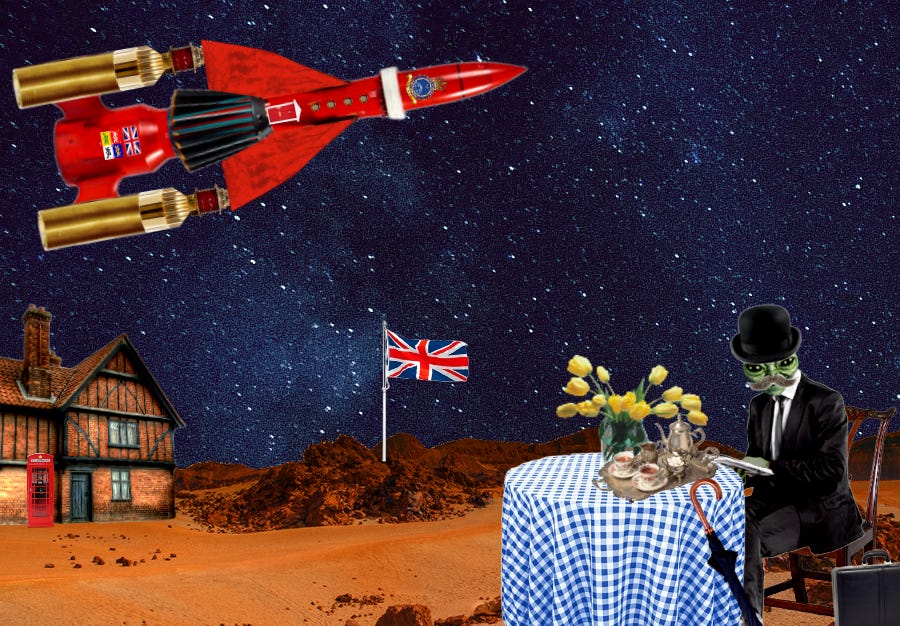
Red Gerry Anderson Thunderbirds/Captain Scarlet type rockets fly to Mars, where Martian Englishmen enjoy tea.
“Under Anglofuturism, Rolls-Royce Mini Nuclear Reactors will be as ubiquitous as smartphones. You will have a Rolls-Royce Mini Nuclear Reactor in your pocket and wear Rolls-Royce Mini Nuclear Reactors in your clothes; everything will be covered in Rolls-Royce Mini Nuclear Reactors” – Drukpa Kunley
Roussinos notes that access to cheap, abundant energy is key to our industrial revival and promotes the idea of small modular nuclear reactors in every town. Rolls Royce, the epitome of precision British engineering, has already won the competition to develop Britain’s first commercial modular nuclear reactor.
Drukpa Kunley also coined the term “Yookay Aesthetics”, representing the infrastructural decay and uglification of modern Britain, the decline of British culture and rising crime rates as a result of police cuts, overly lenient border policies and the importation of foreign sectarian politics that this has brought. As I mentioned in the previous article, the term “Yookay” derives from the way the word UK is pronounced in the Multicultural London English dialect.
Of all the imagined dystopias, I think the “Yookay” most closely resembles the one imagined by Anthony Burgess in a Clockwork Orange- urban decay and gangs of young men dressed strangely with their own street slang language who go out nihilistically committing random acts of violence. I think what we have now in the urban parts of Britain is actually worse than the dystopian future imagined by Burgess.
Anglofuturism is a rejection of the Yookay and the decline that comes with it. A rejection of the low trust, danger, grime, banality, soullessness of modern Britain and an embrace of the glory of the mythic Britannia, effectively, to build Jerusalem in England’s green and pleasant land. Thankfully I believe that the lifespan of the Yookay is limited and that Great Britain shall long outlive it.
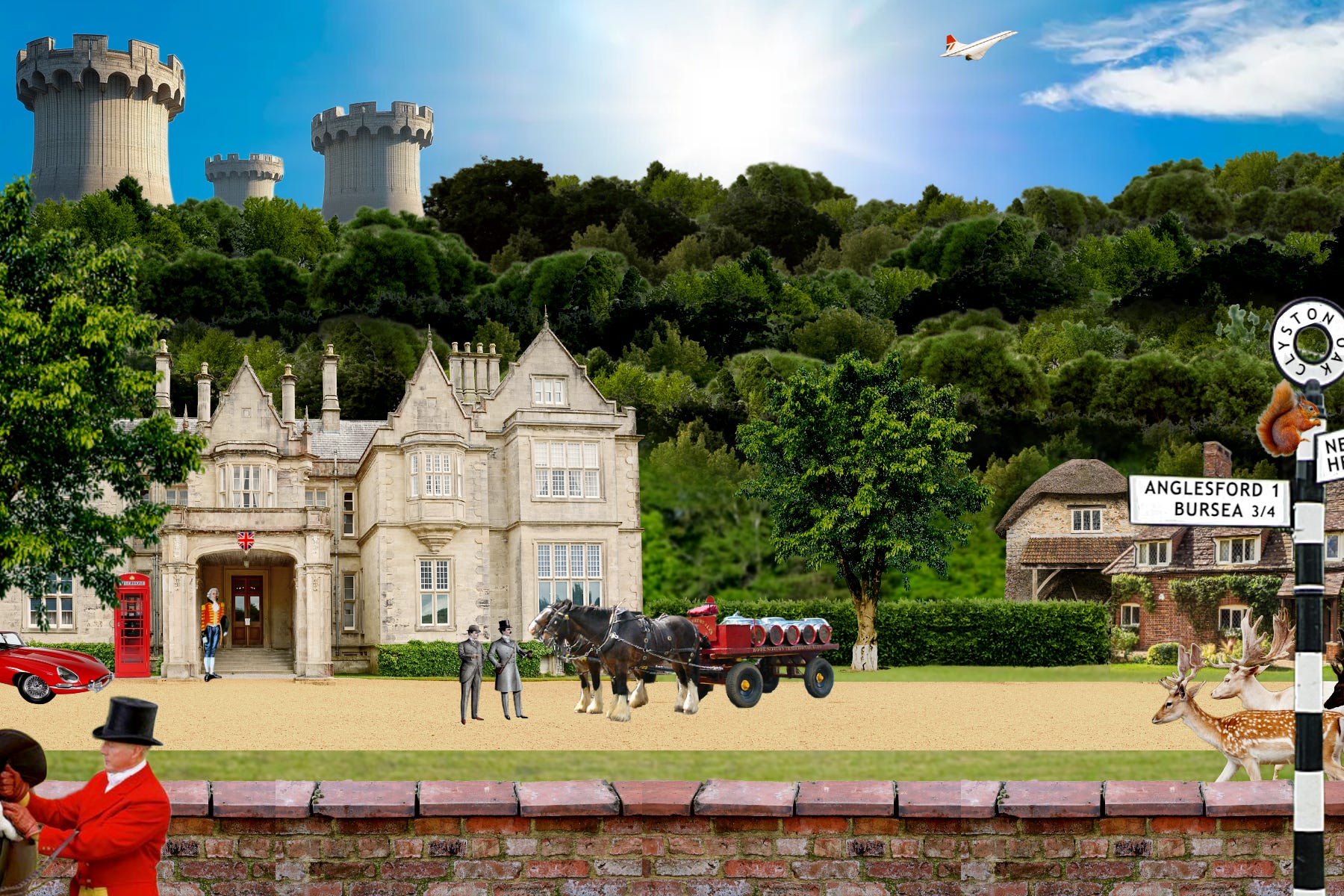
Crenellated nuclear cooling towers that resemble Medieval castles. This village and country estate that looks like it was built in the 1800s- built brand new in the 21st century to an exceptionally high standard. The forest- also new- replanted. Red squirrels and deer roam. Cars and planes designed with precision British engineering.
THE ANGLOFUTURE AS I ENVISAGE IT

My definition of Anglofuturism is also a rejection of decline. It is the ejection of the useless and treacherous political class who brought us here, the fools and authoritarians of both major parties of government who view British people with contempt and a rejection of everything that they represent.
Anglofuturism is about building a new British state that is functional, patriotic and serves the people, not one that is parasitic, useless and hates the people.
What I want to see change most specifically is the rejection of the aesthetic and cultural decline of the civic realm. I want every single part of Britain, regardless of how mundane it is, to be so beautiful that you almost can’t quite believe it’s real.
Why is this? It’s because ugly architecture and urban decay are the most visual symbols of decline, the loss of beauty that subtly but significantly degrades our human happiness on a spiritual level every day. Houses that lower middle class people lived in over 100 years ago are now highly desired for their beauty, but out of the range of affordability for people of the same class that they were originally built for. The whole of Britain needs architecturally and aesthetically remodelling from its current sad, grey Yookay state on an absolutely massive scale, like how Christopher Wren redesigned London after the Great Fire.
I envisage walled citadels of gothic arches and towering white spires that pierce the heavens like you’ve stepped into Gondor or Cair Paravel. Every town and city will have undergone heritage led regeneration. Everything down to the last lamppost, dustbin and bollard has been made beautiful. Small independent businesses thrive.
Similarly to myself and the Twitter user, Taz, host of the Anglofuturist podcast, Tom Ough recognises why nimbyism is so prevalent and that the spamming of the beautiful British countryside with Barratt boxes is the reason so many people oppose new developments. Ough says that such aesthetic considerations need to be appreciated and that any new developments must be constructed in traditional, attractive local styles. What you need to do is end the monopoly that the big corporate developers like Barratt, Taylor Wimpey, Bovis, Persimmon, Bloor etc. have over the domestic architecture landscape.
Almost no street will have shops that sit empty for long. Shabby old council houses and ugly new build estates will have been torn down, either replaced with far superior housing inspired by traditional British vernacular architecture, or given back to farming use.
Exeter for example should be rebuilt to its pre-Blitz glory. Rebuild Bedford Circus, St Lawrence Church, Paragon House, Bear Tower, Deller’s Café, the Royal Clarence Hotel, the Old Waterbeer Street gothic police station, the Civet Cat Emporium, the Globe Hotel, the Lower Market, the Cathedral Gatehouses, the St Catherine’s Almshouses, Bampfylde House, the Theatre Royal, St John’s church, St John’s Hospital, St Edmund’s Church, St Mary Major Church, Eastgate Arcade, the Electric Theatre etc.
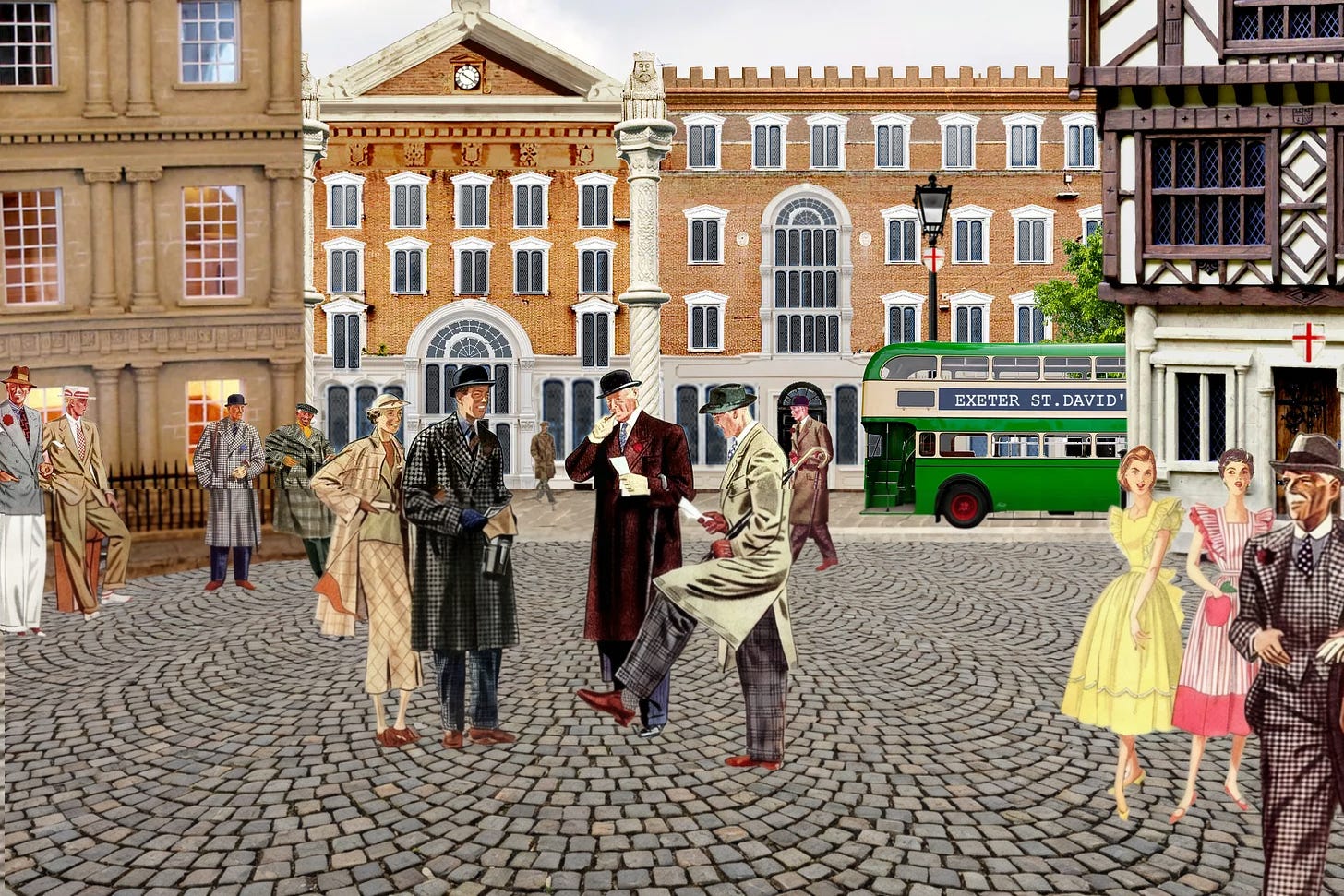
I’ve mentioned it before but I am not best pleased with the civic planners who set about rebuilding Exeter after the Blitz. Whilst nowhere near as grim as Plymouth’s reconstruction, Exeter’s postwar town planners showed absolutely shocking disregard to one of the most architecturally heritage rich cities in England. Their failure to not only rebuild Exeter in line with its architectural heritage but to destroy buildings that the Luftwaffe actually managed to avoid destroying took Exeter from one of the jewels of England to a fairly average provincial English cathedral city. Perhaps the most shocking example was the demolition of Waterbeer Street’s Victorian gothic police station, which had a 2000-year-old Roman mosaic floor, ripped up & thrown away in the 1960s to make way for the Guildhall shopping centre. Imagine instead an Exeter covered comprised of Georgian circuses, half-timbered Tudor shops, Victorian gothic town houses, Roman mosaic floors and sandstone chapels and castles. Destroy the homogenising nihilistic modernism and celebrate your local heritage!
The High Streets of Britain should have as many independent, locally owned businesses as possible.
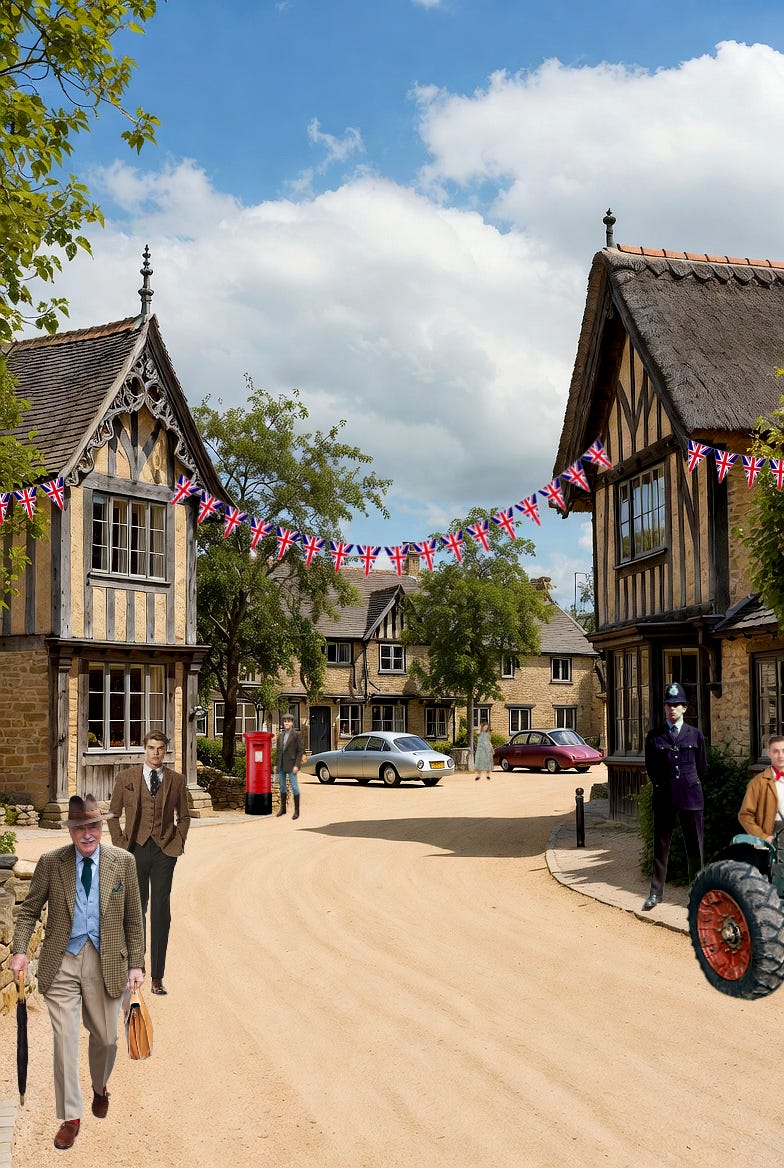
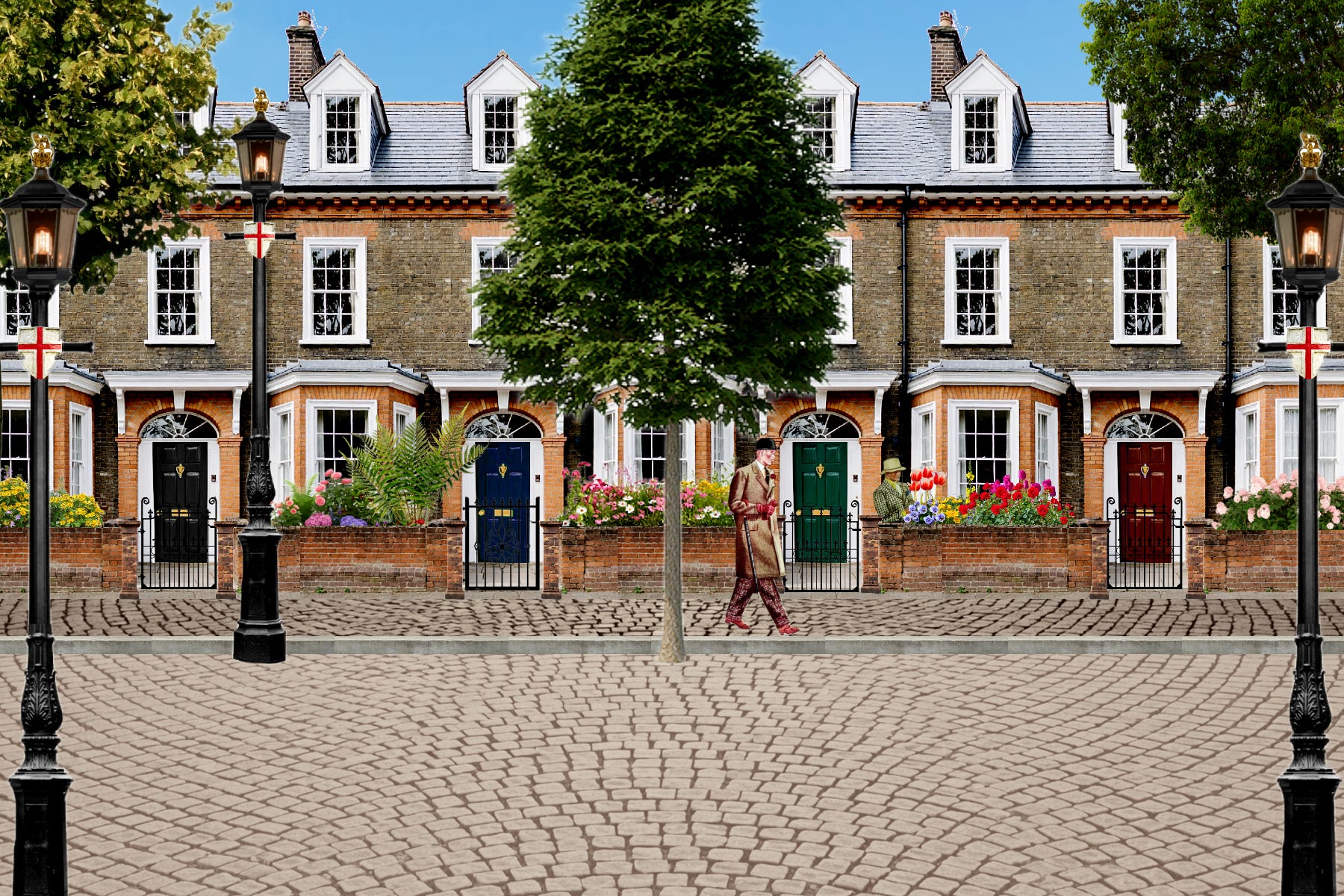
Fairly simple houses that can be built in an attractive style. New build houses should be constructed to design codes that allow for freedom of architectural expression within classic design principles and a baseline level of ornamental detail. This prevents modernist architecture, which is inherently minimalistic, ugly and inorganic in form from ever being built again. Even smaller, more affordable houses should be built to a high quality of design and craftsmanship.
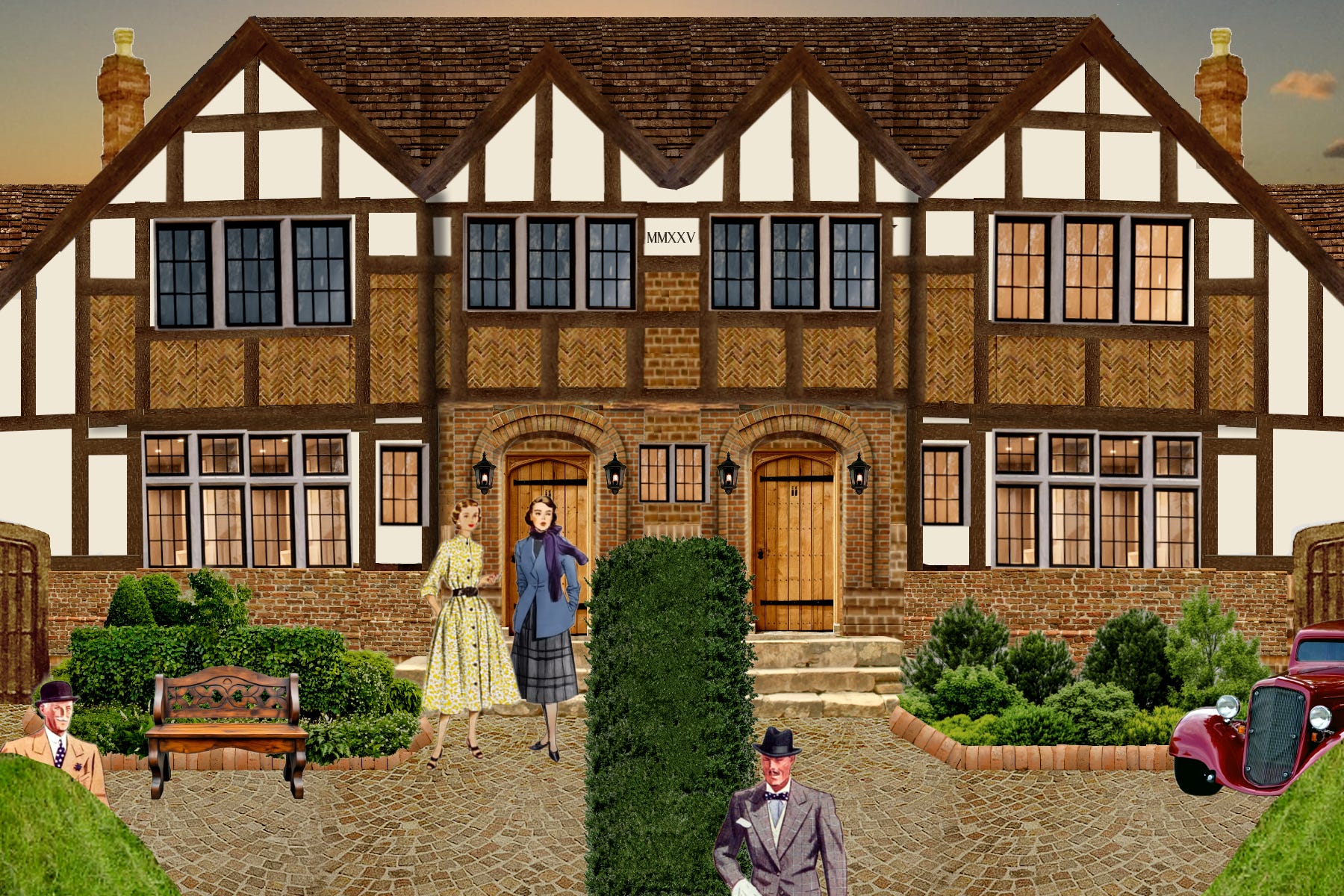
Semi detached middle class homes in an early 20th century Arts and Crafts/Tudor revival style.
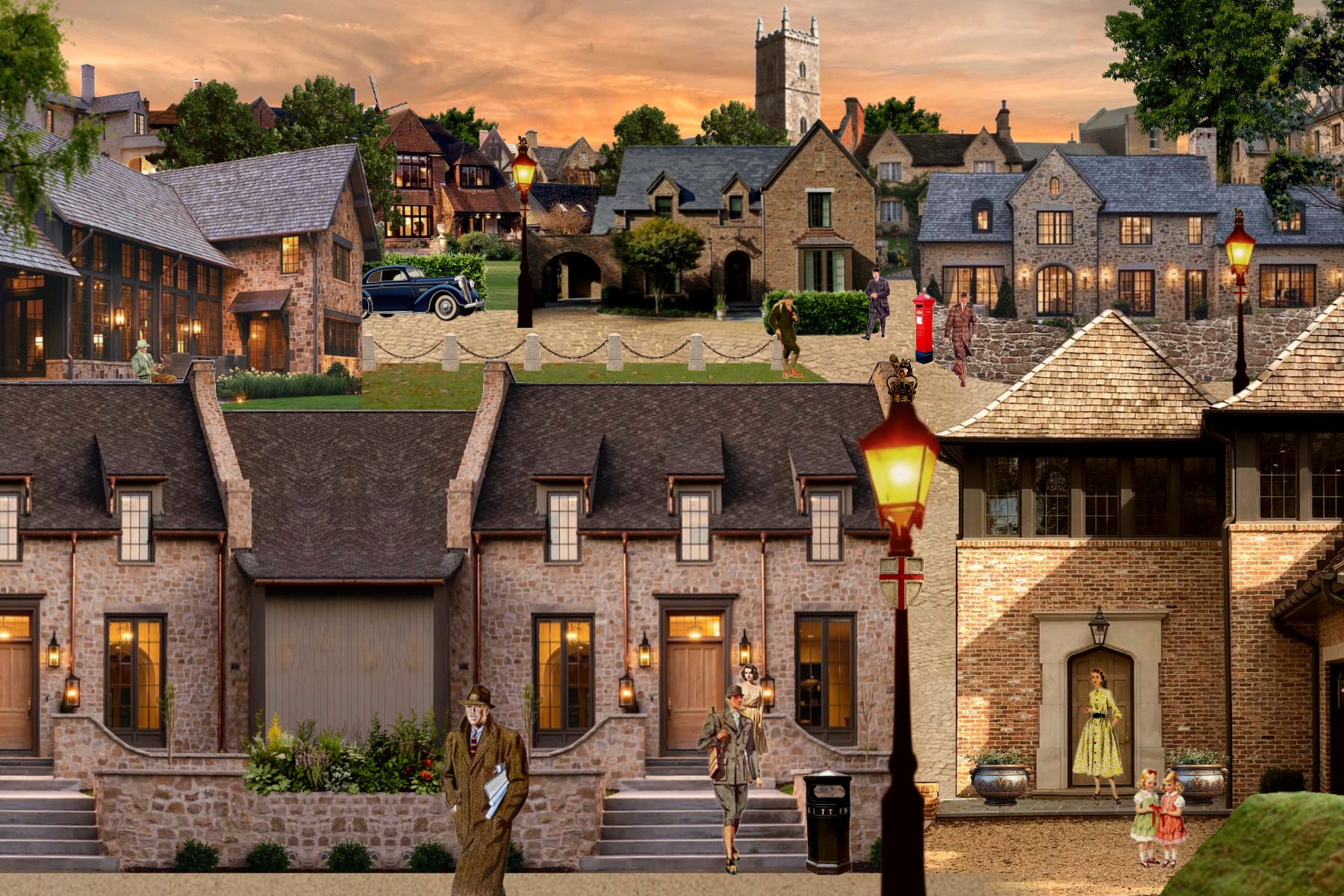
The average English village layout. Credit to the Caldwell and Castello Instagram account for the source house images I used in this collage.
According to Simon Evans, one of the main reasons modern architecture looks so bad is that it is built to metric measurements, rather than imperial ones, which is apparently a more harmonious and natural scale to the human eye. Perhaps this is worth bearing in mind.
Brutalist eyesores that currently have heritage listed status thanks to organisations like the 20th Century Society will have them removed, so that we can finally bulldoze these Soviet monstrosities that blight our towns and cities. Virtually all post-1945 architecture will be destroyed and replaced with a mixture of British classical styles- Elizabethan, neoclassical, gothic, gothic revival, regency, arts and crafts, baroque, and art deco, as well as new styles based on these traditional principles created by traditional architecture schools.
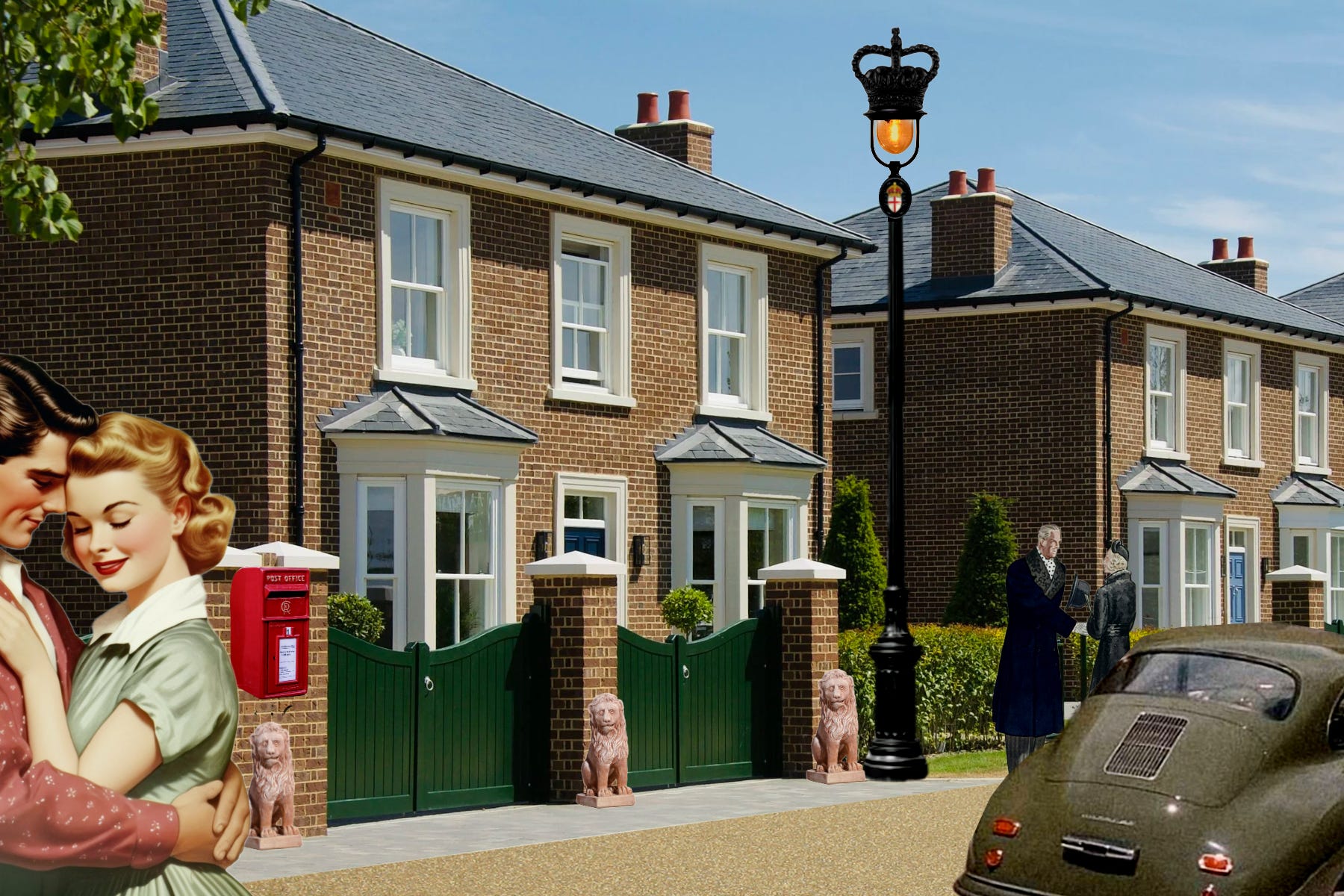
And if you would believe it, these houses are actually new- in Welborne Garden Village, a new development in Fareham (Hampshire). I have changed nothing here about the properties themselves, but I did upgrade the street lighting to be more traditional.
I won’t add any more examples of how we can beautify the realm, but more architectural renderings I’ve created are viewable in this substack from last year-
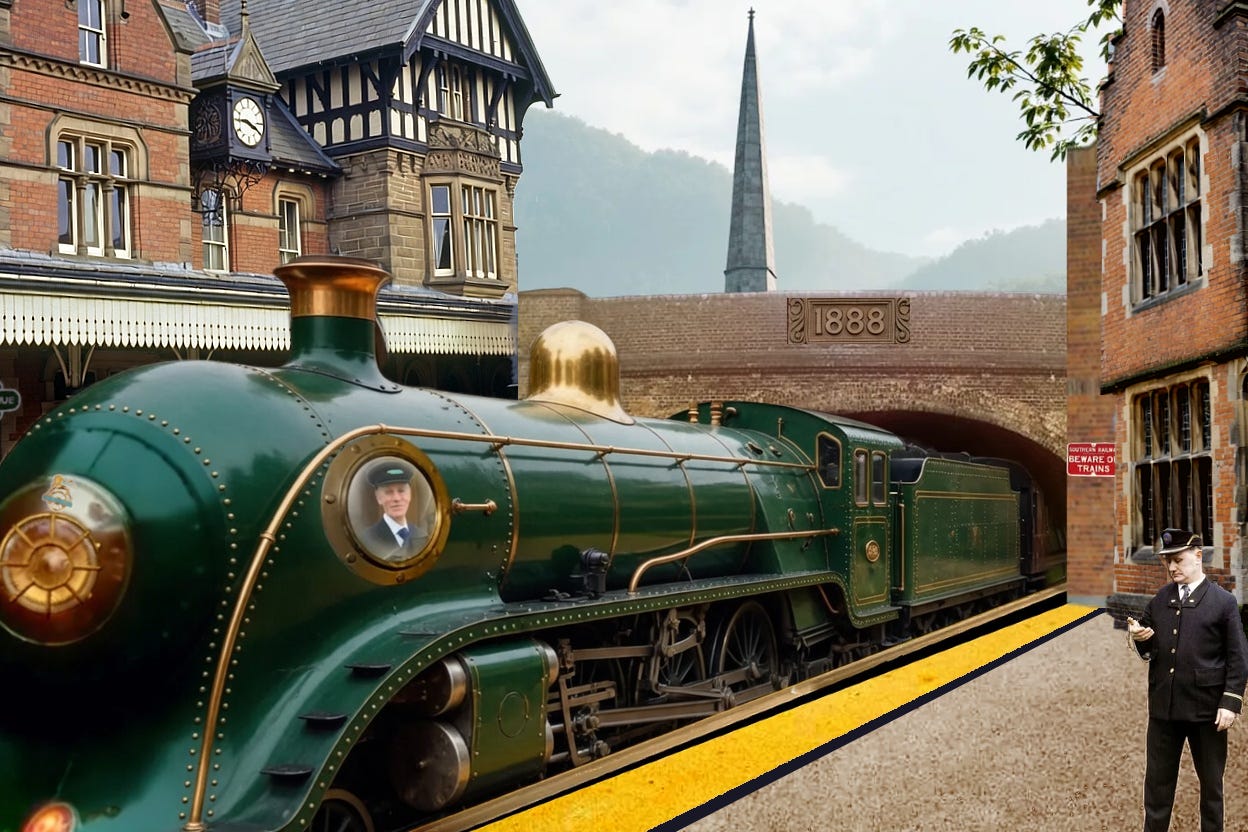
Another example being rail travel and the beautification of British trains and railway stations. In the early-mid 20th century, the railway was one of the crowning glories of British engineering and heritage railwayana has always enthralled me. Many Anglofuturists want high speed rail but it would involve destroying the countryside and disturbing animal habitats, so I’d rather we just upgraded the transport infrastructure we already have.
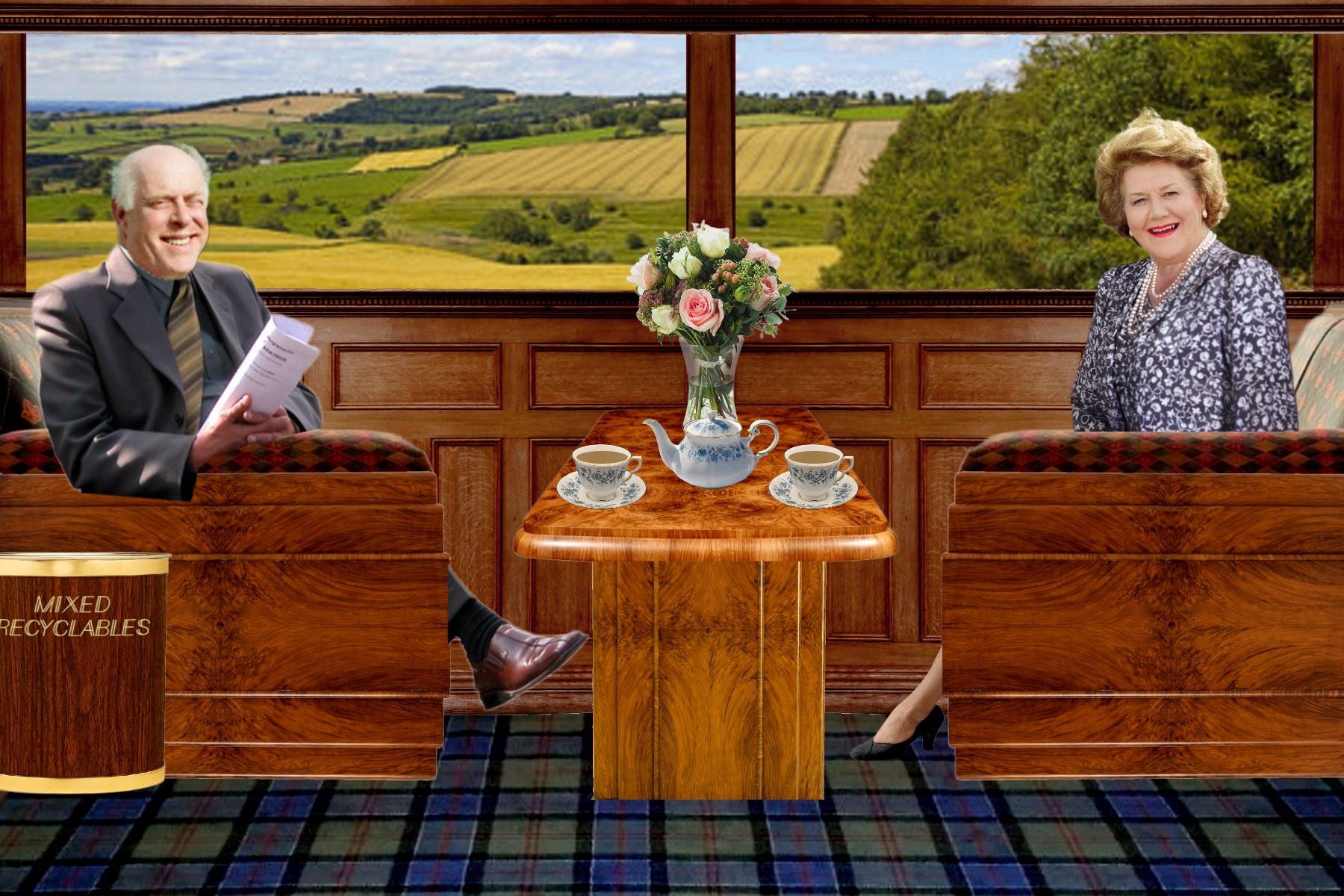
Inside, train carriages regain the sense of glamour and luxury to the point where even those who would currently refuse to travel by rail due to class concerns will see it as desirable. You can sip from Royal Doulton tea sets with hand painted periwinkles on your way to visit your darling Sheridan.
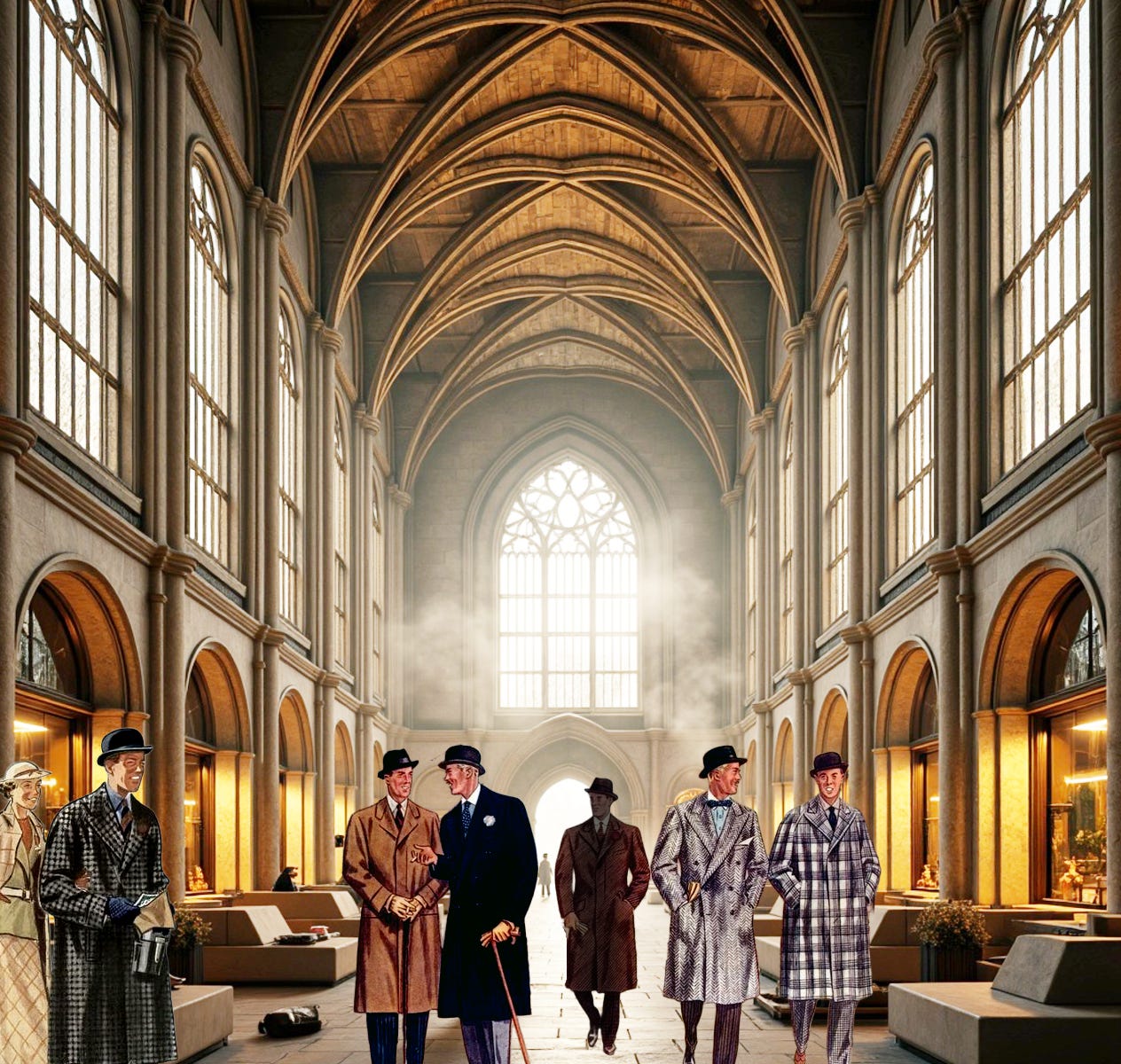
Even transitional spaces in which you don’t spend much time should be beautiful. Here at the airport, high tech ensures safety without invasive or degrading security theatre. Air travel should be about comfort and style. The airport should not just be a functional space, but a magical one, one where the moment you land you immediately know you are in Britain.
My vision of Anglofuturism is also less focused on urbanism and is primarily about strengthening our agricultural industries and the preservation of the British rural landscape.
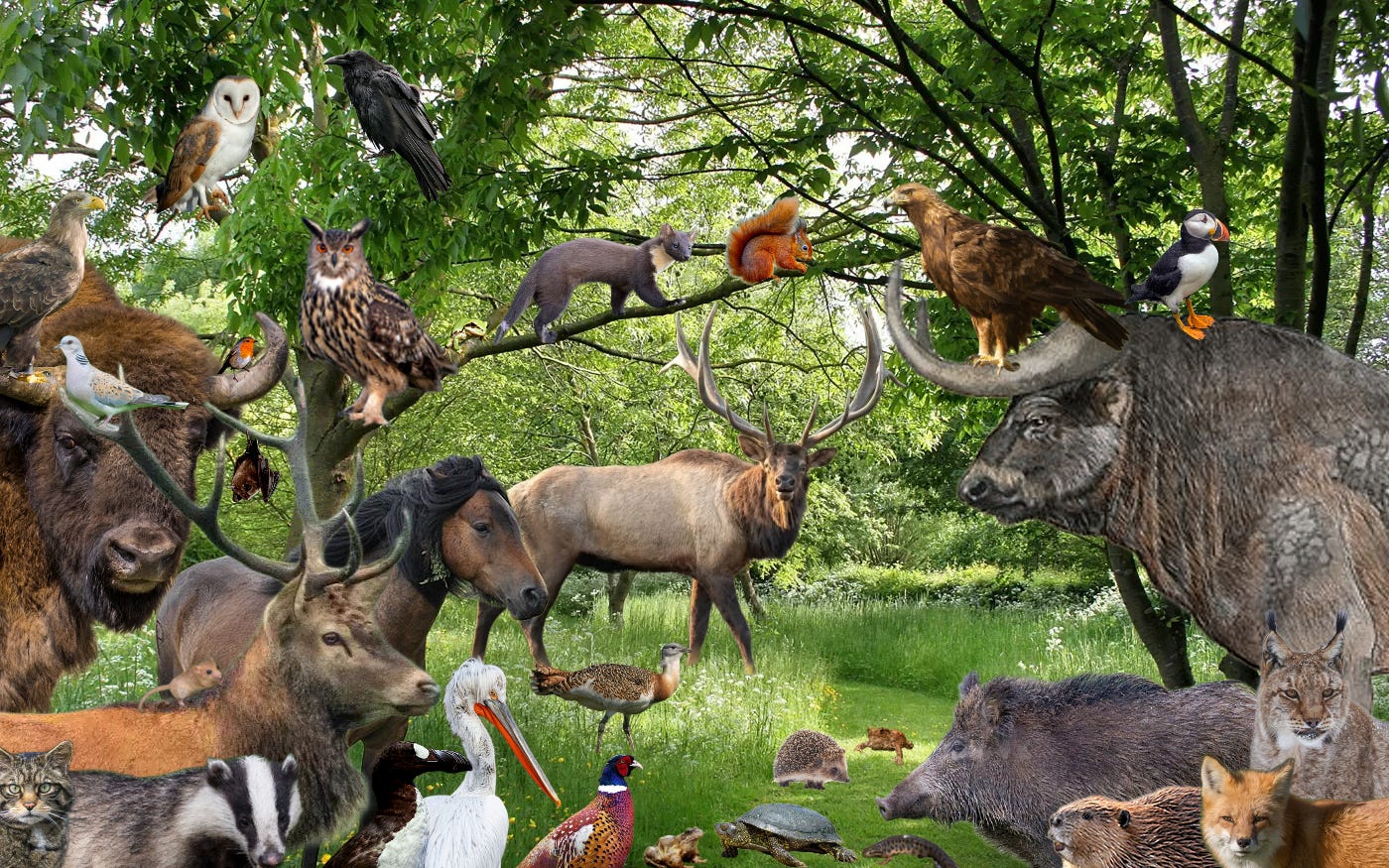
There should be mass reforestation efforts and rewilding. Return red squirrels, wild boars, lynxes, pine martens, bison, wild horses, beavers, elk, aurochs, Dalmatian pelicans, golden eagles, red deer, storks, eagle owls, cranes, goshawks, bustards, European tree frogs, freshwater turtles etc.
Urban areas will also be greened up to, with new parks and tree lined streets.
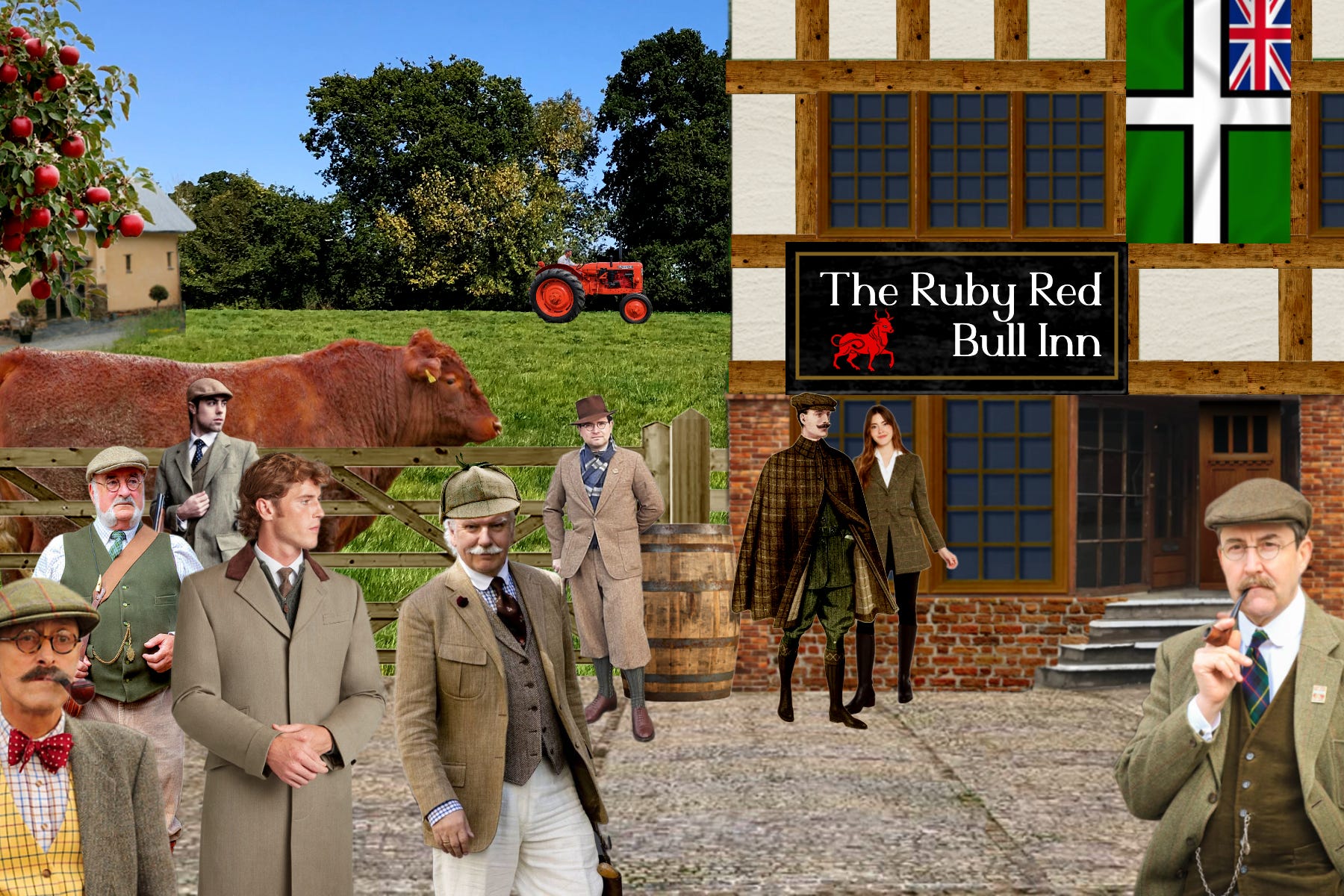
Useless, ugly wind and solar farms are cleared away. New build estates are destroyed and returned to farmland or rebuilt in traditional local vernacular styles. British agriculture flourishes and agricultural communities are proud. Such mass housebuilding has largely only really occurred as a result of the rapid population growth caused by very large waves of inward migration. The expectation that Britain should destroy its landscape to house everyone in the world and accommodate their cultural norms is unacceptable. Academics have also decried that rural Britain is too white and monocultural. This is ridiculous- like complaining there are too many Chinese people in rural China.
It is odd that the likes of the Green Party bemoan destroying the countryside with housebuilding but also support open borders (interestingly, they didn’t always used to) Where else do you expect all the new people you’ve added to live? You can’t have it both ways!
Accepting our environmental erasure is to also accept our cultural erasure because so much of our culture is inspired by our landscape. This landscape does not even really belong to us, it belongs to the children of the future who shall inherit it from us. This is an environmentalism motivated by the British values of stewardship, duty and the preservation of an organic heritage for generations.
With mass house building and the family farm tax, it seems like the government appears to be waging a spiritual war against rural communities because they represent traditional Old England, and the British establishment hates their own culture and wishes to see it destroyed. For example, the government intends to build a new town in Tempsford, taking the village population of 650 to 350,000, destroying a traditional way of life forever.
They shall not succeed. In this scene, the spirit of Merry Old England endures. Britain’s wilderness is restored- reforestation of our dwindling temperate rainforests and a revival of our chalk streams. British pubs thrive.
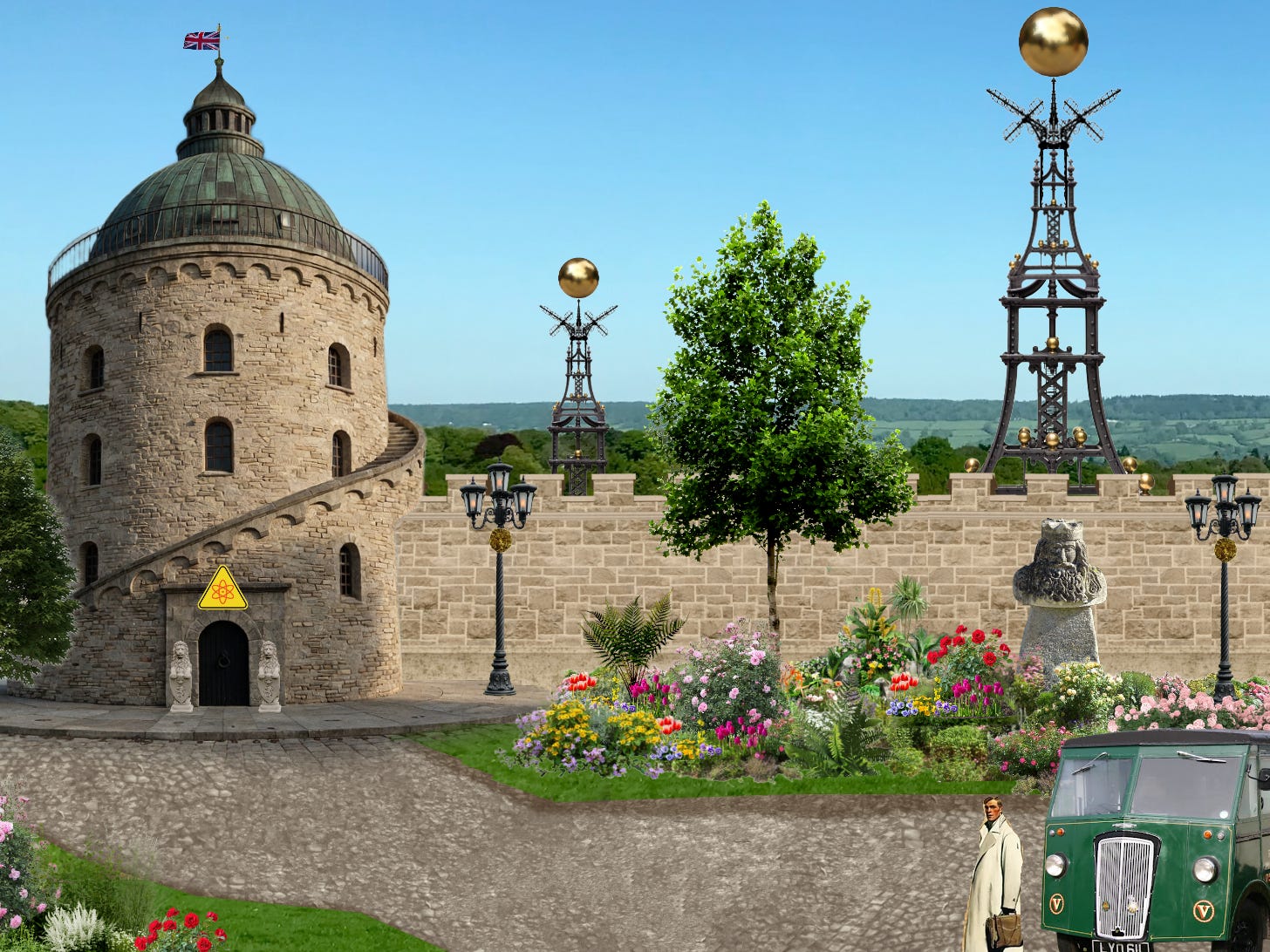
Modular nuclear reactor kept in a secure building to prevent meddlesome fiddlers from tampering with it. Also represented are new British wireless pylons designed in an ornate Victorian cast iron style.
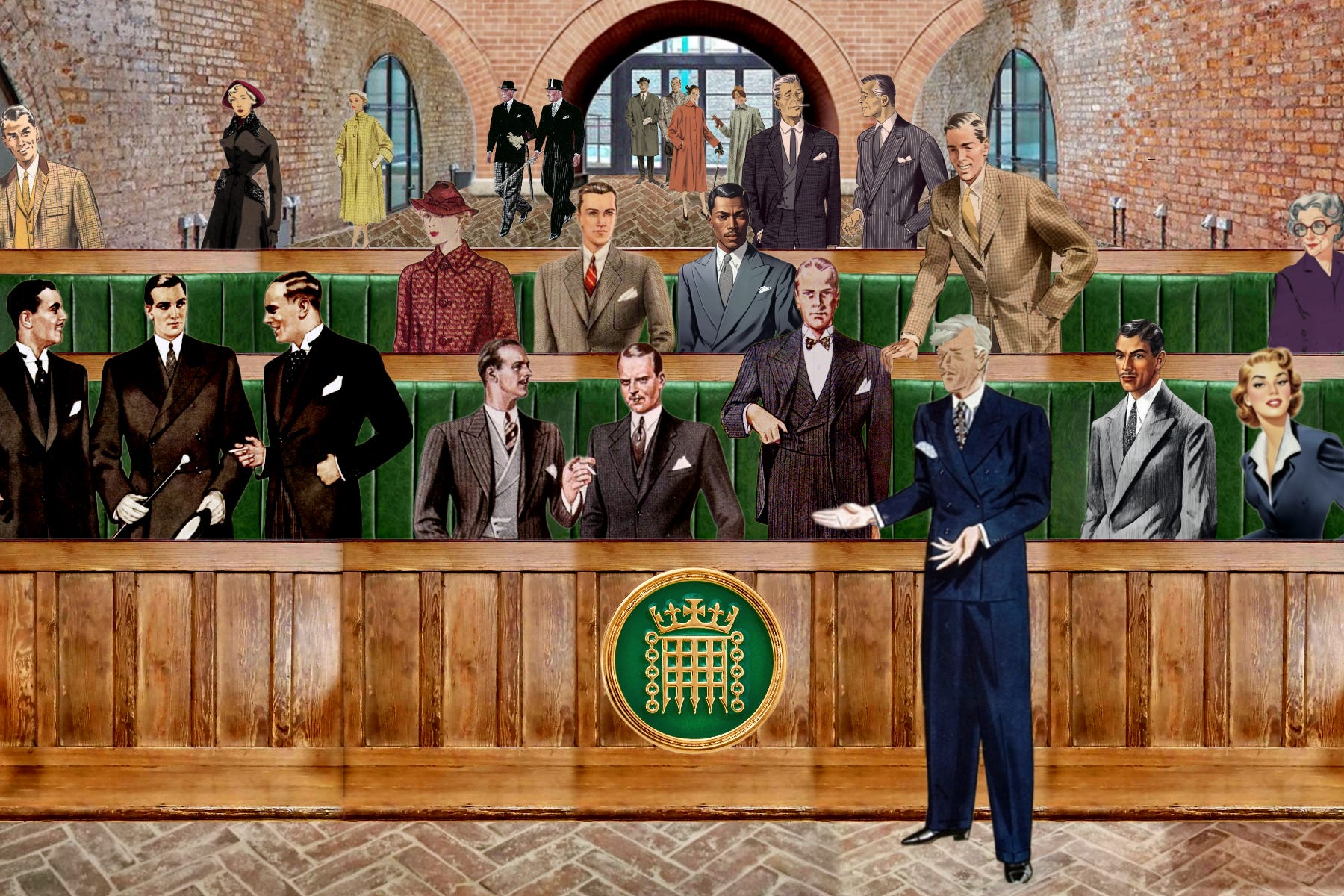
And fuck me, here is the most fanciful and unrealistic expectation of the entire article- a competent parliament made up of people who aren’t a shambolic bunch of inept and treasonous clowns, no longer a sinister den of lying crooks and traitors. These guys understand that if they ever reach such depths of mis-governance as the last few generations of politicians that they’ll end up in prison. In this image, the Palace of Westminster undergoes full restoration to its former glory and this pared back but attractive ex industrial building is used as a temporary location for Parliament to convene.
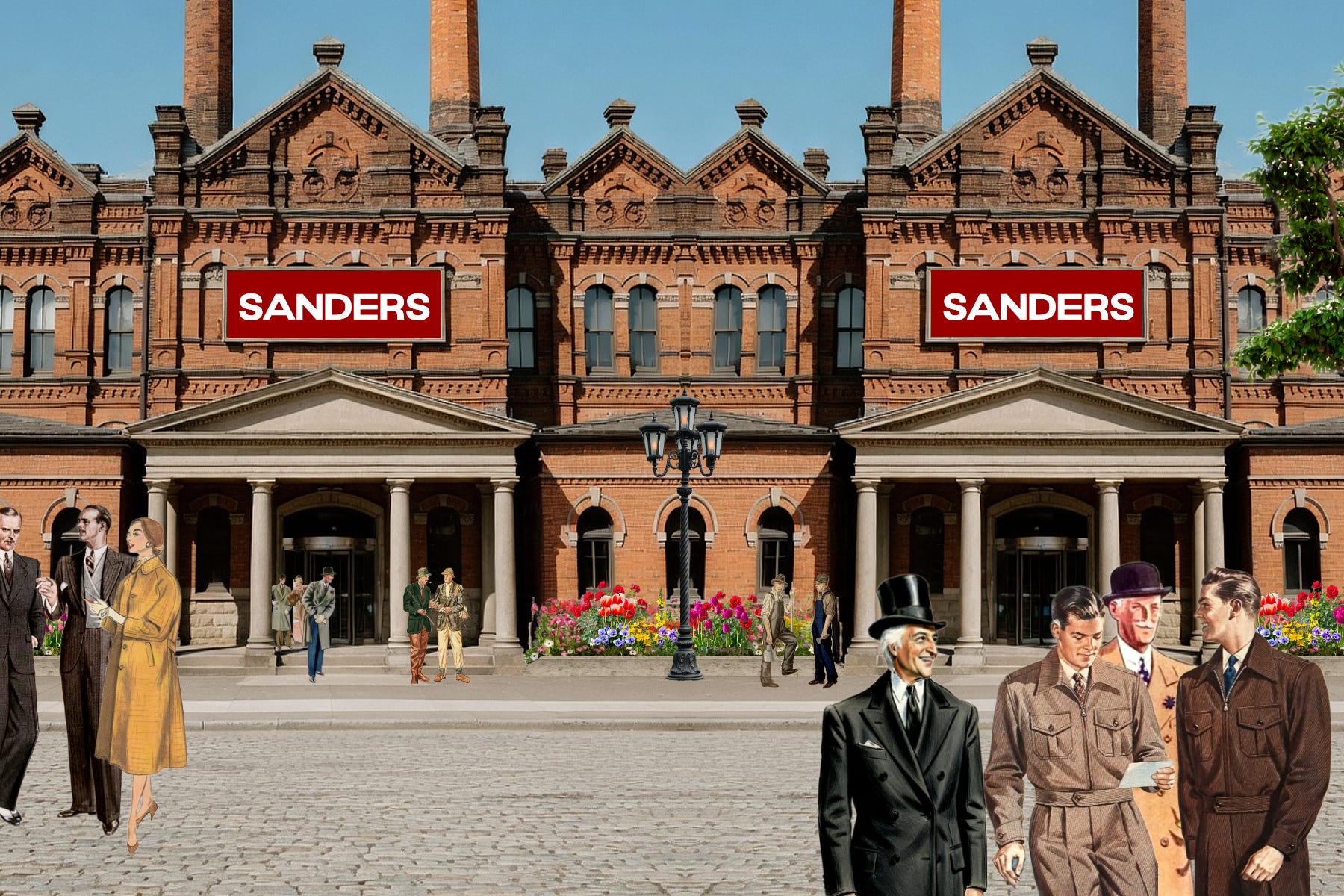
Here is a scene of British industry. The factory provides highly paid jobs for talented, hard working British people. Britain needs to have industrial manufacturing returned to the mainland. We should produce as much as we reasonably can. The companies will also be owned by Brits, not by faceless multinational corporate conglomerates who own everything eg. Kraft, Nestlé, BlackRock etc. This is a nation of shopkeepers and independent entrepreneurs.
Key sectors should be advanced manufacturing, robotics, AI automation, aerospace engineering, submarines, turbines, pumps, cyber systems, automobiles, food, chemicals, nuclear technology, pharmaceuticals, agricultural machinery, steel, glass, bricks, cement, paper and the such. We need to stop being reliant on China, with its geopolitical meddling and unethical practices. The British working class enjoys among the highest standards of living in the world, and the British wealthy elite provide for them, abiding by the principle of noblesse oblige. The spirit of Victorian philanthropy is strong. (Distributism)
The great JRR Tolkien saw industrialism as a great evil and a danger to the shire. This is what Saruman at Isengard represents. I think more pragmatically, so long as it does not intrude upon the shire, its profits can be used for the shire’s enrichment and defence.
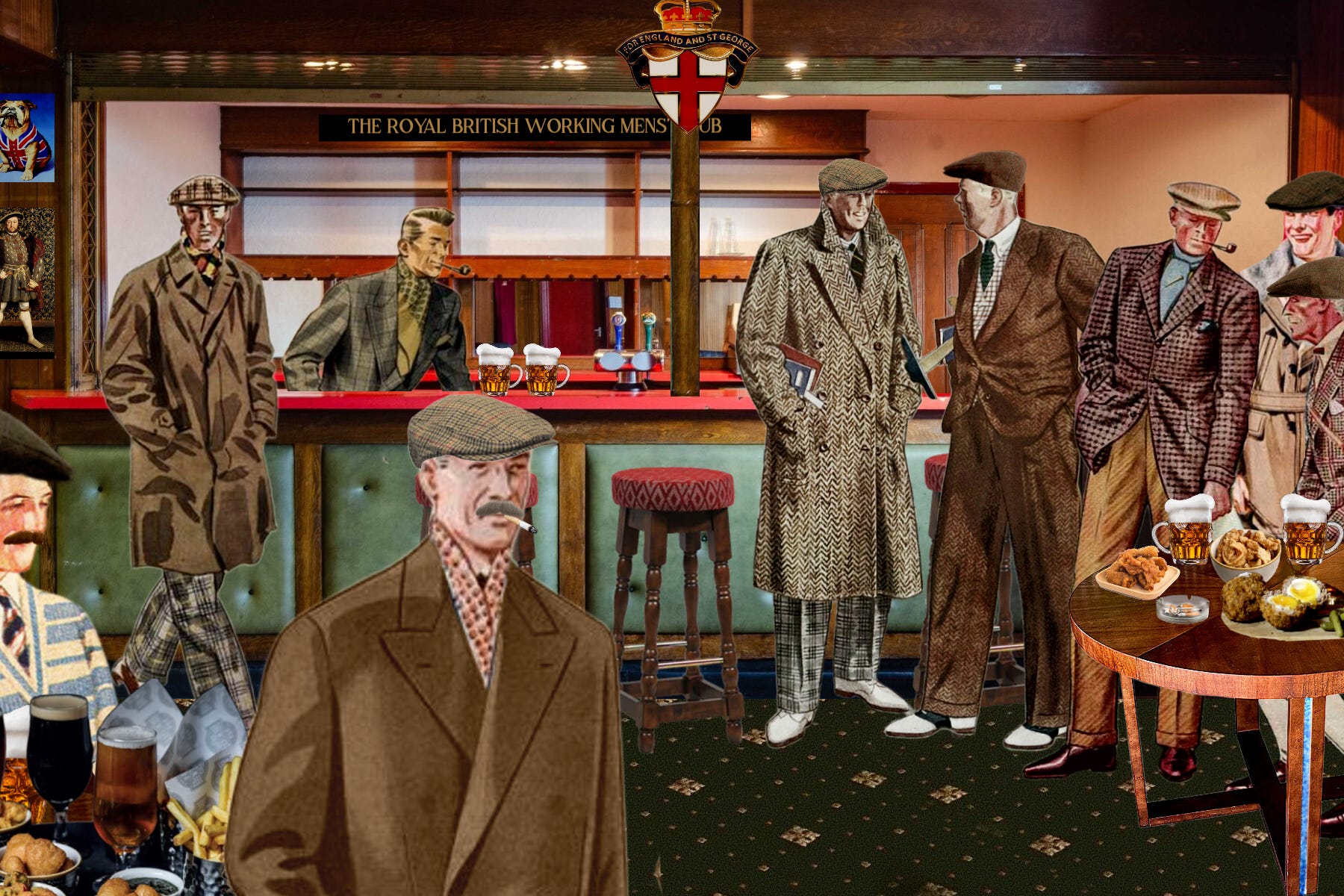
I also envisage the return of working men’s social clubs, spaces that foster community and friendship. I remember my grandparents taking me to lots of these such places in my youth- Royal British Legion Clubs, Conservative Clubs, general social clubs. I like them and regret that they are seemingly in decline. These men have secure, long term employment, decent pay and pensions. In this scene, they enjoy social time after work, sharing drinks, snacks, games and good conversation. The British working classes prosper, enjoying a higher quality of life than their parents’ and grandparents’ generations. Treated well and fed fat, the worker shall not want to turn to radicalism, to organise against capital and bring about the proletarian revolution. This ensures he maintains good relations with the industrialist employer, the church and the squire. When these relations break down, you shall have anarchy and tyranny, Sir.
Treating workers badly shall result in them turning to dangerous socialist radicalism, the likes of which will result in the end of private property and thus social and economic ruin like some South American banana republic overrun by drugs cartels and where a Freddo bar costs £17.50.
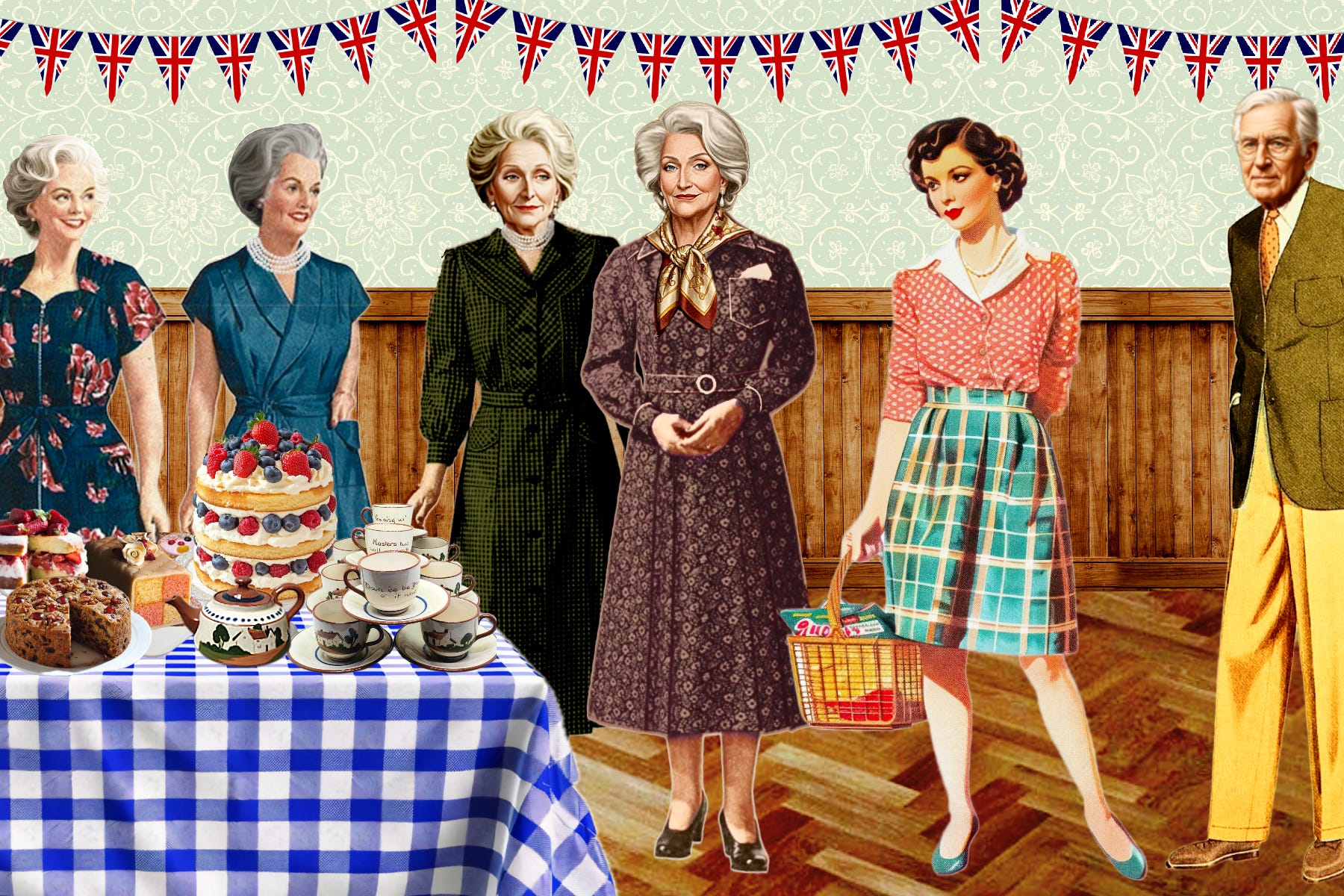
Women are of course welcome in the Working Men’s Clubs, but many women would prefer groups specifically geared towards them. The Women’s Institute is a good example of such a group. Here, a scene very reminiscent of my childhood, the coffee mornings my Grandma used to take me to at the Royal British Legion clubhouse.
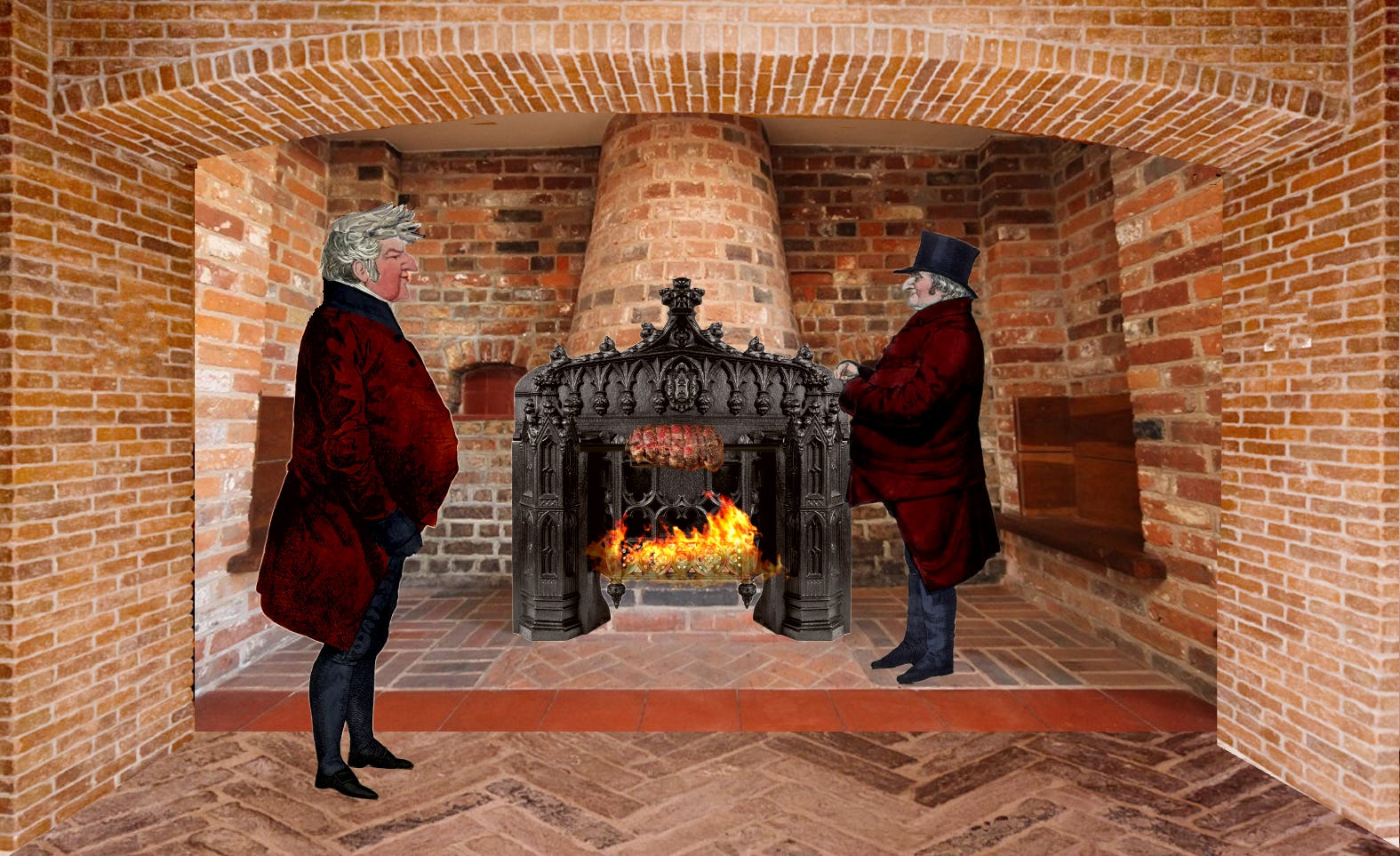
And here is a community fireplace for roasting meat that can be hired out for a nominal fee covering maintenance costs. We should establish community dining clubs, like the old Sublime Society of Beef Steaks Club that foster gentlemanly goodwill and comradeship. Beef and liberty shall in abundance be for the Englishman. Our meat is the greatest quality in the world and the most ethically produced. Our high quality national cuisine is honest and unpretentious, unsullied by weird garlicky sauces and fricassees. We are a nation of meat despite being an island surrounded by sea. I suppose we had ought to celebrate British fish (which, being cold water fish, is better than sinister warm water seafood like dodgy Vietnamese prawns that’ll give you cholera) but to be honest I dislike even the better fish. If there is an article to be gotten out of fish futurism, I won’t be the one to write it.
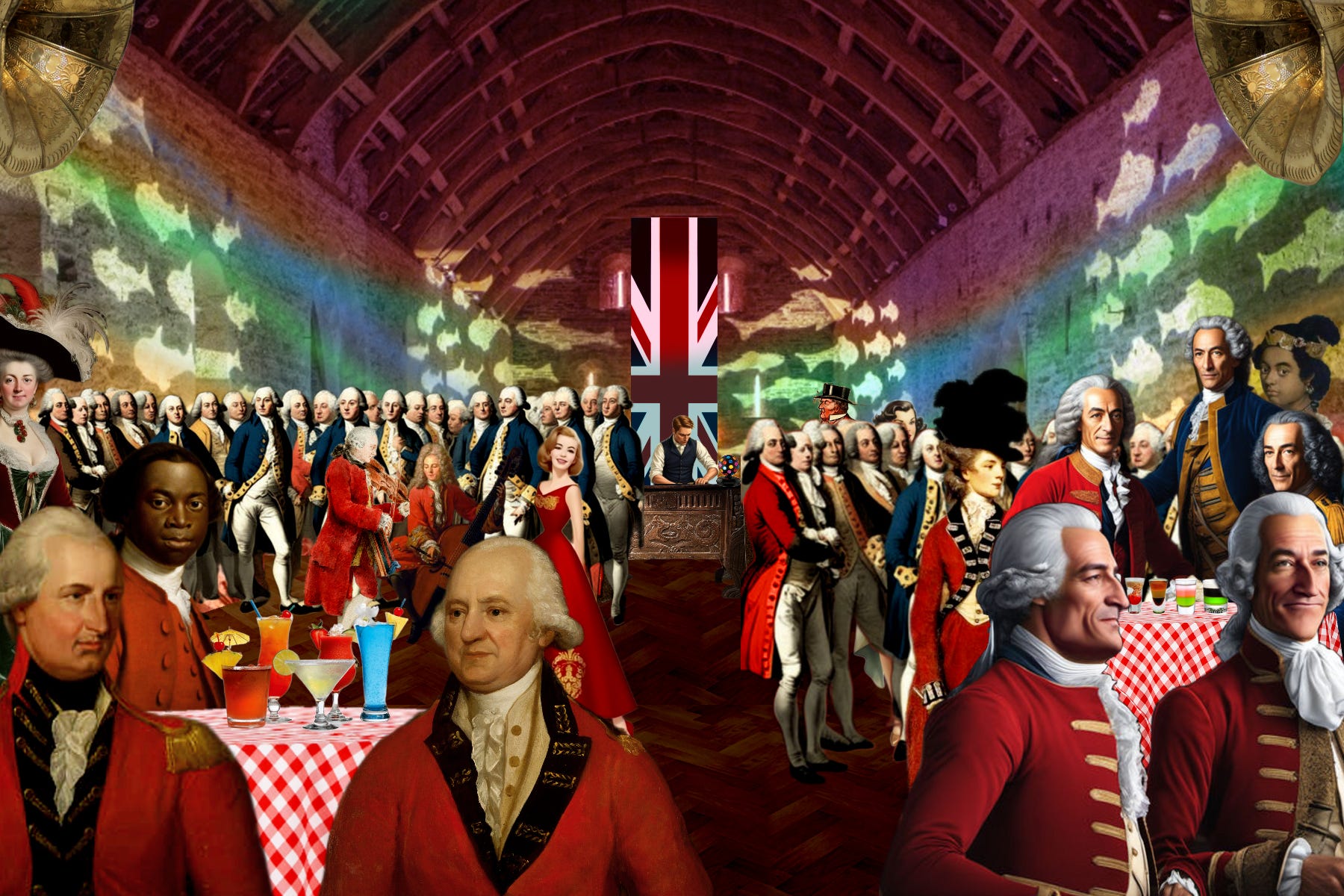
Social activity continues elsewhere and the British night time economy thrives. I’ve never been inside a nightclub, but I imagine this is what it is like, or at least, what it should be like. We can balance a good time without indulgence in sinister, depraved continental decadence like French fops fannying around in frilly lace and effeminate perfumes in Parisian boudoirs, Italian Casanovas playing perverted sexual parlour games in Venetian masks or German skinhead gimps urinating on one another in Berlin sex torture chambers. Disgusting! Instead, English baroque chamber orchestras play wholesome patriotic tunes at a reasonable volume that permits casual discourse. I am far from a Puritan, I am a jolly cavalier, albeit a fairly quiet, boring one who doesn’t really like loud raucous partying.
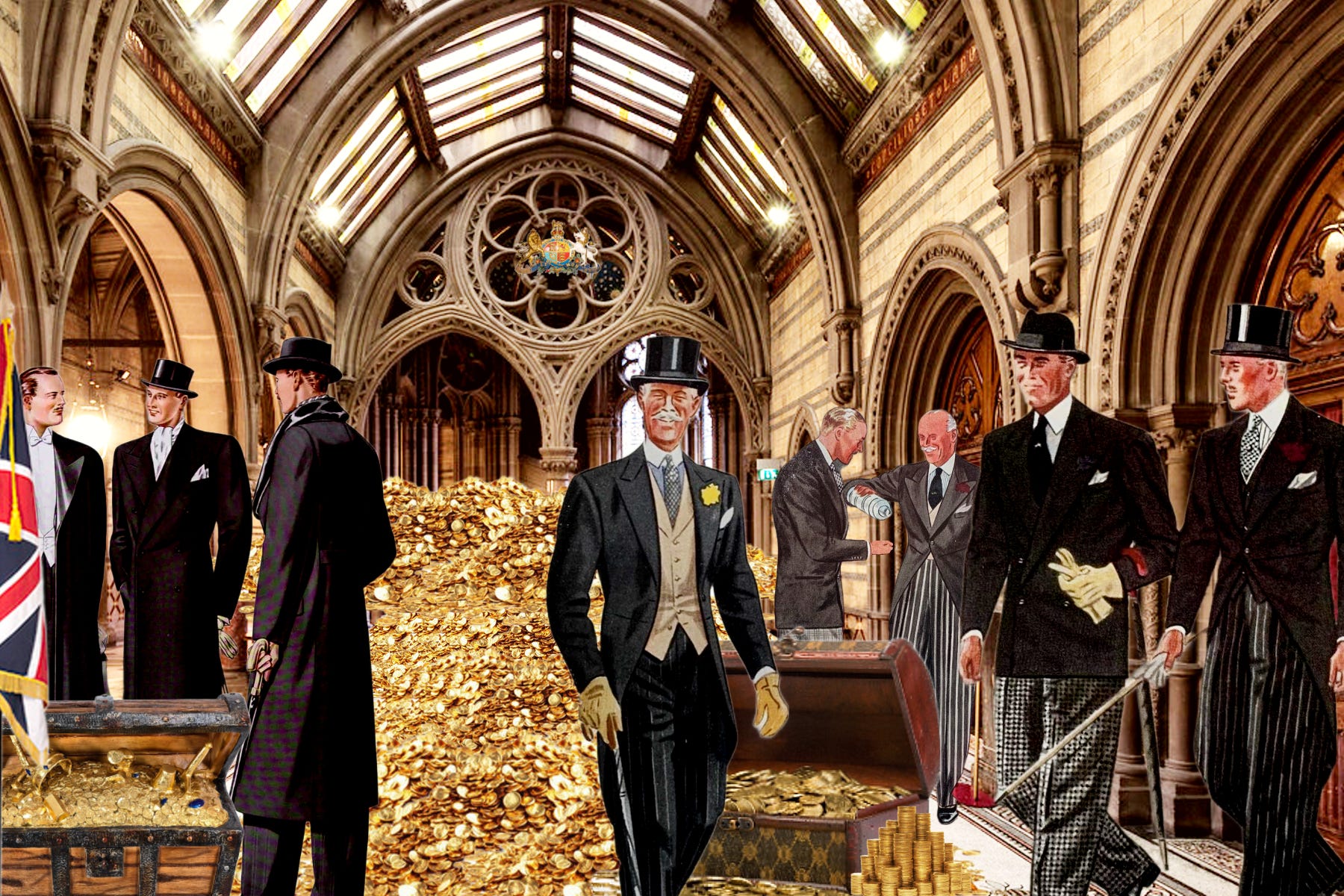
Money in the bank. There is so much gold and treasure the likes of which a 16th century English privateer could only dream of capturing. So much that the Spanish galleon carrying it would actually sink because it’d be too heavy. Such a scenario would not happen since we’d ideally want the Spanish ship to sink after we’d taken the gold off of it. British people ought to be classy with this wealth, not vulgar and flashy with it, since that is the tacky, classless behaviour of the nouveau riche. Instead this wealth goes towards preserving our heritage and building upon it. The idea that to become weaker and poorer and to let the likes of China and the global south get richer is ludicrous and Marxist. Marxism, like Nazism, is Germanic treason. Decline and poverty is not inevitable and it must and will be reversed.
A key component of Anglofuturism to me is wealth. Insane levels of wealth. Switzerland/Luxembourg levels of wealth. British people should literally be swimming in gold, and will need tighter belts to stop their trousers falling down because there’s so much money in their pockets. Roussinos mentioned that you should be able to feel the money bulging in your wallet. The average British guy should look like the Monopoly Man. Visiting Britain should be like visiting a classier, less vulgar version of Dubai where Britain uses its vast wealth to invest in grand architectural projects that celebrate our long and rich heritage.
Free market reforms will be key to this as well as finding cheap and plentiful energy- North Sea and Falklands oil reserves, nuclear, geothermal. Tom Ough also recommends utilising the British Antarctic Territory and harvesting its supplies of gold, silver and uranium to make this wealth possible. Currently, under some treaty no area of the Antarctic can be exploited for commercial gain, only for scientific research. The Chinese are already engaging in this on the Australian part of the Antarctic. We must colonise the Antarctic and become the pioneers of global exploration we have always been as a people. Of course this must be balanced with environmental stewardship and responsible care for the area and its habitats. After that, we should be thinking even further afield- colonising space.
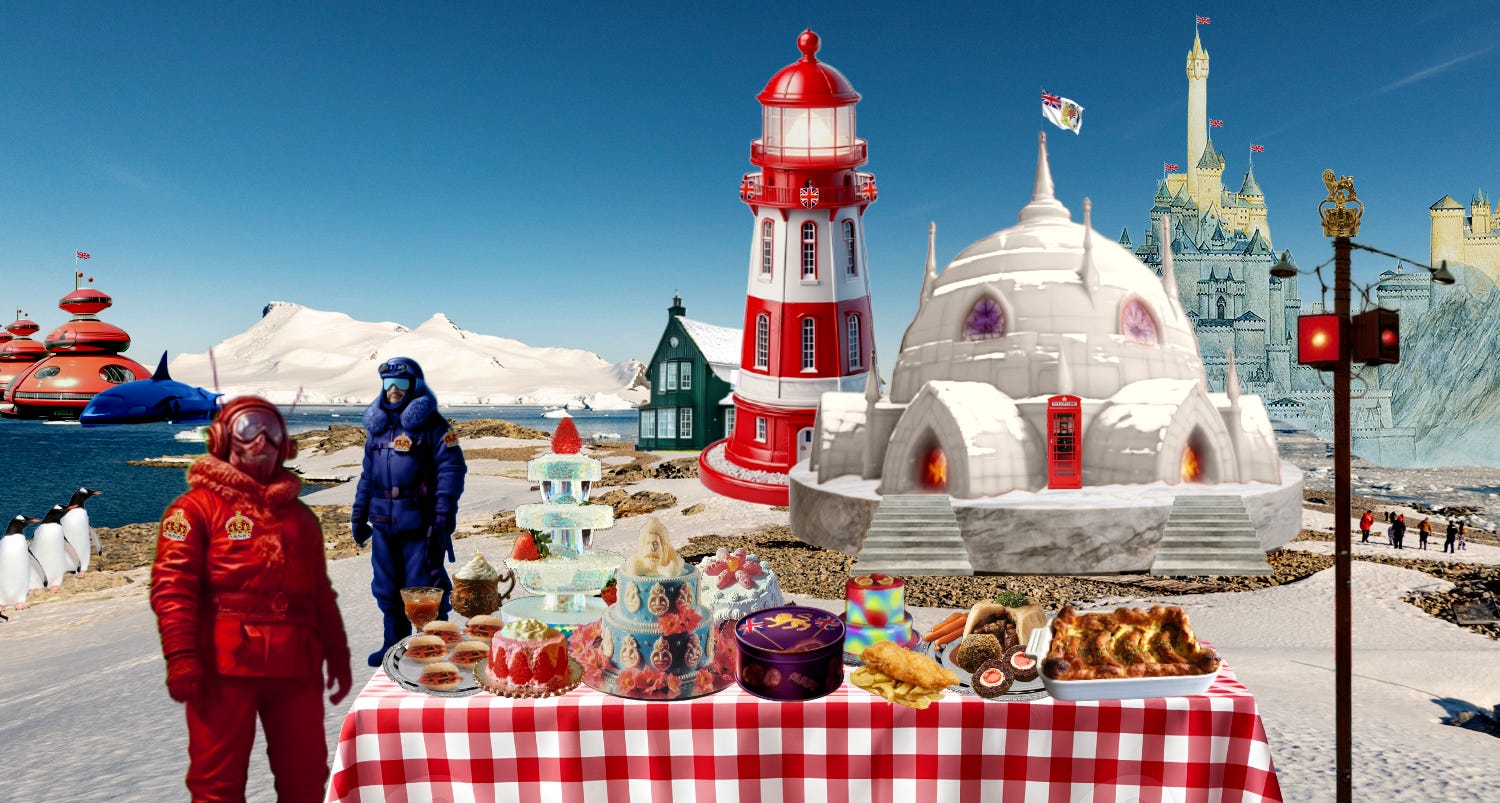
British Antarctic settlement. Picnic day on a national holiday. The British Antarctic settlement is one of the crowning achievements of 21st century Britain. We pioneer in benevolent colonisation and scientific endeavour.
We cannot allow this insane opportunity for wealth to fall into the hands of our enemies- primarily Russia and China. The Anglosphere should not be ashamed of its values, but proud. It needs to recognise that it is one of the greatest civilisations to ever exist. For all our faults, I’d far prefer our (United Anglosphere Commonwealth) values to be the prevailing global model of governance, not the authoritarian statism of the Chinese Communist Party, the evil, murderous political entity that surveils and tyrannises its own people and was responsible for plunging the world into lockdown nor Russia under the demented, despotic Putin.
All in all, 58% of the claimed Antarctic territory belongs to nations of the British Commonwealth (Britain, Australia and New Zealand, with Australia having the largest portion) As of now there is a treaty which prevents exploitation of the Antarctic for commercial interests, but this treaty lapses in 2048, potentially creating a very messy free for all to gain control over the world’s southernmost continent, an intriguing and mysterious area where few are currently able to set foot.
A beefed up British Commonwealth which defends each others territorial interests in the Antarctic would basically dominate the entire thing, and we could easily solve territorial disputes with Chile and Argentina (where our land overlaps) with diplomacy and tact. But with this comes responsibility to care for this mysterious ice covered realm and to respect its biological and spiritual integrity as best we can.
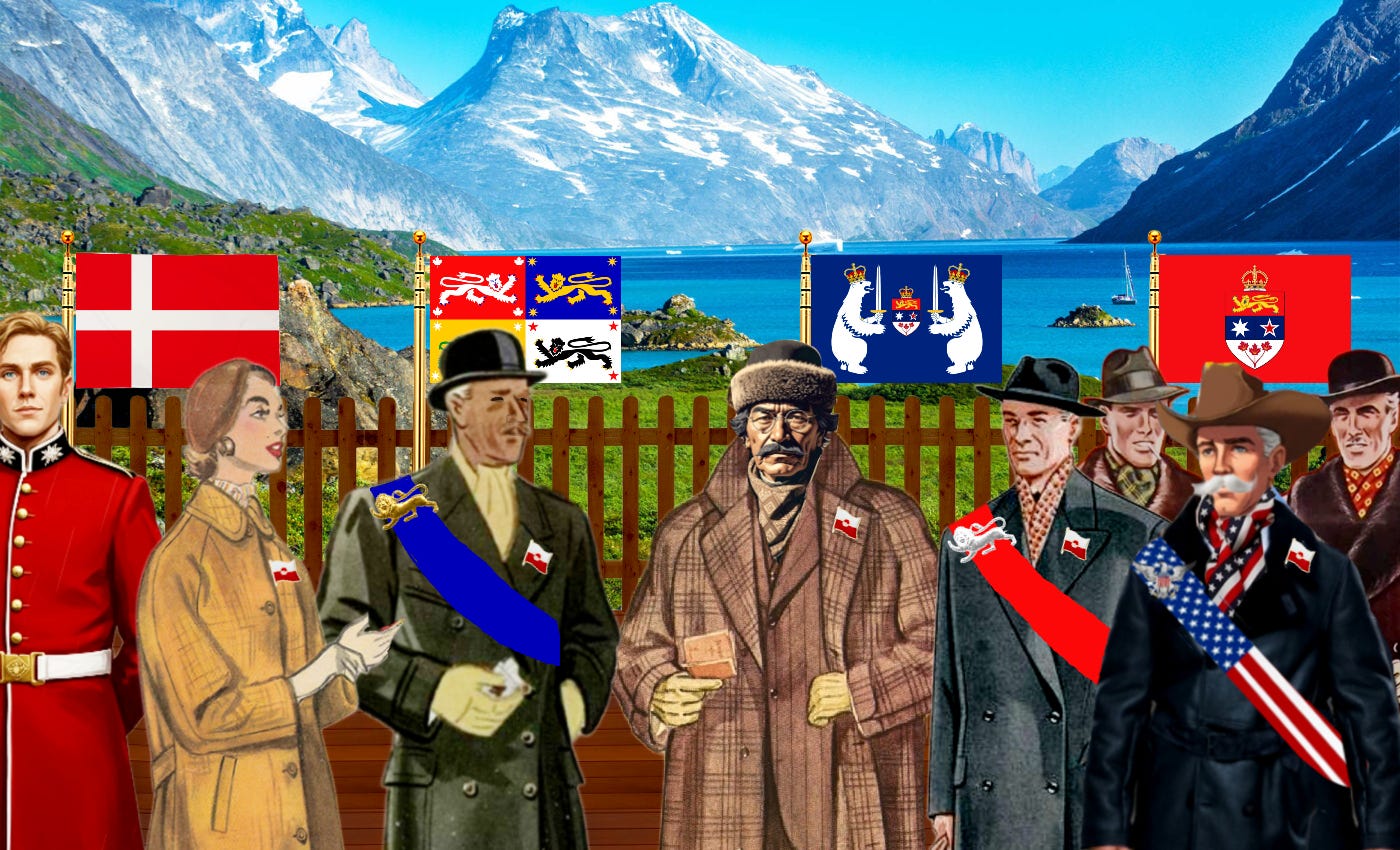
On the other polar extreme, we have here a summit meeting for the discussion over the future of Greenland. Donald Trump wants to purchase it from Denmark for America, but I think the best case scenario here is Greenland offered a referendum on staying with Denmark, or the choice of independence with the promise of membership of CANZUK/ The Anglosphere Commonwealth or some sort of North/Arctic Sea alliance union (with Greenland, GB, Denmark, Iceland, Canada, Finland, Sweden, Norway, Ireland and the USA) in exchange for priority access to trade and resources. (Basically an Arctic EEC Common Market with less centralised bureaucracy and more emphasis on national sovereignty)
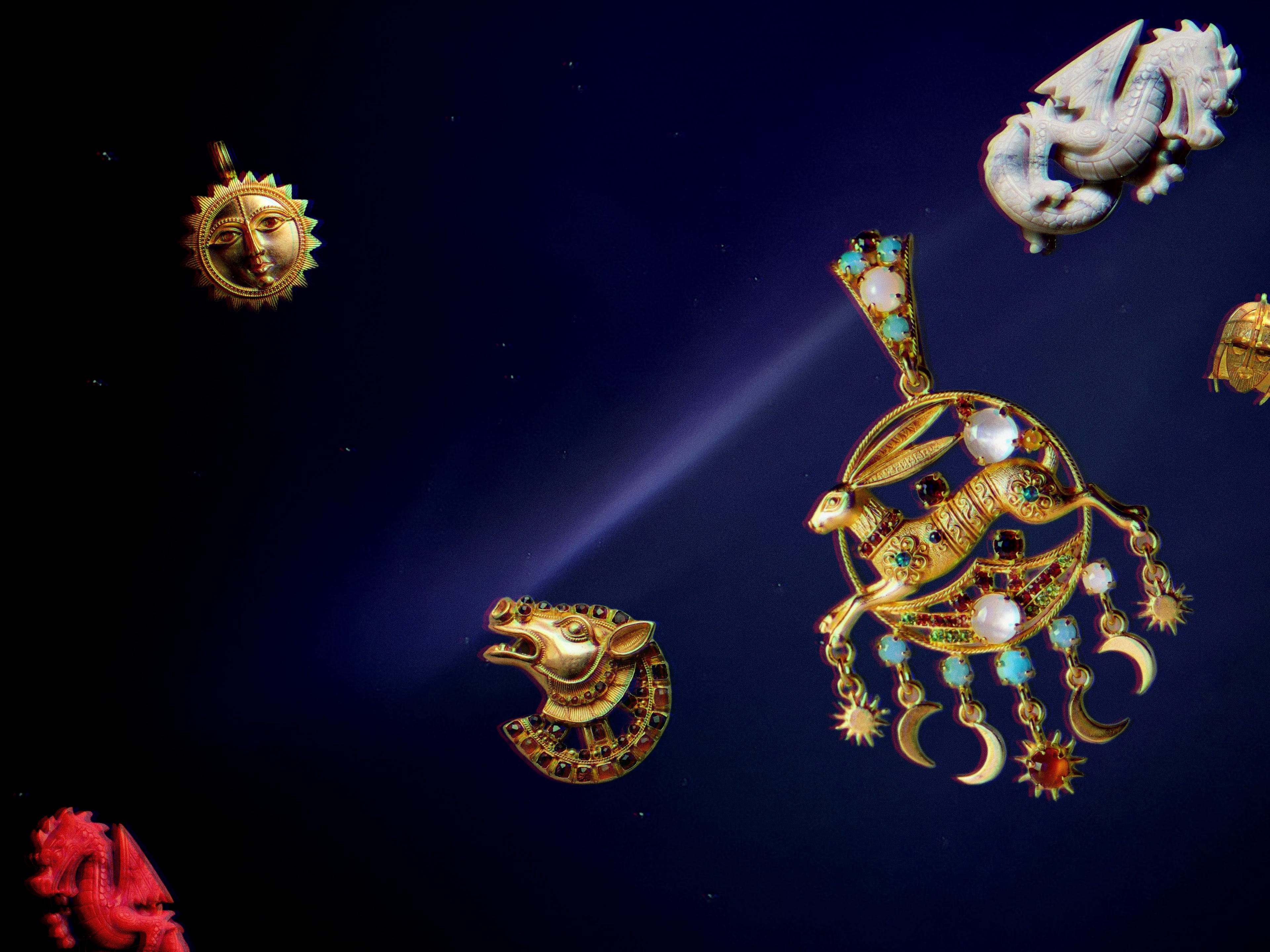
The Antarctic is the final frontier before space. In millennia to come, treasures of the Anglo Saxon people shall be found floating around the stars. We shall fashion beautiful masterpieces out of gold and semi precious stones and send them out into orbit. The clues to find them shall be hidden in illuminated manuscripts, much like Kit Williams’ Masquerade, where the artist and craftsman buried a hare pendant made out of 18 carat gold in Bedfordshire, and hid the clues leading to the location in an elaborate and cryptic picture book. People in the far future will fly out in rocket cars seeking to find the treasures and bring them back to the soil of England, where they belong.
To be honest, I’m not sure why I even want to do this other than I like the idea of something fashioned into something mysterious and beautiful by mankind, just travelling aimlessly as a warm flash of gold through the dark, cold, endless desolation of space.
Britain should be the cultural tastemaker of the world, as it was in the 1960s and 70s when it produced some of the best music in the world- the Beatles, David Bowie, the Rolling Stones, Led Zeppelin, the Who, Pink Floyd, Black Sabbath, Queen, Elton John etc. British music and British cinema should be world class, rivalling Hollywood in its glory days and selling the aspirational, patriotic national dream, just as America did. British culture and heritage will be celebrated instead of denigrated.
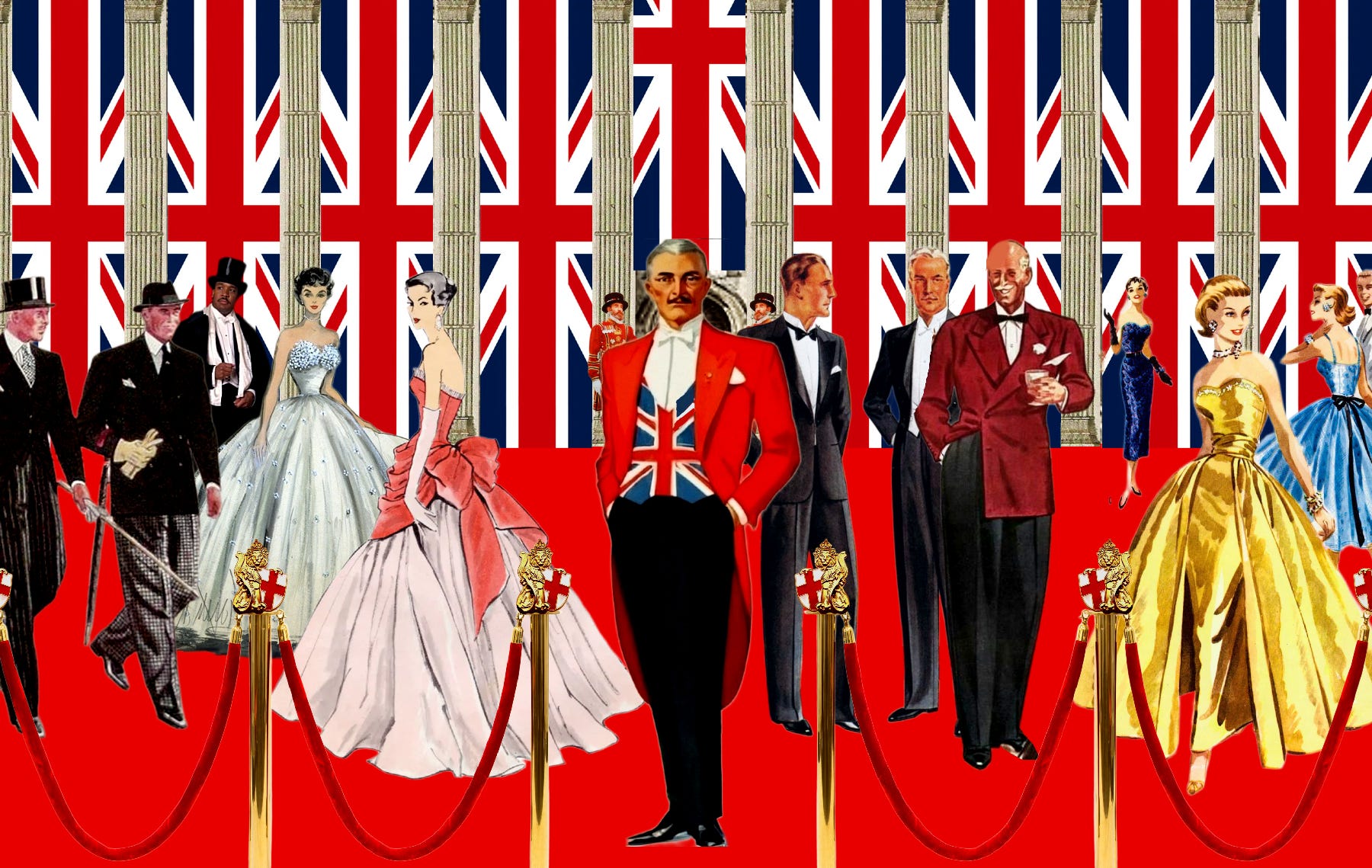
A grand gala celebrating British culture, much like the Great Exhibition of 1851, but a celebration of British film, theatre, literature, art and music, ready to be exported all over the world. Imagine the entire canon of Shakespeare and Chaucer or the Arthurian Chronicles put to film in glorious Powell and Pressburger style technicolour with the cream of the cream of our theatrically gifted world class actors. New James Bond type franchises of British action and adventure. Classic comedies. Surrealist blockbusters like the tale of the green children of Woolpit. Biblical epics in a stylised Medieval English landscape. Wicker man type horror films about folk villains like Black Annis and Peg Powler or ghost stories like the Barbary ape of Carew Castle. Historical epics based on real events, like the Spanish Armada, Trafalgar, Waterloo, the English Civil War or stranger tales like the elephant of Henry III kept in the Tower of London. Swashbuckling adventures of Drake and Raleigh, Agatha Christie/Conan Doyle type murder mysteries etc. We have so many stories to tell and through keeping our myths and legends alive, we keep the spirit of our nation and our ancestors alive.
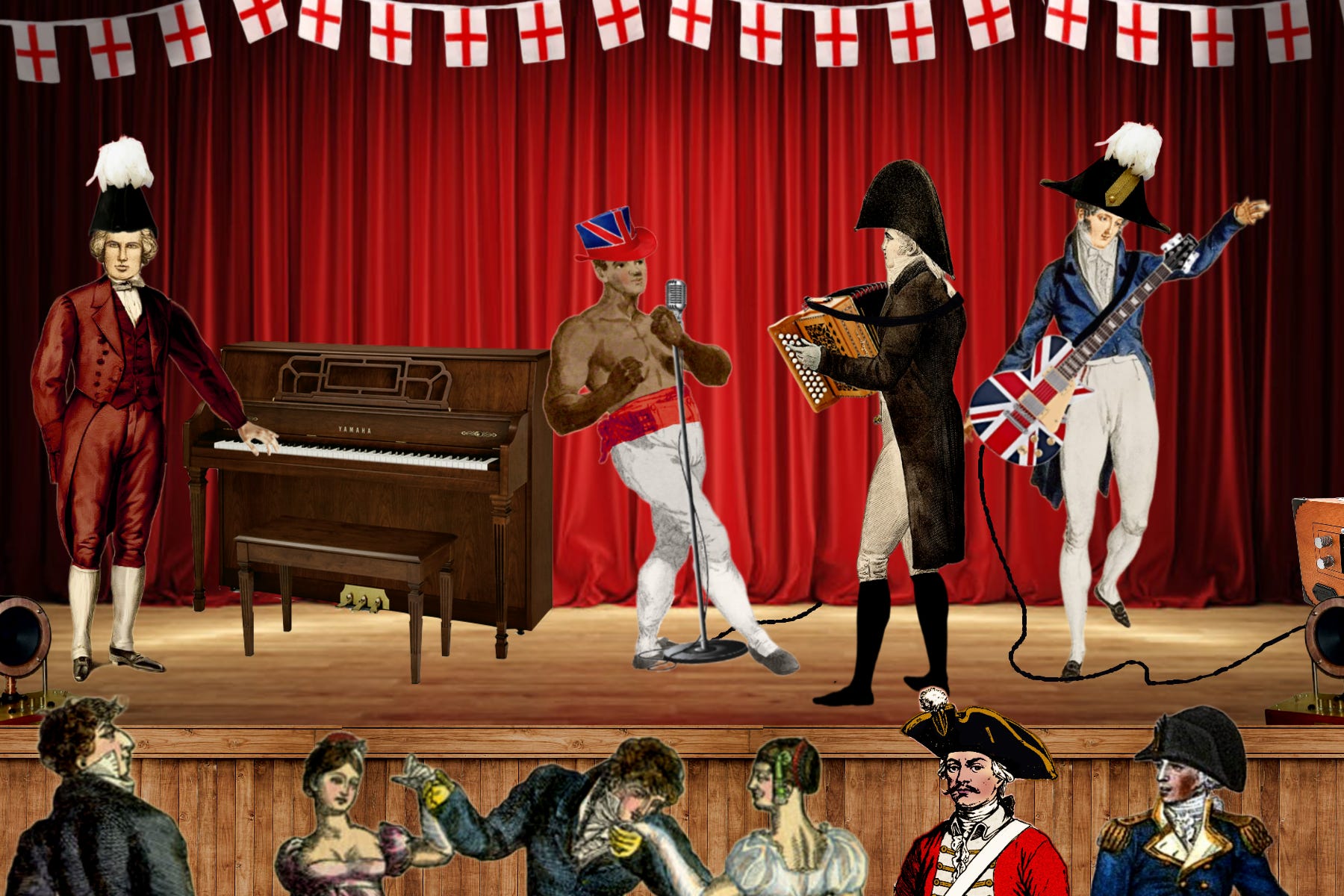
British music dominates the way it did in the 1960s and 70s, but instead of American influenced blues and rock, now we get traditional British folk influenced music. Imagine the Butcher’s Hornpipe, the Moon and Seven Stars, Here’s a Health to the Company or the Saucy Arethusa played to a new generation of youth. A new generation of British rock gods. David Bowie type glam rock using British folk scales and instrumentation. Concept albums about the myths and legends of the British Isles. We must seek to regain our cultural identity distinct from an America dominated English speaking media.
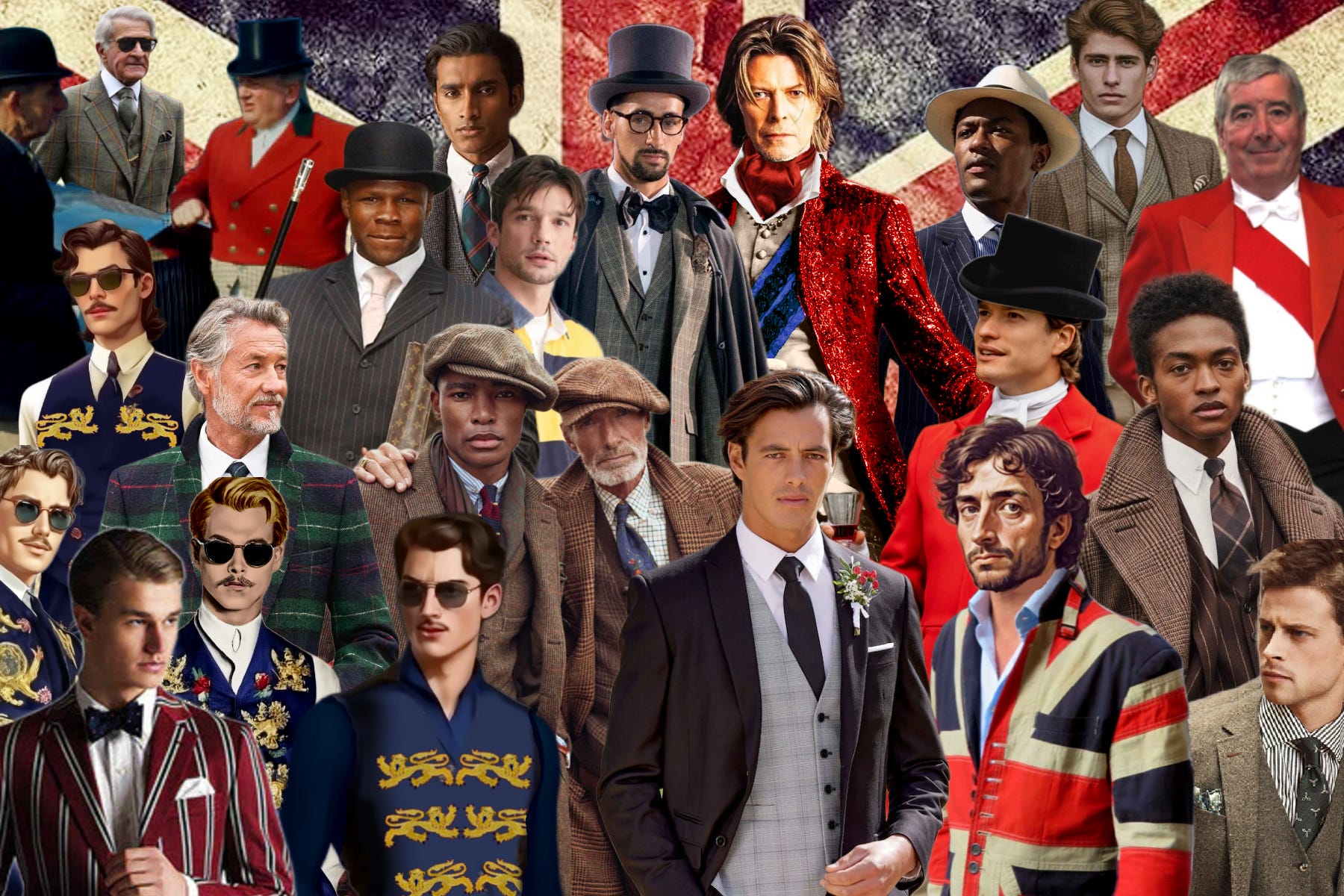
British men will be the sharpest dressed in the world. Smart, high quality tailoring rooted in our heritage.
Britain should be viewed as the world’s sugar daddy, a very old, wise, rich nation who everyone wants a piece of.
But Britain should be more discerning with who it lets come here to enjoy that. If we adopted sensible, selective migration policies, such as those that were the norm for much of the 20th century until the 90s, that would calm a great deal of the rising tensions around immigration, which is becoming an increasingly angry and toxic debate and could end up backfiring on decent, integrated minorities, which I don’t want to see.
The ideal policy should be aiming for small, sustainable, high value immigration from closer cultures and hardline Anglophiles who will assimilate perfectly into British culture and maintain loyalty to Britain over their home country. This is the best way to maintain cultural cohesion, and would likely be the most popular strategy going forward.
This is not to say nobody ever gets to come at all, and certainly not that anyone who’s not ethnically British is never welcome (something I have sadly seen more of) but that we have to be sensible and make sure that whoever does come really has to love us as a nation.
Meanwhile, the sorts of menial manual labour that only low wage developing world migrants will do should be automated. There is no reason in the 21st century that any first world country, but especially the one that developed the industrial revolution, needs to do things like manually harvest crops. Eventually we would export this 21st century industrial revolution to the third world itself so that nobody in the world should have to toil in poverty.
Decline is a choice and we should not accept that becoming poorer, less powerful and less ambitious should be the inevitable future of our great nation. We achieved great things before and we can do it again.
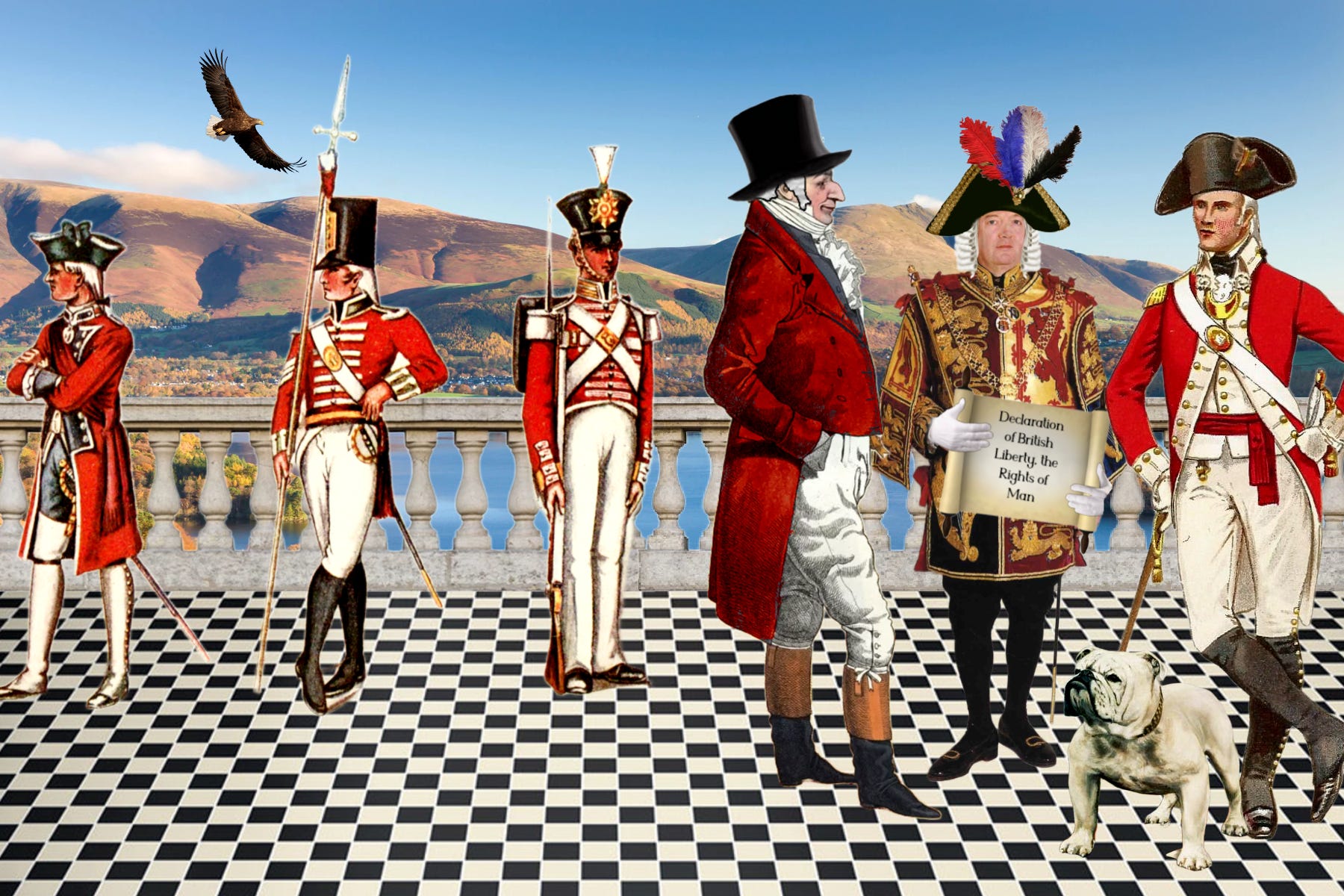
As with America’s bald eagle, the golden or white tailed eagles reintroduced could become another symbol of British liberty and its return to our land, although nothing will ever represent Britain’s tenacity and resilience more than the good old British bulldog.
Britain has become a joke on the world stage- the British state is anarcho-tyrannical, meaning that it allows a state of virtual lawlessness where genuine crime goes unpunished, whilst going out of its way to punish ideological dissidents of the regime.
To the Americans, who are lucky enough to have a First Amendment protecting their freedom of speech, Britain looks like North Korea. (Although America has not been immune from decline, also having its own set of equally bad problems to deal with)
This was covered much in the last article, but predictably it continues to get worse, with the Irish comedy writer, Graham Linehan (best known for Father Ted, Black Books and the IT Crowd) being arrested by armed police upon arriving at Heathrow Airport back from America for a series of tweets deemed transphobic. The stress of this cause Linehan’s blood pressure to rocket, resulting in him being delivered to hospital. The police then warned him that he was banned from tweeting as a condition of his bail.
Whatever you think of Linehan’s strident, outspoken views, he is entitled to hold them and express them freely in a democratic society without fear of persecution. Linehan is now suing the Metropolitan Police with the aid of the fantastic Free Speech Union. The whole situation is chilling and disgusting and should see the officers responsible reprimanded.
“It’s a combination of officers not knowing how to use their discretion any more, leadership convinced that it has to impose morals on the population and a load of idiotic laws that need to be repealed. A disaster 30 years in the making.” - Anonymous senior officer on Graham Linehan, (quote courtesy of journalist Allison Pearson)
There is also clearly an asymmetry in how this is applied. For example, Labour councillor Ricky Jones was tried for incitement for threatening to slit people’s throats, yet was found not guilty. To be clear, I don’t think Jones should have even been taken to trial either, regardless of how stupid and awful what he said was. Freedom of speech must extend to your absolute worst enemies and cover even the most vile, crass, offensive hate speech imaginable. I would not even prosecute the grotesque people who celebrated the murder in cold blood of American conservative commentator Charlie Kirk.
Instead, Britain should be the freest country in the world, even more so than the United States itself. Despite Americans often characterising the British as lovers of tyranny, the opposite is in fact true. The American simply just became an even more passionately libertarian Englishman.
“The air of England has long been too pure for a slave, and every man is free who breathes it.” - James Mansfield, British judge (possibly misattributed)
The United States of course was founded on the values of British enlightenment philosophers such as Thomas Paine, John Locke and David Hume. The Declaration of Independence and United States Constitution were of course influenced by England’s Magna Carta.
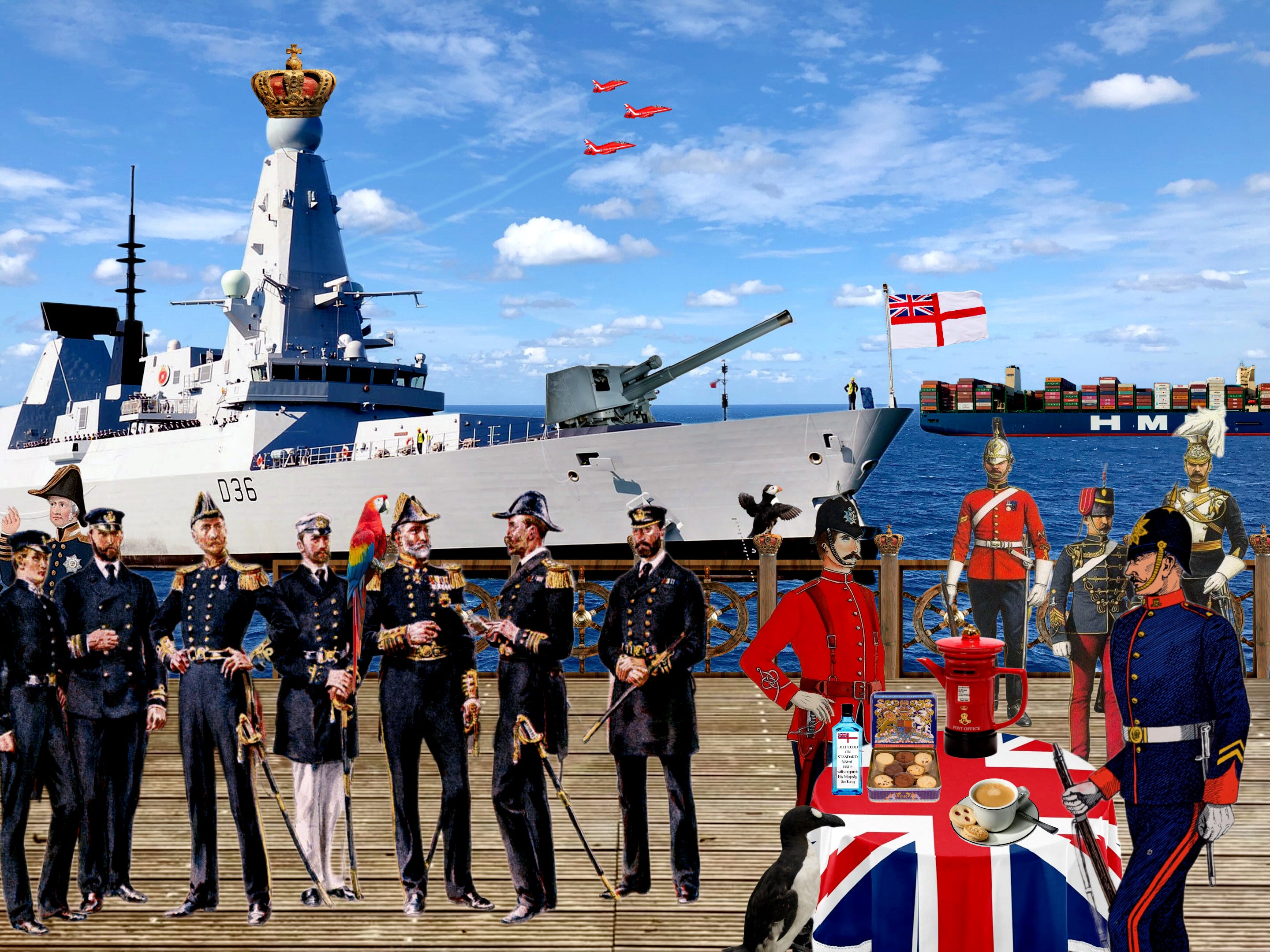
Britain is remilitarised to become a formidable superpower, ensuring peace and stability the world over. British military regatta complete with tea, biscuits and gin. State of the art naval ships and air shows by the red arrows. Behind, a merchant ship carries goods into Britain. The mercantile, entrepreneurial spirit of Britain is striving to reach its full potential.
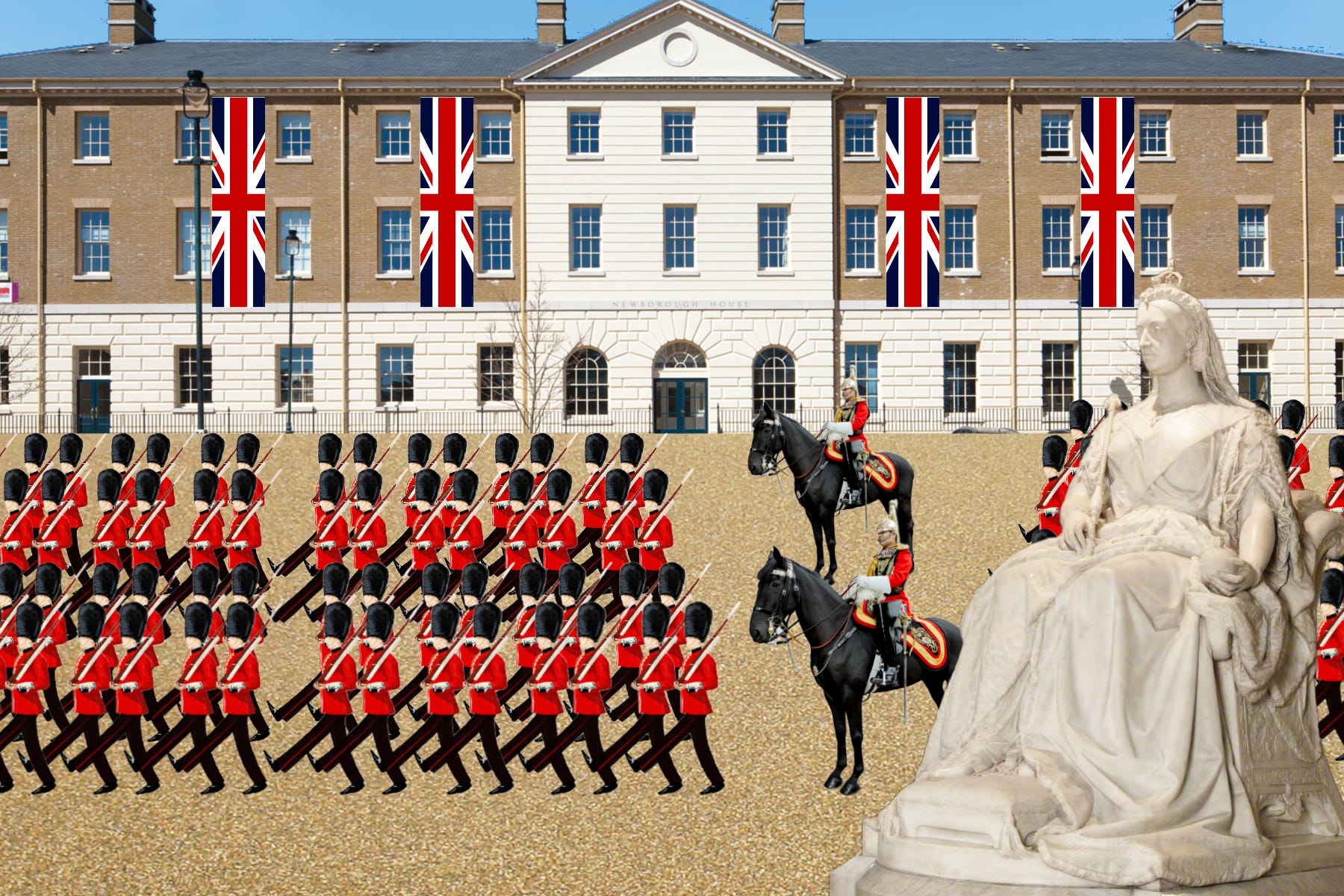
Further military pageantry occurs. This will be even more frequent an occurrence than it already is now.
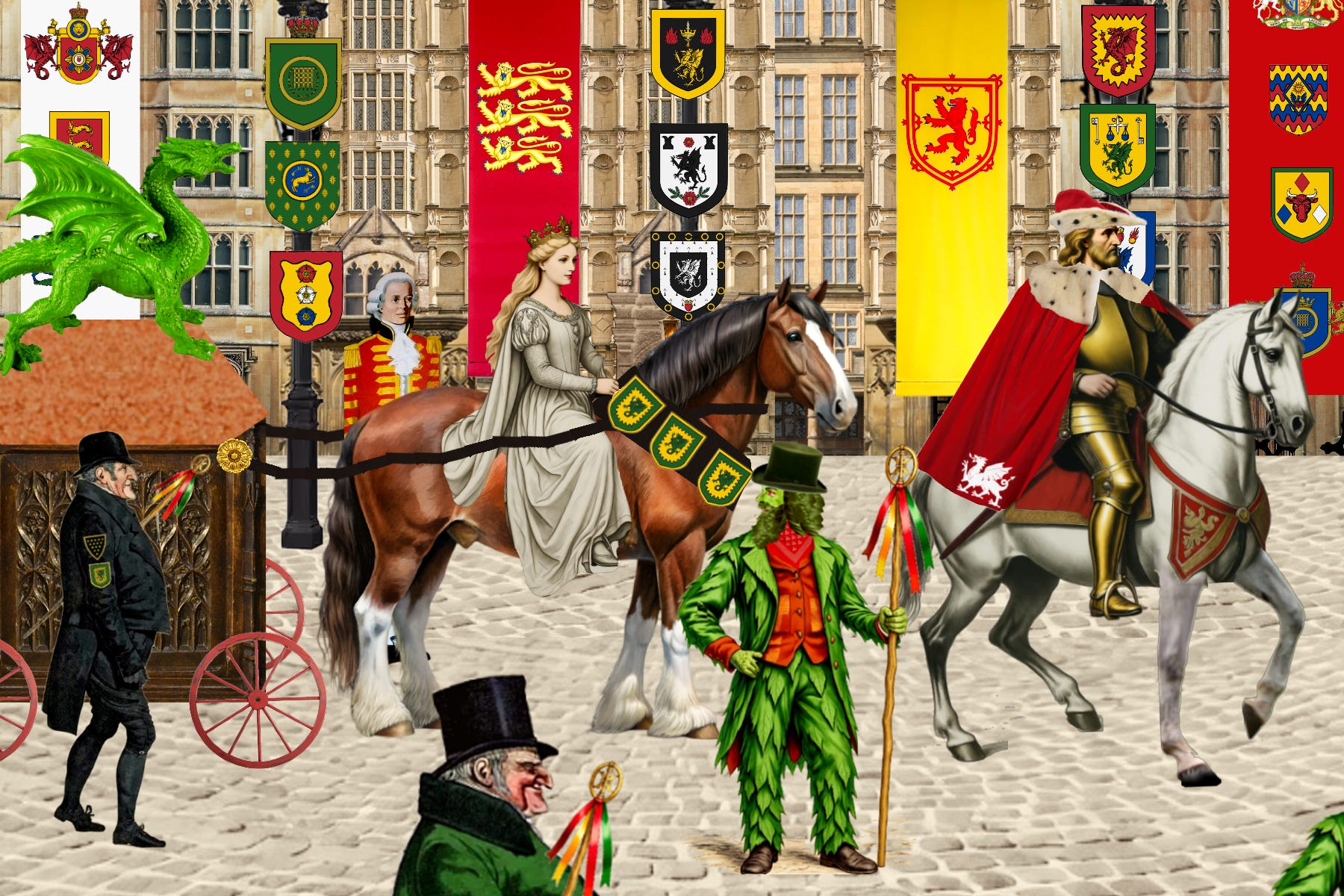
Here we have a folk festival procession for the new chivalric orders that are to be created. The Head Knight of the Order of the White Dragon rides his noble steed. The wife of the Head of the Order of the Green Dragon proceeds behind him with the order’s ceremonial float. Stewards from each English county walk alongside (in this case Devon and Cornwall) along with a host of Green Men. We must restore the values of Medieval chivalry and honour and recognise noble heraldic tradition as integral to Britain’s success. It harks back to a pre-Imperial Old England of dazzling Arthurian glory.
This is the sort of thing that tourists would flock to see as well. I love all of our weird and archaic traditions and think that all joyless technocrats who want a “modernised” Britain unshackled from these colourful traditions should be subject to indefinite incarceration in the Tower at the behest of His Majesty the King.
They are enemies of the realm and must be exposed as the incorrigible vandals and dishonourable cads that they are. This old order of knights and lords who will die for the honour and glory of England and of their noble dynastic legacy must be restored, whilst the soulless and illegitimate Blairite new order of rule by civil service bureaucrats, corporate lobby groups and judges who will die for nothing must be scrapped.
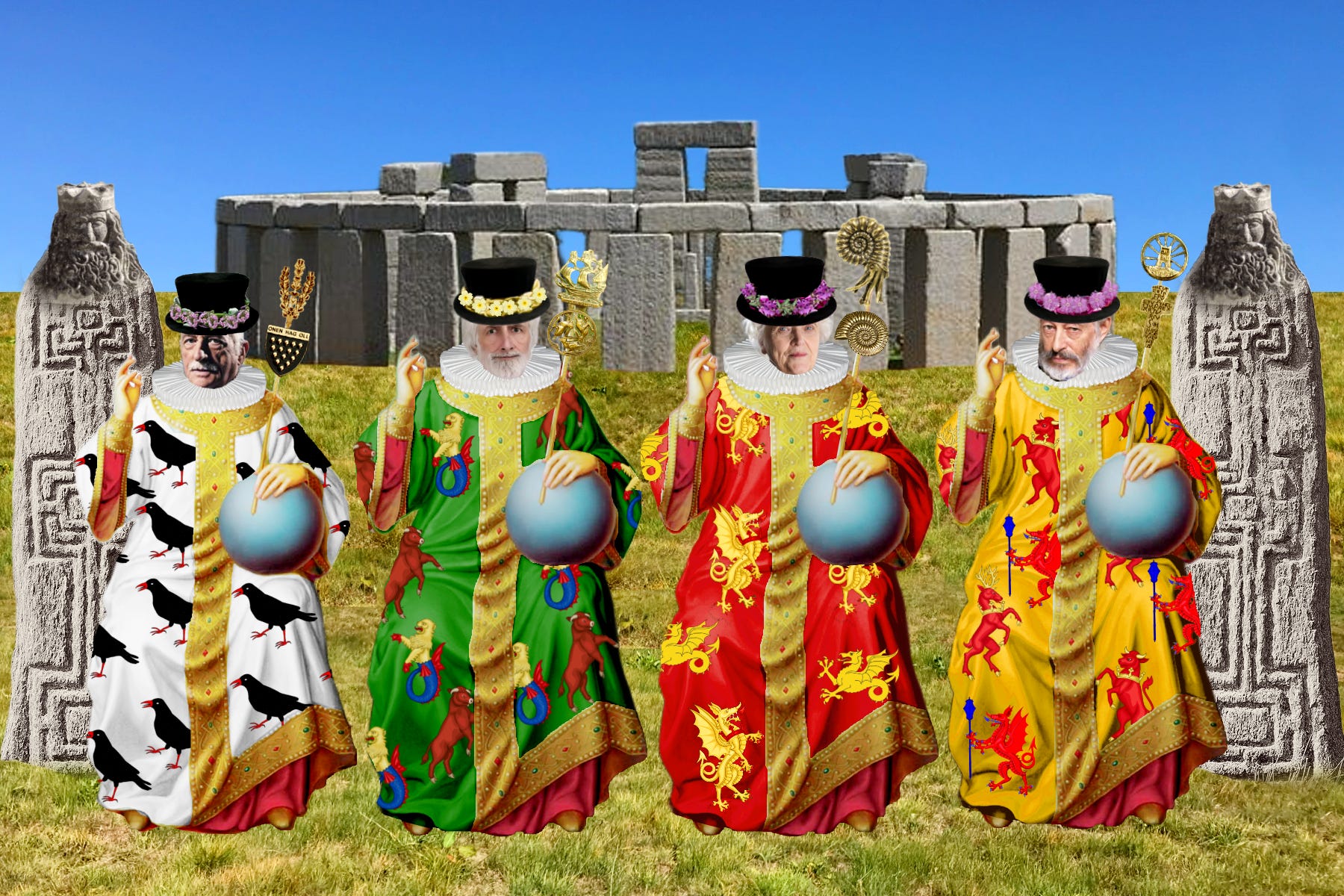
Each historical region of the Anglo Saxon era- Wessex, Sussex, Essex, Kent, Mercia, East Anglia, Northumbria etc. will get its own newly built henge, with its location chosen based on astronomical coordinates and ley line convergences. Here, the bards of the Westernmost counties of England- Cornwall, Devon, Dorset and Somerset, arrive at the opening ceremony of a brand new henge. These elders are the esteemed wise custodians of our cultural heritage.
THE EMPIRE SO GREAT YOU WON’T WANT TO LEAVE
OK, a tongue in cheek title. What I present here is not really an Empire in the sense of what we had, but what many others refer to as CANZUK, a strengthening of the Commonwealth of former colonies that speak English, are populated by predominantly British descended peoples, that share our monarch as Head of State and share much the same values and legal/parliamentary systems. Uniting the Anglo diaspora.
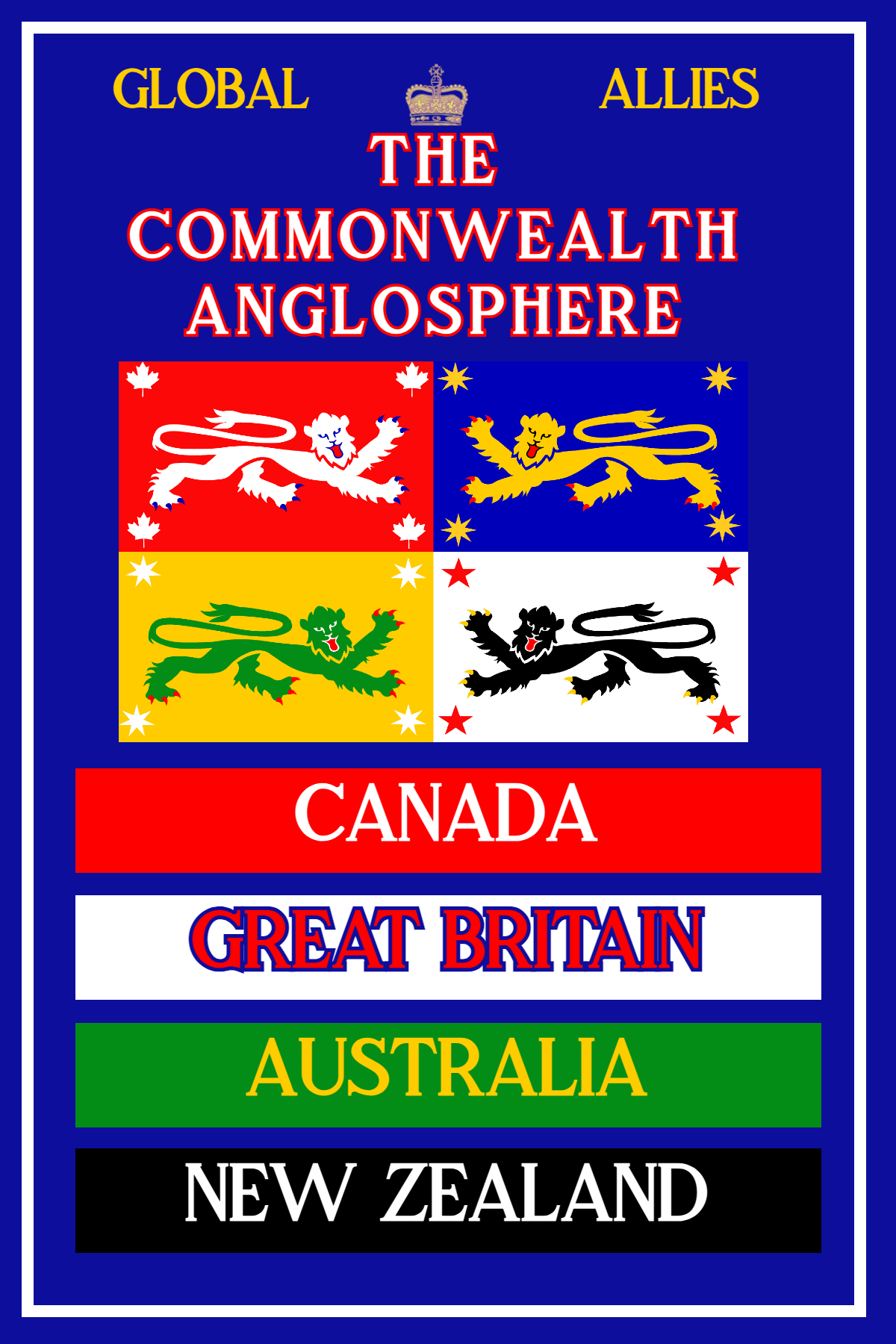
Liberty and Prosperity for all.
The CANZUK countries are Great Britain, Canada, Australia and New Zealand. The USA also speaks English as a former colony but does not share our monarch as head of state and is very much economically and constitutionally its own thing, so it would not be a member but would be our closest ally.
The Anglosphere union has far more potential than its main rival- BRICS (a union of Brazil, Russia, India, China and South Africa) in that the Anglosphere countries are all descended from settlers from the British Isles and share the same language, much the same values and legal systems. The only things unifying the BRICS nations is their dislike of Western supremacy. In all other aspects they have nothing in common.
It’s a union of very different nations- ranging from secular democracies to totalitarian centralised states. It's easy to see how this union of nations can and probably will go wrong- India wants regional security and opposes China’s Belt and Road initiative. South Africa and Brazil may not want to be dragged into Russia’s conflicts in Eastern Europe or China’s clashes in Taiwan.
More Western friendly nations like India, South Africa and Brazil see BRICS as a strategic alignment rather than a strictly ideological anti-Western project. Sino-Russian overreach will likely be the downfall of BRICS, given that they are both very dictatorial nations and the more benign democratic BRICS members could end up being put off by the militaristically anti-Western muscle flexing by Russia and China when all they were seeking was economically pragmatic global engagement.
The addition of Iran, Egypt and the UAE into this mix in 2023 means that tensions will rise, given that India has a strong strategic partnership with Israel, whilst the Iranian regime is Israel’s primary enemy, waging a proxy war against it via Hamas in Palestine and Hezbollah in Lebanon. But with the Anglosphere, it’s hard to imagine this sort of thing going on. Bar the American war of independence vs Great Britain, there has never really been much conflict between any of the Anglosphere nations.
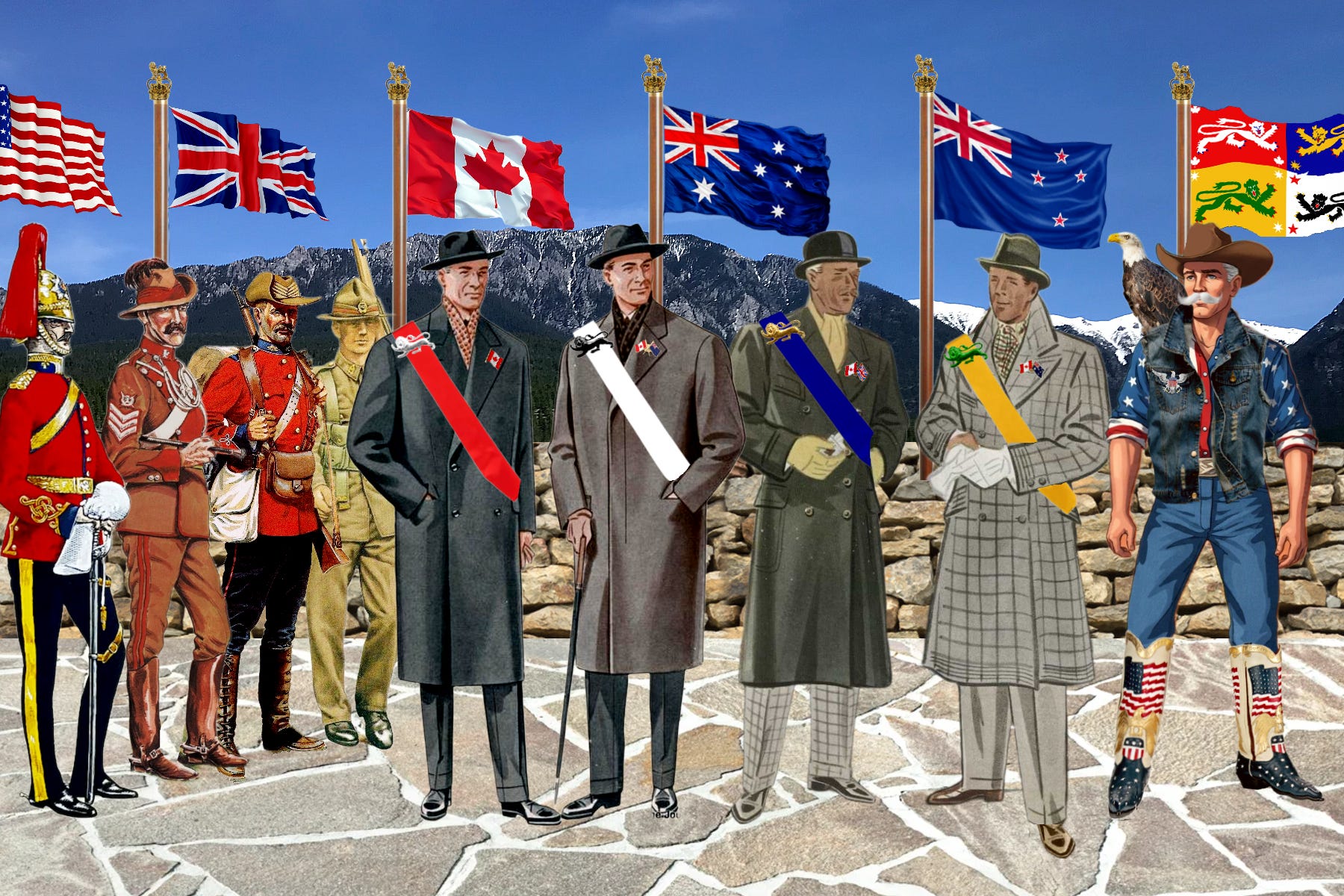
Meeting between CANZUK nations in Canada. The United States President also in attendance. Much would be made of the heraldry of these ceremonies, with the Prime Minister of each country arriving dressed in the sash and lion badge coloured in accordance with their quadrant of the flag. White lion on the red for Canada, black lion on the white for New Zealand, golden lion on the blue for Great Britain and green lion on the gold for Australia. They also wear a badge bearing the flag of their own nation and the nation they are convening in. Protocol would dictate that the flag of the country they are in goes on the left, whilst the flag of the country they are from is on the right. Eg. Here, everyone wears the flag of Canada on the left, apart from the Canadian PM, who wears his flag alone. They would also be accompanied by much military pageantry.
Ireland too also speaks English and shares a similar culture, but is a republic with a strained history with Britain. The idea of being in some sort of imperial union with Britain would probably not be popular in Ireland, but as someone with Irish ancestry who sees our fates as inexorably linked, I would be open for them to join if they wanted to. Perhaps Ireland joins part of a sister organisation to CANZUK which is a kind of Celtic union, although Celtic identities would be included and celebrated by CANZUK, and we don’t want to see the balkanisation of the United Kingdom. Celebrating Celtic culture within the confines of the United Kingdom itself means the Celtic nations are less likely to feel as though they are contained by a centralised Westminster centric authority. This would thus preserve the integrity of our union.
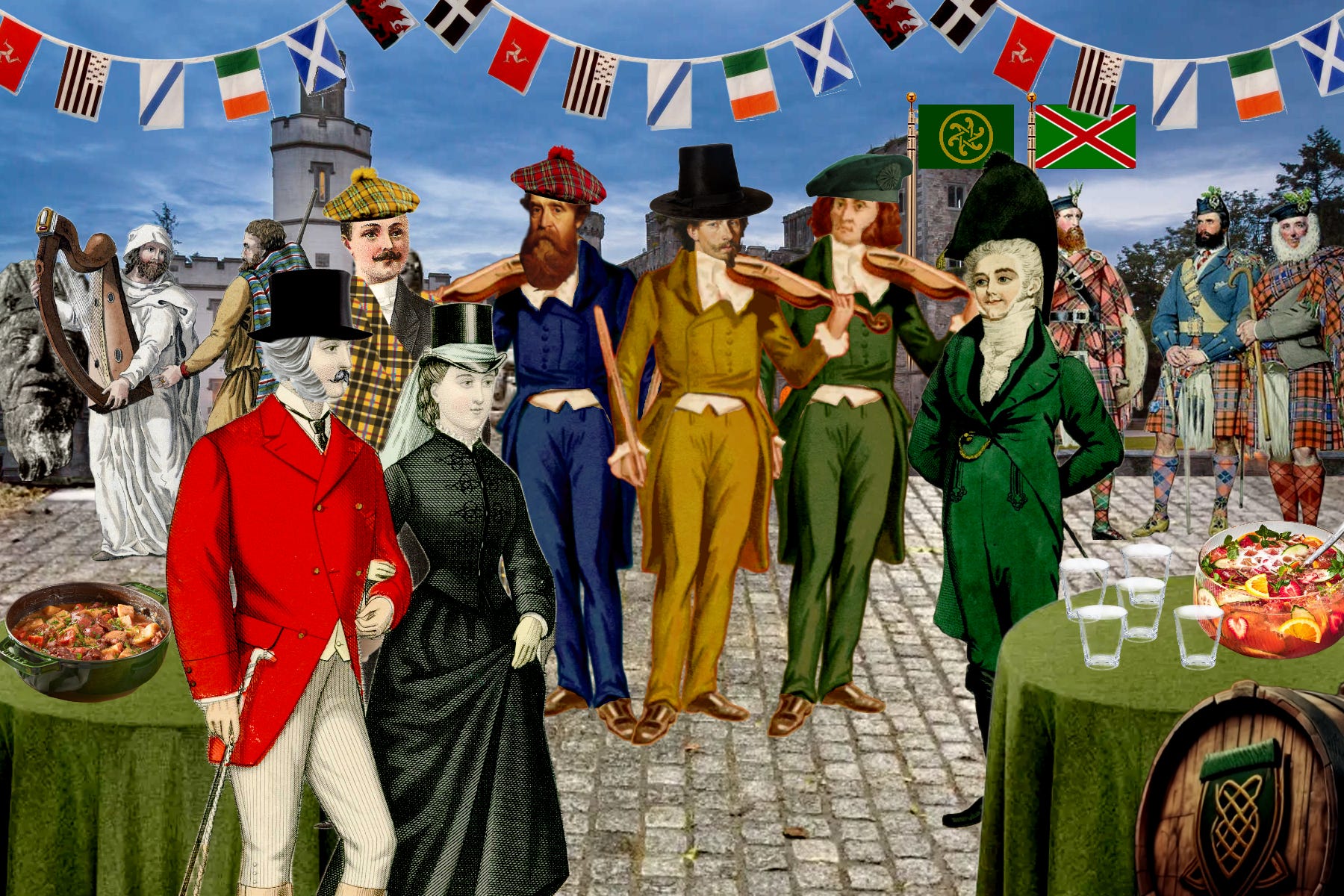
A delegate for English culture (in the red coat) represents the Anglo ally at the festival of Celtic culture, in which the Celtic identities of Great Britain, (Welsh, Scottish, Irish, Cornish, Manx) Ireland and continental Europe (Bretons and Galicians) come together. I hope the Irish will come up with their own futurism- Hibernofuturism, in which they too look at their past with pride. Remember what their ancestors regrettably suffered at the hands of the British, but reorient focus on their own positive historical achievements- the Book of Kells, the monastic scholarship, the Cladagh ring, Guinness, the submarine, the modern tractor, the works of WB Yeats, Oscar Wilde, Samuel Beckett, James Joyce and Seamus Heaney, and use these as inspiration to look to the future as a strong and independent nation, allied with and equal to Great Britain.
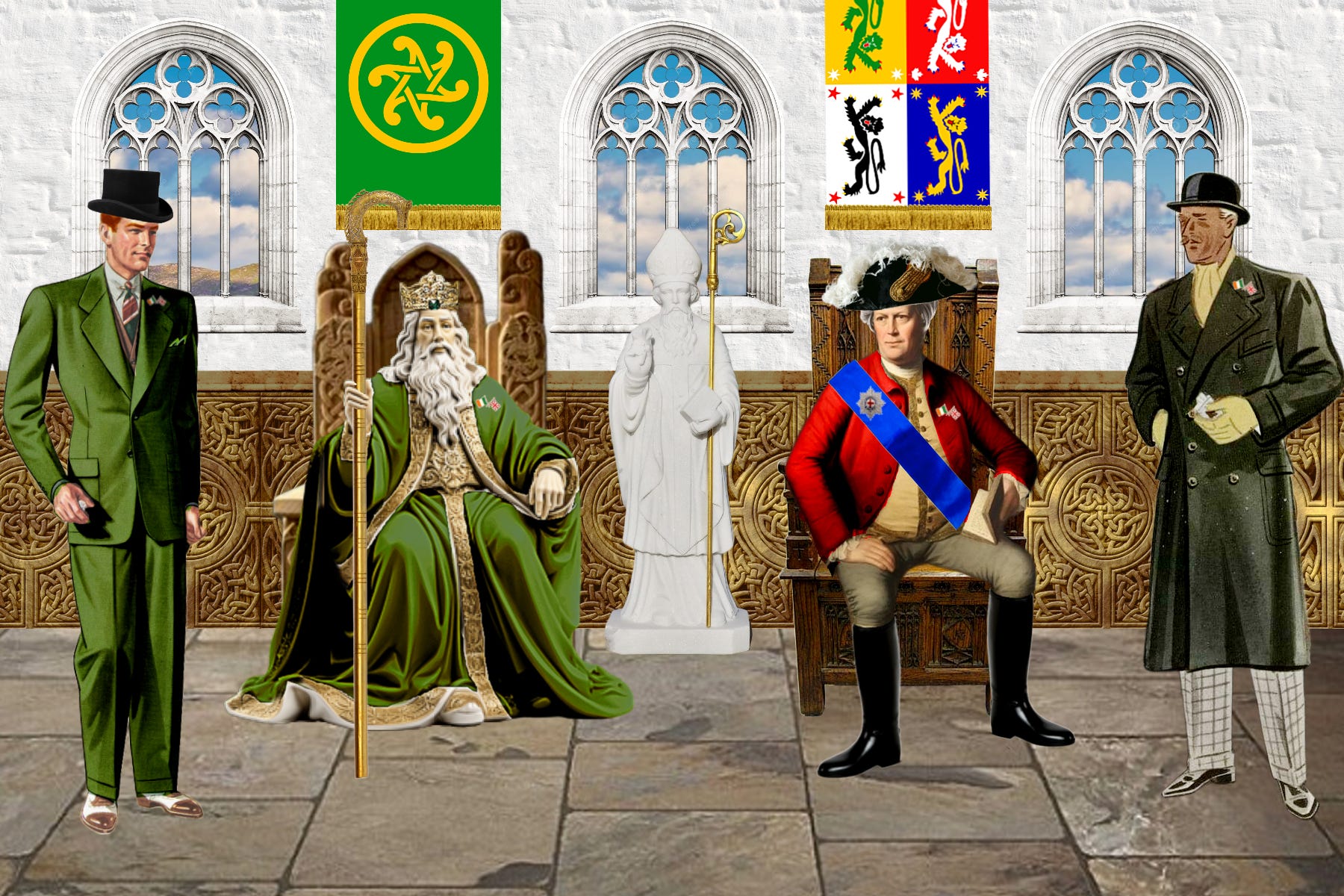
At a castle in rural Ireland, another Anglo-Irish alliance is depicted. Here we see a meeting of the High King (an elected ceremonial monarch who governs the affairs of the Pan Celtic Union, not of Ireland itself), and the King of Great Britain, Northern Ireland and the Commonwealth, accompanied by their President and Prime Minister. New flags celebrate tradition and tactfully eschew the more controversial historical symbolism. The High King and the King of Great Britain are able to converse both in English and in Irish and other Celtic languages. As an Anglo of Irish ancestry, I view the acrimonious separation of Britain and Ireland as truly tragic, but entirely understandable given the historical context of what went down from the 12th-early 20th century. Whilst the United Kingdom and the Republic of Ireland should remain politically independent of one another in terms of sovereignty, we should view ourselves as Britannia and Eriu, the spiritual sisters who stand strong together in the North Sea.
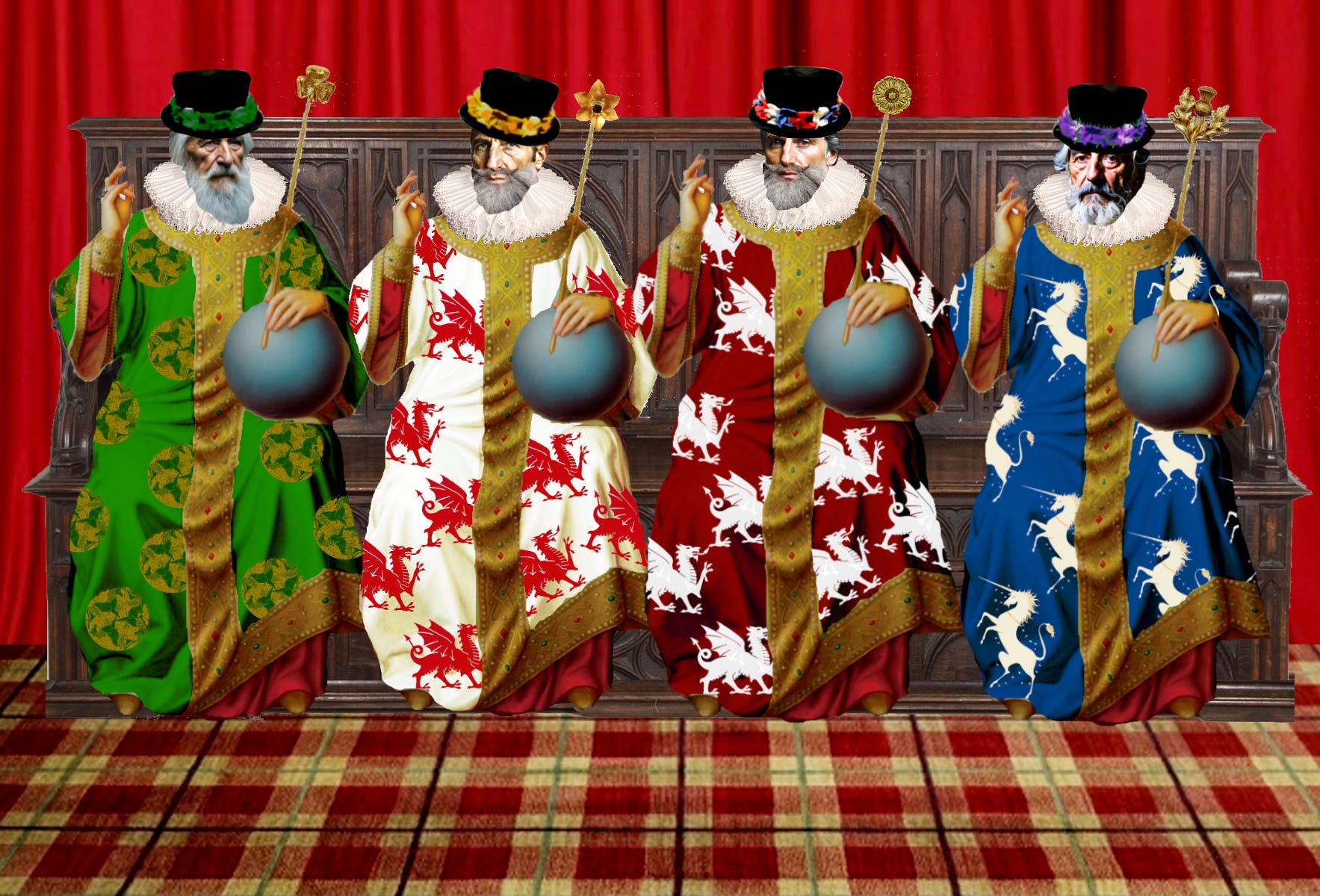
The heraldic bards of each nation in ceremonial dress- Ireland, Wales, England and Scotland.
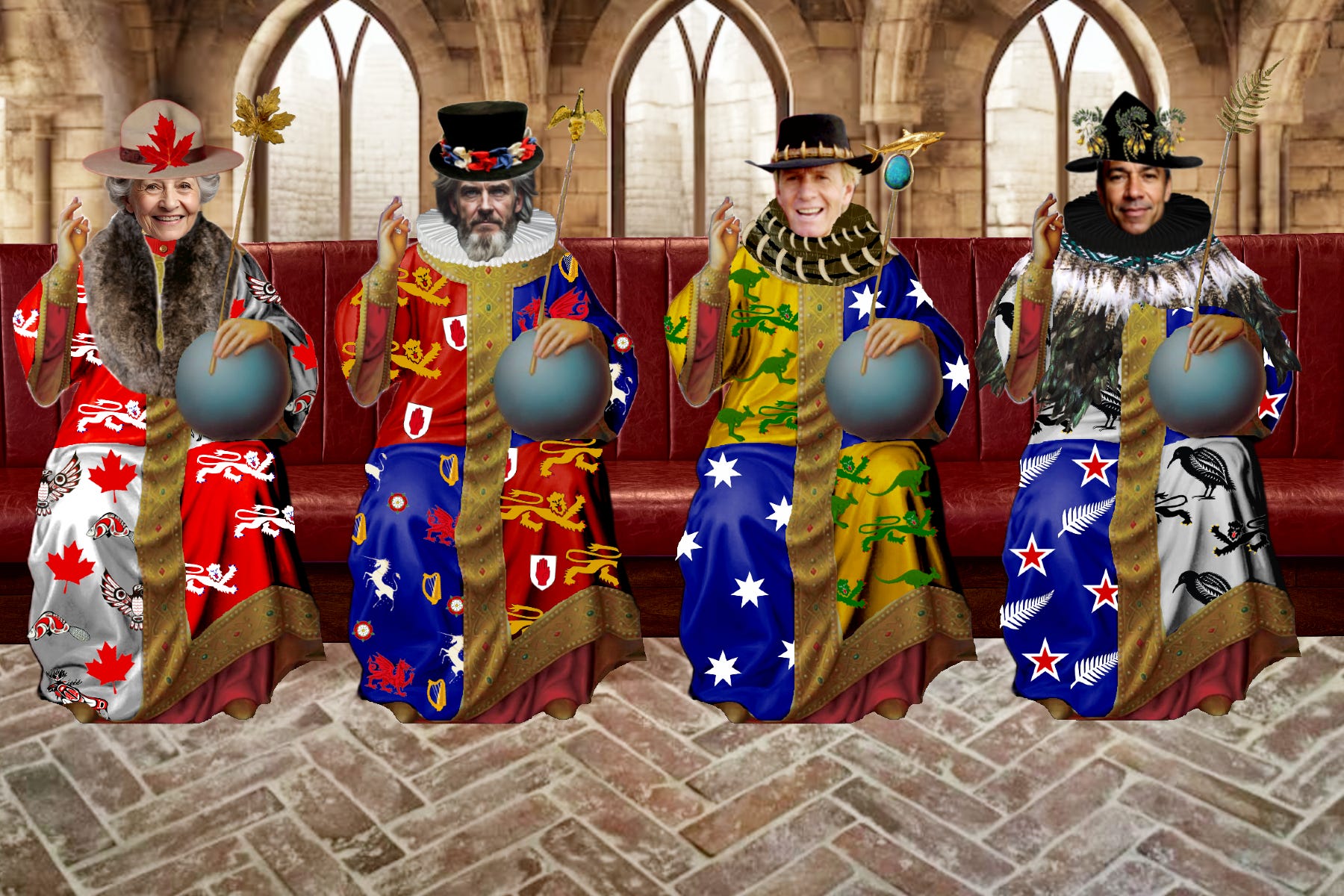
Heraldic bards of the Commonwealth nations- Canada, Britain, Australia and New Zealand.
This would be an entirely voluntary union, and so far, GB, Canada, Australia and NZ are the core membership and politicians and peoples in all these countries are very much open to the idea of formalising this alliance, which so far is just an idea that’s very much up in the air.
It is silly in my view to have something like the Commonwealth and to not really use it to its full potential. So far, it’s just used for Royal visits abroad and diplomatic tea parties. What would make sense is to use CANZUK as a means to help the poorer Commonwealth countries building infrastructure.
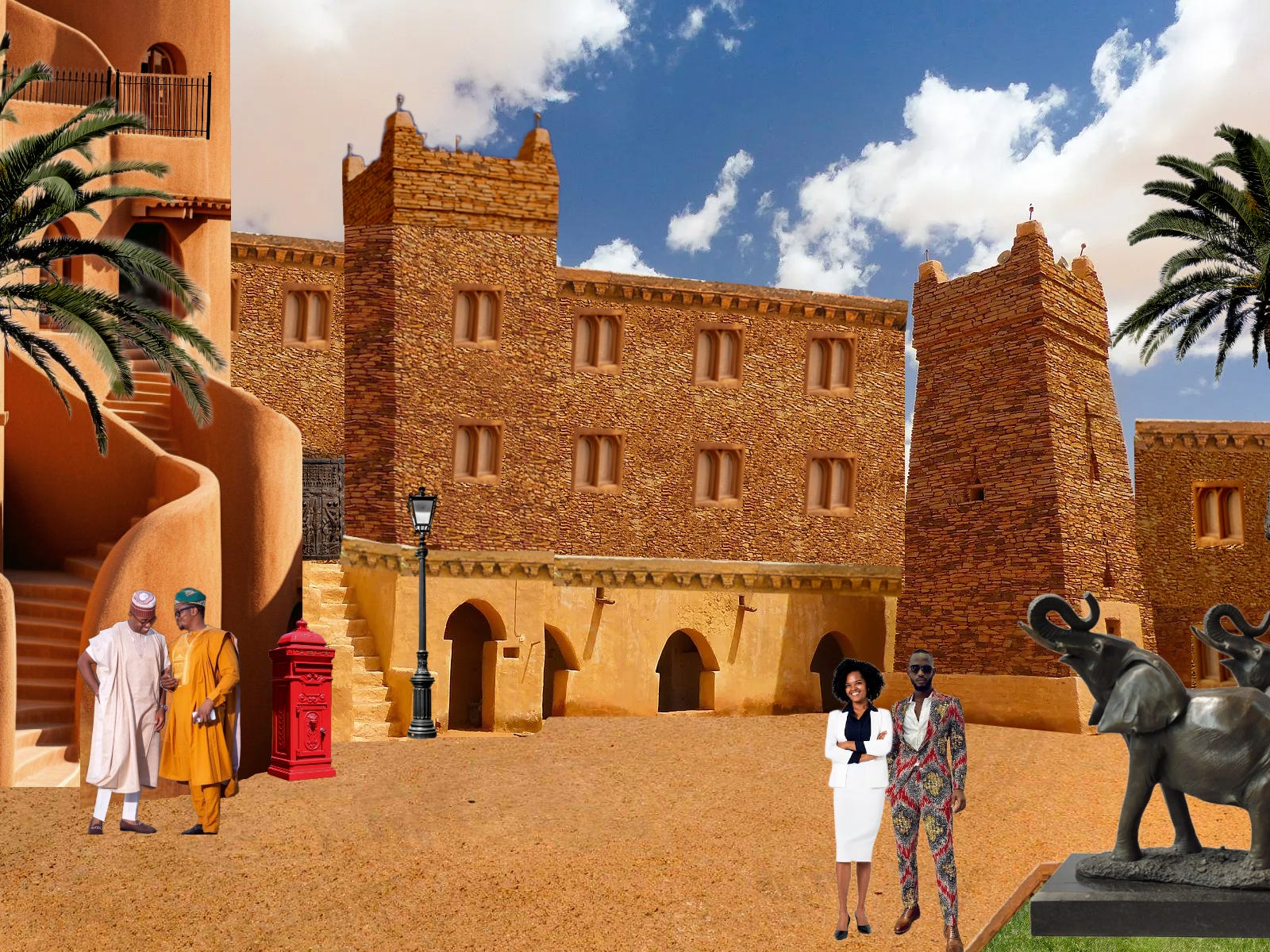
A West African town square built in the traditional local vernacular style from a portion of the funds generated by a CANZUK companies’ profits. Locals are also provided training and employment opportunities within the companies. This assisted development of very poor countries into prosperous ones with better quality of life and heritage led regeneration is a more achievable and pure form of Afrofuturism than the far-fetched Wakanda fantasies, although I admire the ambitious vision that Africa can be rich and technologically advanced. Places like Nigeria in particular I think would benefit hugely from this in that we could help the Christian population defend themselves from the massacres of Boko Haram.
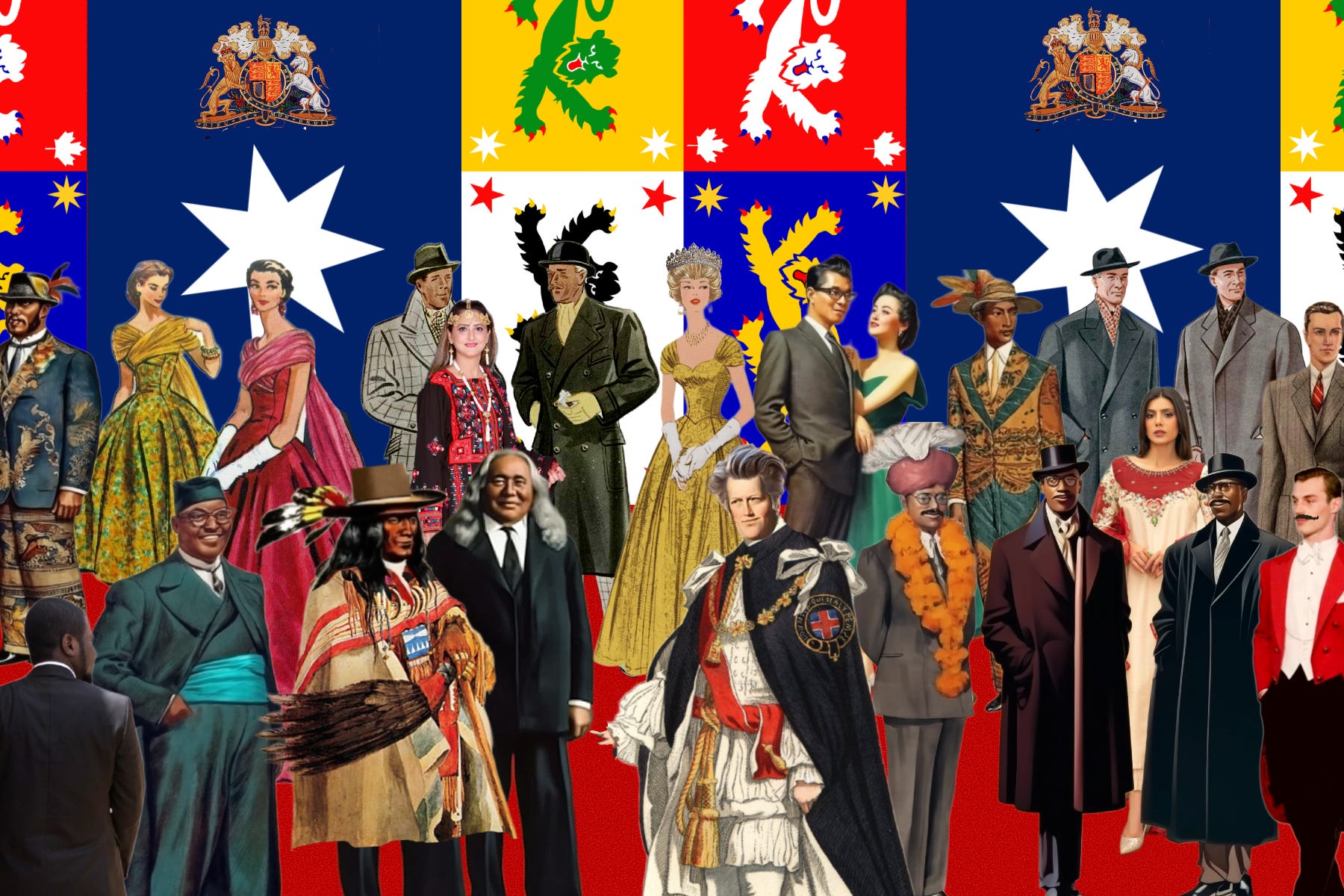
Meeting of the whole Commonwealth. Indigenous cultures prosper and thrive, but in cultures within the Commonwealth where bad things happen such as child marriage, FGM, sharia law and modern slavery, we can use our influence to ensure that these are outlawed, the way we outlawed sati (widow burning in India) and the transatlantic slave trade. Freedom of cultural expression will be integral to keeping all peoples within the Commonwealth on our side, but it is the Anglosphere’s job to ensure that all harmful cultural practices within the Commonwealth are ended as a humanitarian duty to end suffering. The model of just chucking aid money at places like Africa has not worked. In fact, surprisingly, it’s actually made Africa poorer. Clearly, the better way is to strengthen Commonwealth bonds and take a more hands on approach to aid, helping everyone in the world create safe, prosperous, free, high trust societies based on our own successful model, whilst enriching ourselves through free enterprise in these regions in order to incentivise investment and sustain the operation for longer.
Britain should also be a world power in animal welfare, not just for humane meat production, but seeking to end animal cruelty globally the way we proactively ended slavery.
We should take a more active approach in global conservation of threatened species eg. rhinos, lions, gorillas, pangolins, Amur leopards, pandas, whales, polar bears, elephants, orangutans, sea turtles, chimpanzees, river dolphins etc. as well as leading scientific research into reviving the recently extinct species such as the dodo, the Caspian tiger, the great auk, the Northern white rhinoceros, Western black rhinoceros etc.
We can aid and assist nations with the resources they need to protect their most precious species and foster a culture of stewardship, perhaps in exchange for things like cheaper tourist visas for Westerners looking to go on safari holidays. If you have some of the most impressive wildlife in the world, defend it, and show it off for the world to see.
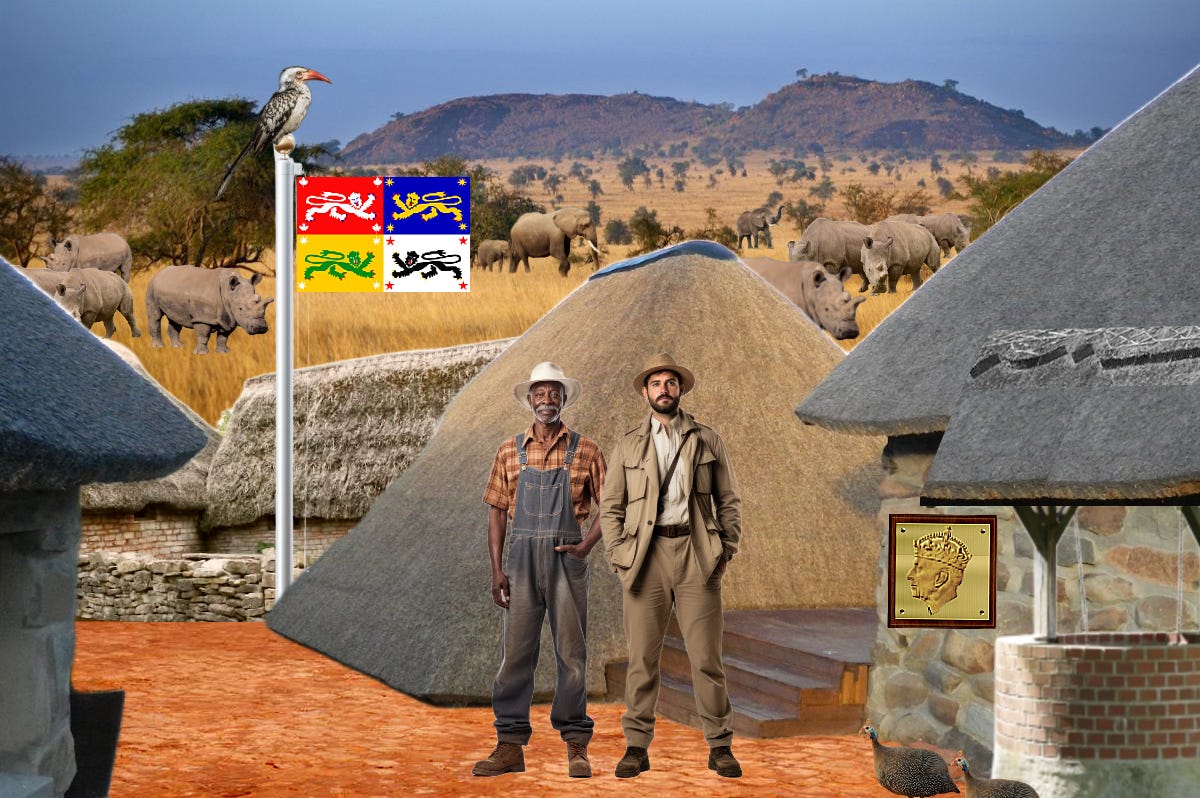
CANZUK wildlife ranger team in an African Commonwealth country helping with rhino conservation. So many rhinoceroses you can’t move for rhinoceroses.
Unlike a more traditional, heavy-handed imperialism, this would be done consensually through skilled diplomacy rather than brute force, except when necessary to crush terrorist insurgents who threaten the native populations (eg. Boko Haram) In return they would allow CANZUK owned companies access to resources.
This form of mutually beneficial foreign aid (AKA capitalist free trade) makes investing in these parts of the world more profitable and thus more sustainable longer term than just handing away state sponsored foreign aid as we do now, which largely ends up being pocketed by the corrupt kleptocrats who unfortunately lead these countries anyway and not helping those who really need it. This is why you see African dictators with Rolex watches and private jets whilst their people can’t afford food.
Some have mooted reparations for colonialism but I strongly disagree. Not only is it practically and politically impossible to expect the British taxpayer to front the bill for these, but there is also no dignity in ex colonies living off of such handouts. Not being financially dependent on Britain builds resilience and independence. If they want our money, we can give it in exchange for goods and services.
I also think that we should not be punished for the actions of our ancestors and that actually the progressive encouragement of guilt and shame of our history is hugely destructive and is holding us back. Slavery actually still exists within Africa itself. Unfortunately, we cannot do anything to end the oppression and suffering of people long since dead centuries hence, but we can proactively end the suffering and indignity of people in the here and now, and only a militarily and economically strong Anglosphere willing to crush the tyrants, the terrorists, and all other such enemies of freedom and prosperity can do it.
This fair, reciprocal form of foreign aid is in my view the best way of eradicating poverty in the third world and providing all citizens with a better quality of life.
Key to the Commonwealth should be liberty and prosperity for all citizens regardless of race, although part of the deal should be a renewed insistence upon the commitment to unified Anglo-Commonwealth values- better adoption of the British legal system, fostering a high trust society and creating a sense of purpose and societal expectations from a young age so that these nations have democracy, stability and strong foundations able to withstand whatever crises they might face.
Emphasis would be put on heritage and respecting your own cultural festivities, art and architecture whilst operating within a stronger and more stable Anglo political framework. The benefits of this for us are establishing global trade networks, increasing our wealth and influence, whilst also meaning that the people of these nations do not need to leave their home countries in want of a better life.
I understand why many to help such people by letting them settle in Britain itself, but look at the size of our island and its population density- this is not practically or politically sustainable. This is not the way to do it. If you want global welfare to be Britain’s moral responsibility then you have to accept that it will have to be done in a similar vein to how it was in the Victorian era, where British missionaries went out to build churches and hospitals and the such.
This is entirely doable without the same sort of brutality as was often the case during the Empire, but it requires skilled and artful diplomacy and strong coordination between local authorities and CANZUK aid organisations.
This pragmatic compromise can serve everybody. Those who believe in global welfare get the satisfaction of going out to help others and making a meaningful difference. Those who don’t want large waves of migration into Britain are assured that that won’t happen. Those who feel like they have to leave their home for a better quality of life no longer have to. I suspect in many cases with regards to mass migration there is a homesickness, and that many would really rather be where they were born and raised were it not in such poor conditions.
What I describe is similar in principle to the Chinese government’s Belt and Road initiative, but in practice it would be more benevolent, not screwing these countries over by turning them into debt traps.
Here I imagine it not just as a marriage of economic convenience, but a cultural movement that celebrates our shared history and our shared future. The flags I imagine are inspired by our heritage, using symbols such as the lion, the maple leaf, and the stars as well as the national colours of these nations- red and white for Canada, yellow and green for Australia and black and white for New Zealand.
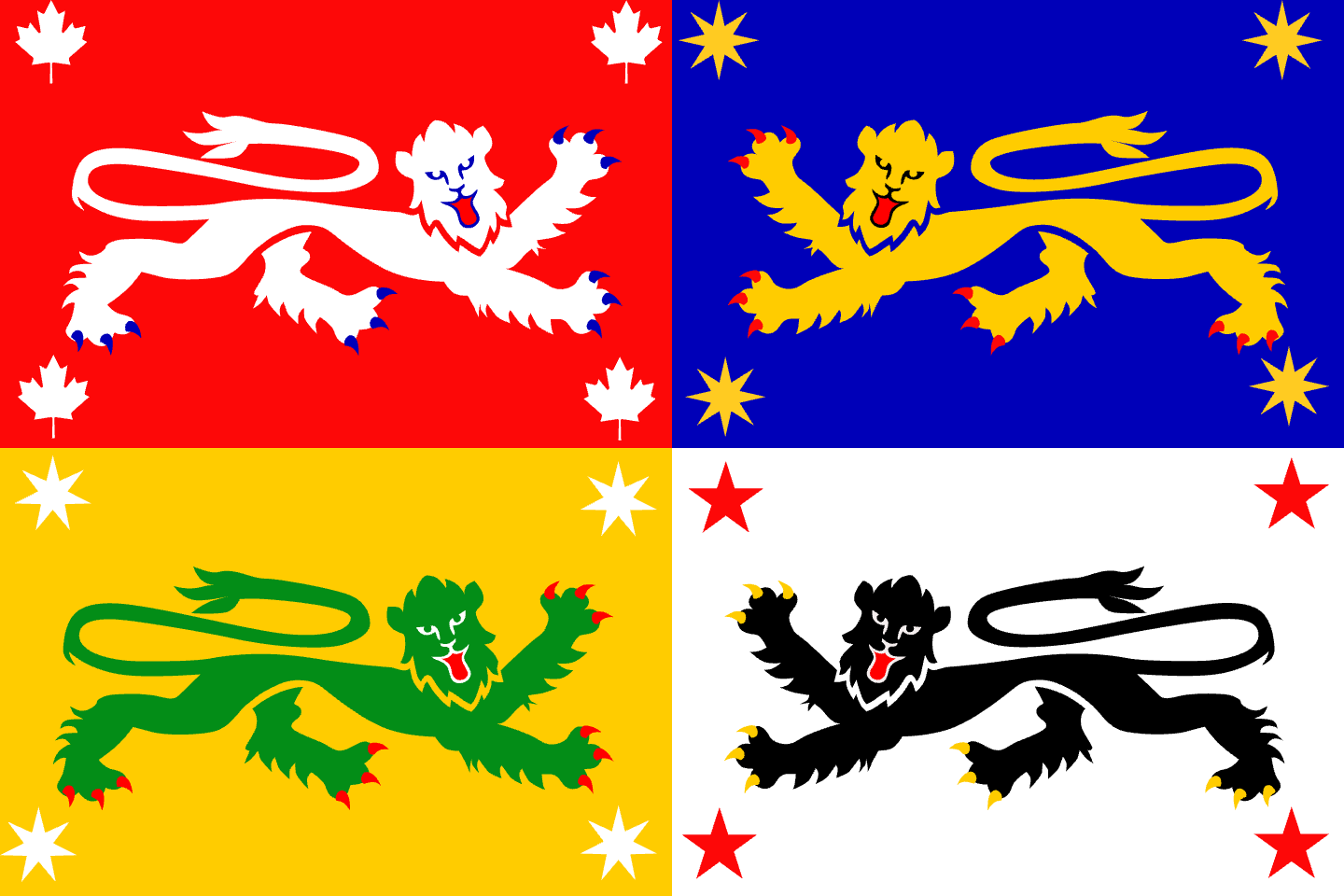
The flag of CANZUK/The Anglosphere Commonwealth contains the traditional heraldry of the English lion, rooting it in a sense of ancient heritage and Medieval pageantry, whilst including the symbols of the four CANZUK nations. The concept flags for CANZUK so far tend to just mush together all the flags of the CANZUK nations and it really just looks messy. In my view it is better to design a new flag from scratch, something like this- fun, bright and optimistic.
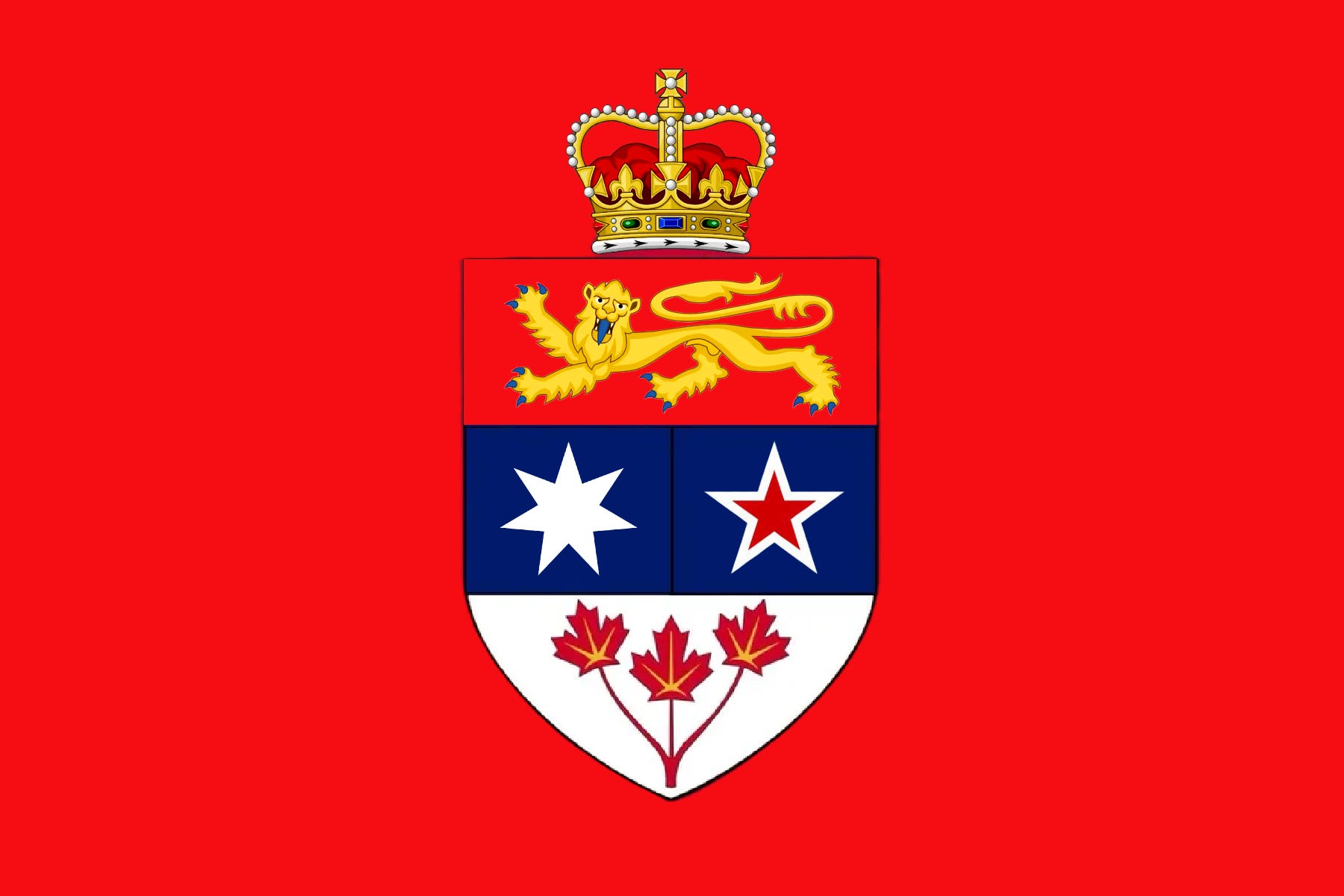
Another Commonwealth flag design based off of the Canadian Red Ensign.
This is how I would blend traditional heraldic heritage aesthetics with a futuristic approach to bolstering the global hard and soft power of the Anglo nations in a way that is fair, not as repressive as traditional imperialism, although I still regard the British Empire as having been a largely benevolent force as far as Empires go.
The British Empire was not a monolithic force of oppression, but a complex system that shaped global trade, law and culture, with complex and nuanced consequences both positive and negative. I understand that there were undoubtedly appalling actions that took place under the Empire, but I agree with Niall Ferguson’s conclusion that overwhelmingly it was a force for good, one that facilitated capitalist free enterprise across the globe and spread the ideals of British liberty and common law, even if it often failed to live up to its own ideals.
We should stop talking down our own historic achievements as being evil. What we managed was incredibly impressive and we should have the same ambitions for wealth, excellence and prestige yet again. Why should we accept weakness and decline as our fate?
This would not be about imposing our will upon other nations (with the exception of wanting to end objectively barbaric practices like child marriage, female genital mutilation etc.) in so much as it would be seeing the potential economic value in what are now third world countries and solidifying those valuable diplomatic and economic partnerships to our mutual benefit.
Both the CANZUK nations and the poorer Commonwealth nations would enjoy greater wealth, with prosperous, safe, high trust societies with better healthcare, better access to education and cutting-edge infrastructure and beautiful towns and cit
This global project I propose is about mutual enrichment and pragmatic reciprocal humanitarianism- not about conquest for the sake of conquest, for the ambition to absolute dominion is like the one ring- it will corrupt the souls of man.
This would be a decentralised, mutually beneficial economic union that we would extend first invitation to ex-colonies/Commonwealth members and through which we would project soft power via our cultural exports.
I would also advise against doing things which would hasten collapse, eg. overextension of military capacity, deindustrialisation due to complacency over security of wealth, then ending up in debt and devaluing the currency (eg. America printing more dollars, 17th century Spain adulterating their silver with copper) which all causes the bubble to burst, as happened for Britain before back post WWI, when we ended up with a debt so high we only managed to pay it off in 2015, over a century after the war first began.
Become rich, powerful and influential- yes. Getting arrogant and complacent, thinking collapse won’t happen to you- no. Don’t make the same mistakes of the past.
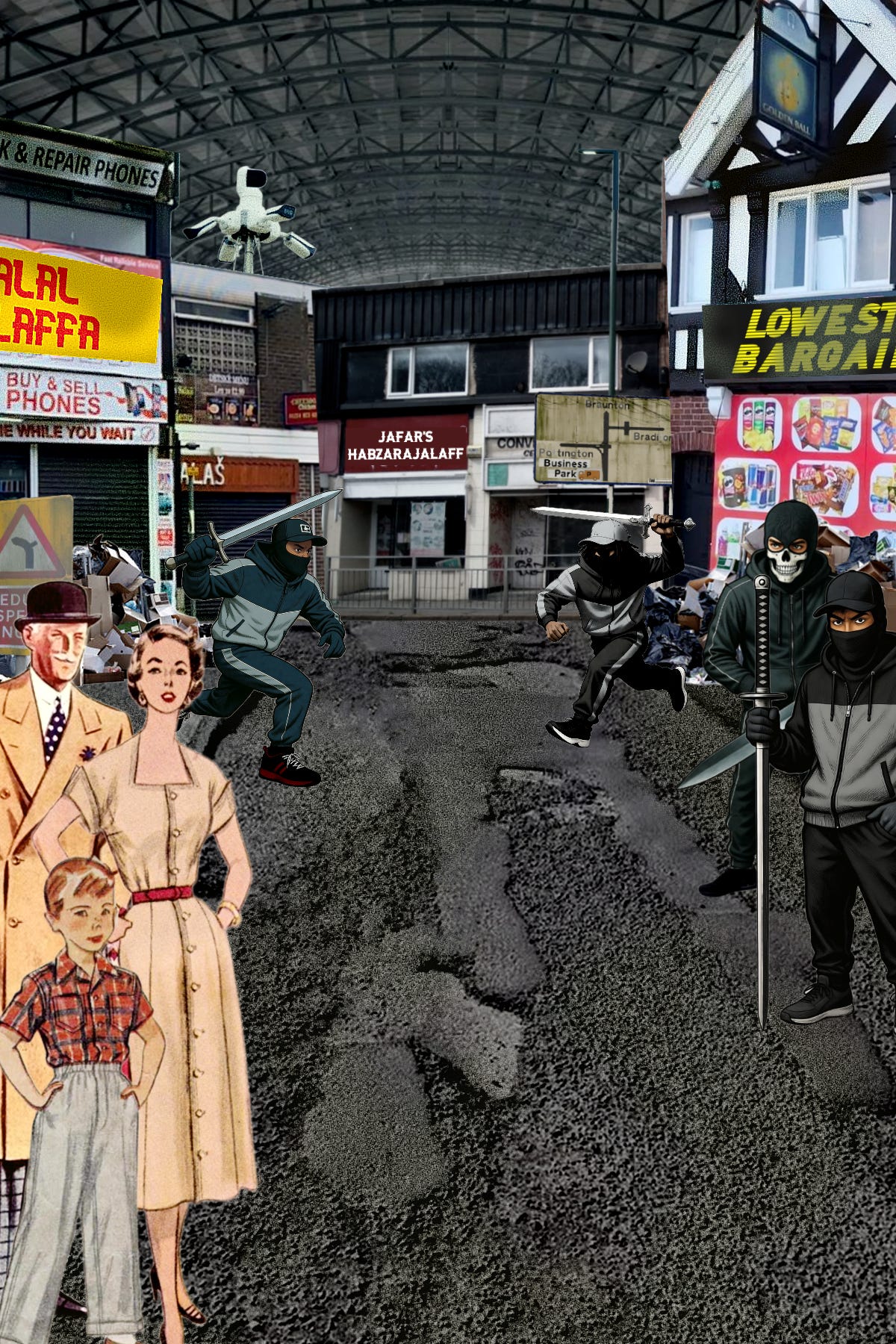
Britain’s decline is not terminal or inevitable. One day it will feel like a distant memory, and perhaps people in the future may even construct 2020s replica streets to have immersive historic experiences like we do with Victorian streets today (eg. Bygones, Flambards, York Castle) with creepy mannequins posed in Yookay tableaus and stuntmen hired to play roadmen gangsters and engage in daily ninja sword duels for the public’s entertainment.
It is very much reversible if we are able to sweep away the political class who’ve stood in the way of progress and prosperity for virtually my entire lifespan and transformed one of the richest, most powerful, high trust societies in the world into a grim, sluggish, dysfunctional backwater, a politically paralysed kakistocracy run by parasitic morons who are seemingly omnipresent in our private and economic affairs but useless at providing the most basic requirements of infrastructural maintenance.
England is the land ordained for greatness by God beyond all others. This is what the unofficial anthem of England, Jerusalem, describes- the landing of Jesus with Saint Joseph of Arimathea (a tin merchant) in Cornwall to extract its reserves of tin. The legend states that the gospel was received in Britain directly from Christ himself. Jesus also received spiritual guidance from the Celtic druids. Upon the death of Jesus, Saint Joseph delivers the blood of Christ kept in the Holy Grail to the Vale of Avalon (Glastonbury). Glastonbury thus became a site of Medieval pilgrimage and is said to be the burial place of King Arthur and Queen Guinevere. Whether this legend is true or not is not known. No tangible archaeological evidence for it exists. However, mythology is important in forging a national identity and narrative, as Alexander D’Albini explains-
“Culture is founded upon myths. This may be a surprising statement, as myth is seen as being synonymous with something which is untrue. But an alternative definition could say the myths of a culture are the foundation stories on which the rituals rites, customs and values are built upon. This mythos is expressed through the actions and worldview of the people.”
The lines about “those feet (Jesus’s) in ancient time walking upon England's mountains green” and the “Countenance Divine (the face of God) looking down upon our clouded hills” represent the mythic spiritual founding of Britain, with the instruction to build Jerusalem in England’s green and pleasant land (ie. a proclamation from God himself that Britain would be destined to build the greatest civilisation known to man, the closest thing imaginable to the Kingdom of heaven.)
If you believe this pre-Arthurian myth of the heavenly ordination of Britain by God 2000 years ago to be a foundational myth worth having, then you accept that not only is the recovery of Britain towards an Anglofuturist dream of beauty, brilliance, power, prosperity, peace, strength, cultural flourishing, invention, innovation and glory is not only possible, but inevitable, since it was proclaimed to be as such forever by divine majesty, and that though it may face its trials and tribulations and periods of good and bad, Great Britain shall always manage to remain great in the end.
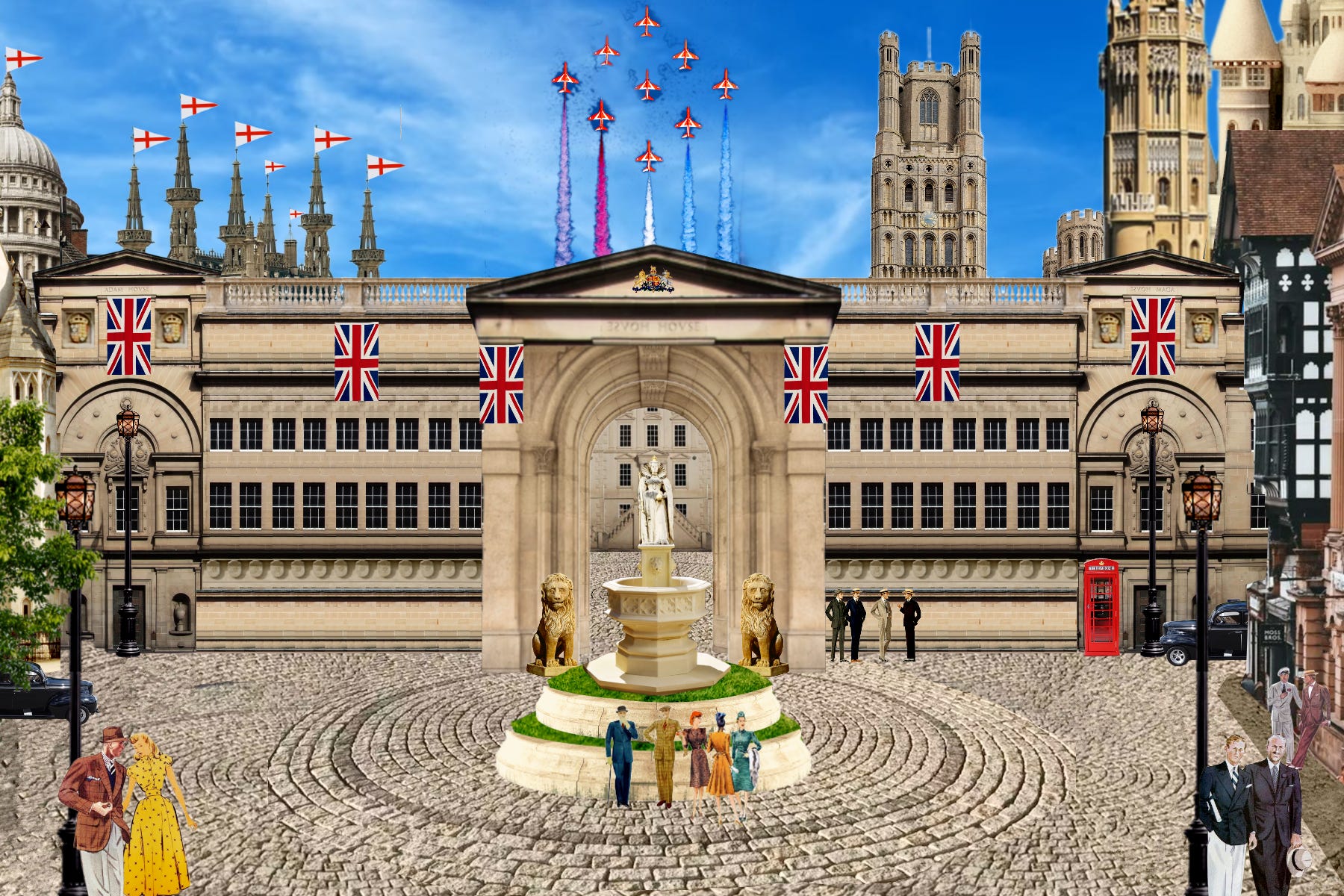
THE END/BEGINNING
Great article. Definitely resonates with me.
Though, I’m researching the history of AngloFuturism and I found Kunley didn’t come up with the term AngloFuturism. It was first mentioned in 2012 by a left wing commentator on Twitter. It was seen as an English version of Afrofuturism. So, it started as a literary and arts movement. Then Alice Earendel began using it in 2020. Then Aris and Kunley discovered picked up the same term a few years later.
Let’s connect. DM me.
You had me until the Labour waging "spiritual warfare", and then mentioning Conservative clubs as places of meeting but not working mens clubs or traditional labour clubs, or trade unions. Your view of Anglofuturism is clearly an aristocratic conservative one that doesn't include the industrial working class or our culture. That's fine but won't have much purchase beyond Substack and X. It also won't chime with the majority of self-described Anglofuturists who favour unbridled economic growth and YIMBYism (I'm not one of those - I'm pro-rural life and pro-industrial labour culture/gentle reindustrialisation eg renewables/nuclear, rearmament etc).
Interesting and thoughtful article nonetheless!