FIXING MUNICIPAL AESTHETIC DECLINE
Make Britain Beautiful Again

Here I imagine how heritage led regeneration will help to revitalise and re-energise Britain.
I scoured the web for a series of images of places in Britain that feel depressing and run down, and reimagined how they would look if they were rebuilt with the principles of traditional British architecture and street design in order to create beautiful places rooted in a sense of their local heritage.
In many cases it is not entirely the fault of business owners themselves for the streets looking the way they do. Either they acquired buildings that are unfixably ugly or in the past 15 years of financial hardship, they simply lack the money to renovate their shop fronts in anything more than cheap plastic, or to maintain a historic building, so none of this is intended as a slight on the owners, (although in many cases it is a slight on the architects and city planners)
I do understand why this type of architecture took off post WW2. Much British infrastructure had been destroyed by the Luftwaffe, and things needed to be rebuilt quickly and in huge quantities. Also because back then it looked futuristic. Post-war wanted to look towards a bright future of advanced technology, abundance, peace and plenty. However, despite these utopian promises, none of it has aged very well. Lack of ornament was seen as a necessity in the mid 20th century, but we sort of kept going through the motions of seeing beauty as frivolous and superfluous, and prioritising utility over form, in a way that we no longer need to.
I’m pleased to say that this is already going on, as this brilliant project here by Historic England demonstrates-
https://historicengland.org.uk/whats-new/news/heritage-regeneration-value-revealed/
Some really great examples. Decline is about more than just surface level aesthetics, and unfortunately, I don’t have the answers to addressing more than just its visual symptoms- eg. economic decline, de-industrialisation, increasing homelessness etc. If I did I would undertake a much deeper dive in how to fix all forms of decline. I’m not a policy expert so I won’t, but will leave this as a mood board for potential politicians and city planners to use for inspiration.
This is more just to show how things could be, that we don’t have to accept our towns and cities looking bland, ugly or run down, and to give people hope that we can live in a country which is prosperous and beautiful.
Lots of these photos came from the “Yookay Aesthetics” page, mostly because it is an easy place to find all the most extreme examples of municipal decline, and I didn’t want to be rifling through pages and pages of Google images of British towns.
Even though many associate the Yookay aesthetic exclusively with post Blair-Boriswave immigration, it is actually a uniquely British aesthetic, which in some ways existed pre mass migration era. A lot of the worst architecture we have definitely pre-dates multicultural Britain (eg. 1950s-90s). It is not so much that the immigrants caused the decline, but that they moved into areas already in the worst decline that Brits had decided to leave for that very reason, and that since then the decline just became increasingly rapid.
In fact, I’ve had many conversations with minorities who truly dislike the Yookay aesthetic and would like to see a return to British vernacular architecture that fosters a positive civic patriotism and a general improvement in mood. Everyone, regardless of skin colour or culture wants a safe, warm, beautiful place to live. This is a basic human need. Attractive destinations will also be much better for tourism.
I can’t think of a culture who’s vernacular architecture isn’t beautiful in its own unique way, but such architecture is adapted to the climactic needs of its environment. This is why regional vernacular architecture built with traditional methods tends to fare much better longer term than its generic modernist styles that get build all over the world. It’s why Dubai would be much nicer, and much cheaper to air condition if it were built in the UAE’s vernacular style, rather than having glass skyscrapers in the desert (a phenomenally stupid idea)
British vernacular architecture is thus more sustainable, since it is built specifically to withstand a British climate, and is timeless. It will not only physically last longer, but it will never go out of fashion. People will be able to live in it and enjoy it for centuries.
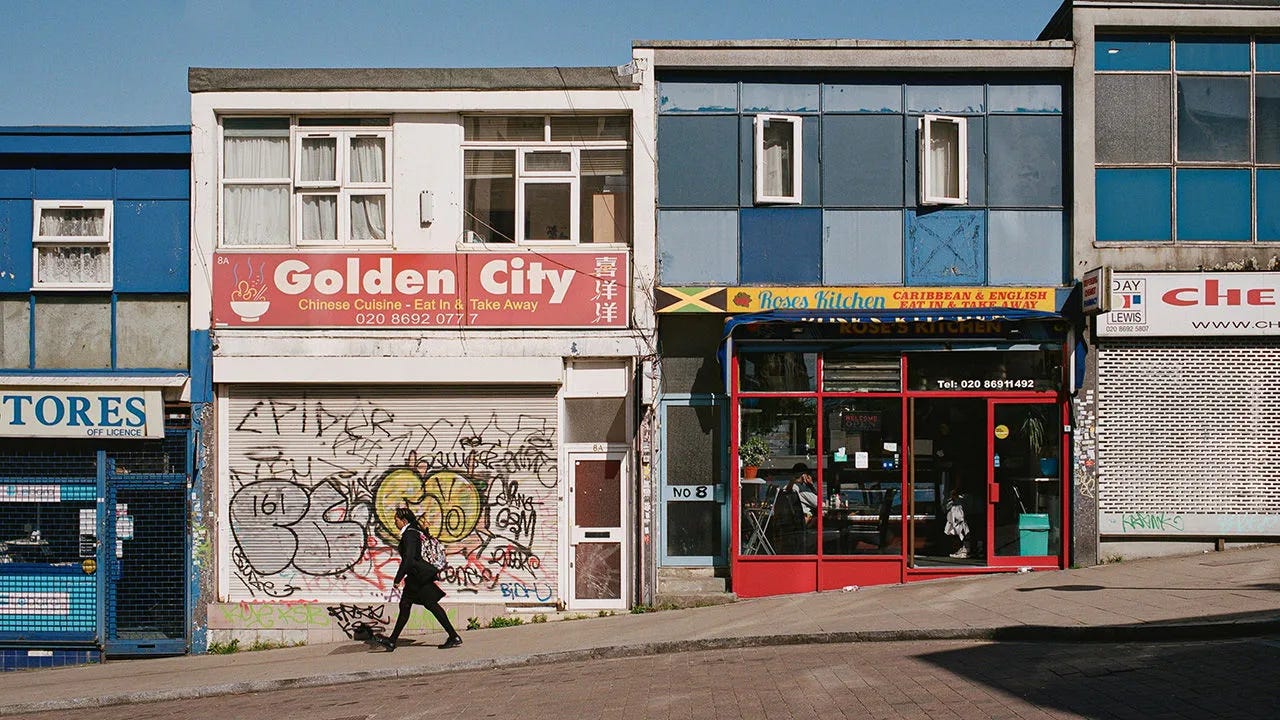
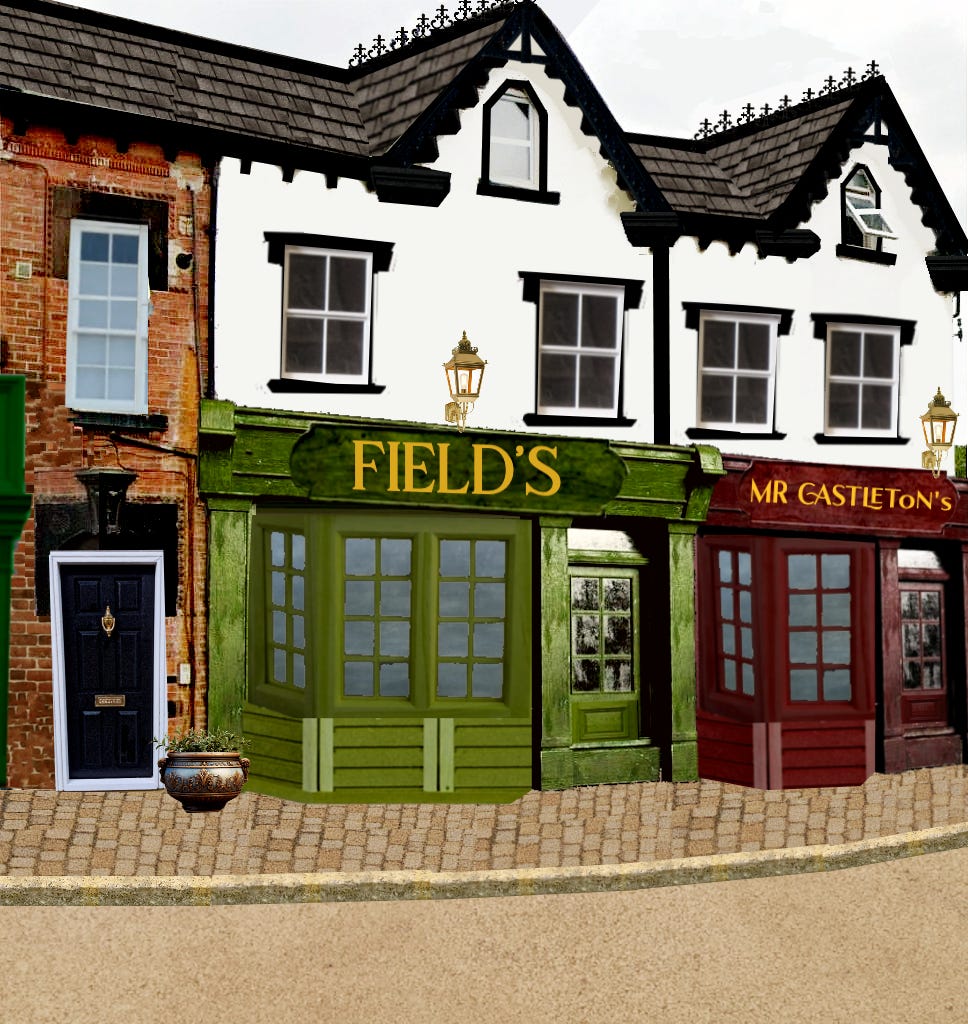
Here, some ugly looking 1960s boxes are replaced with a variety of traditionally British building designs- half timbered Tudor buildings, warm coloured brick and flint knapped buildings. The fact that there are only two floors to these buildings is a waste of space, and so I have extended the buildings upwards to allow for more living space above the shops. Wooden shop fronts create a sense of warmth and sophistication, whilst bay windows add a sense of depth and variety.
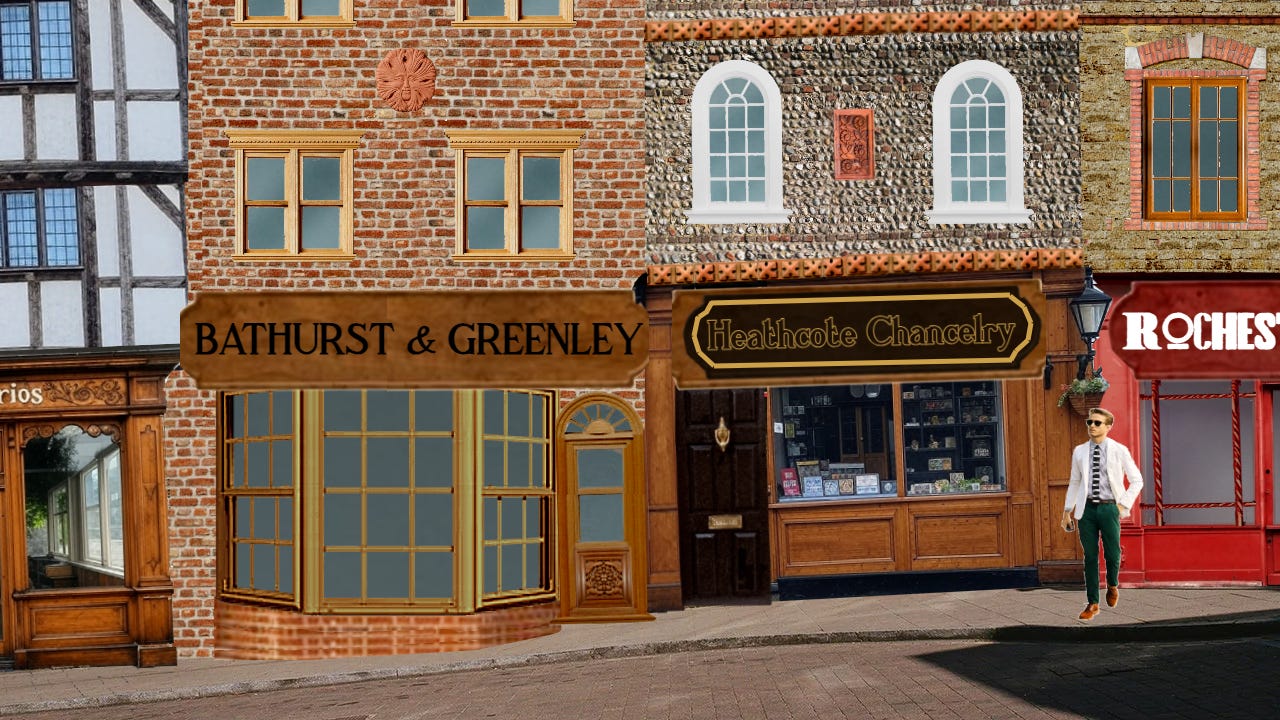
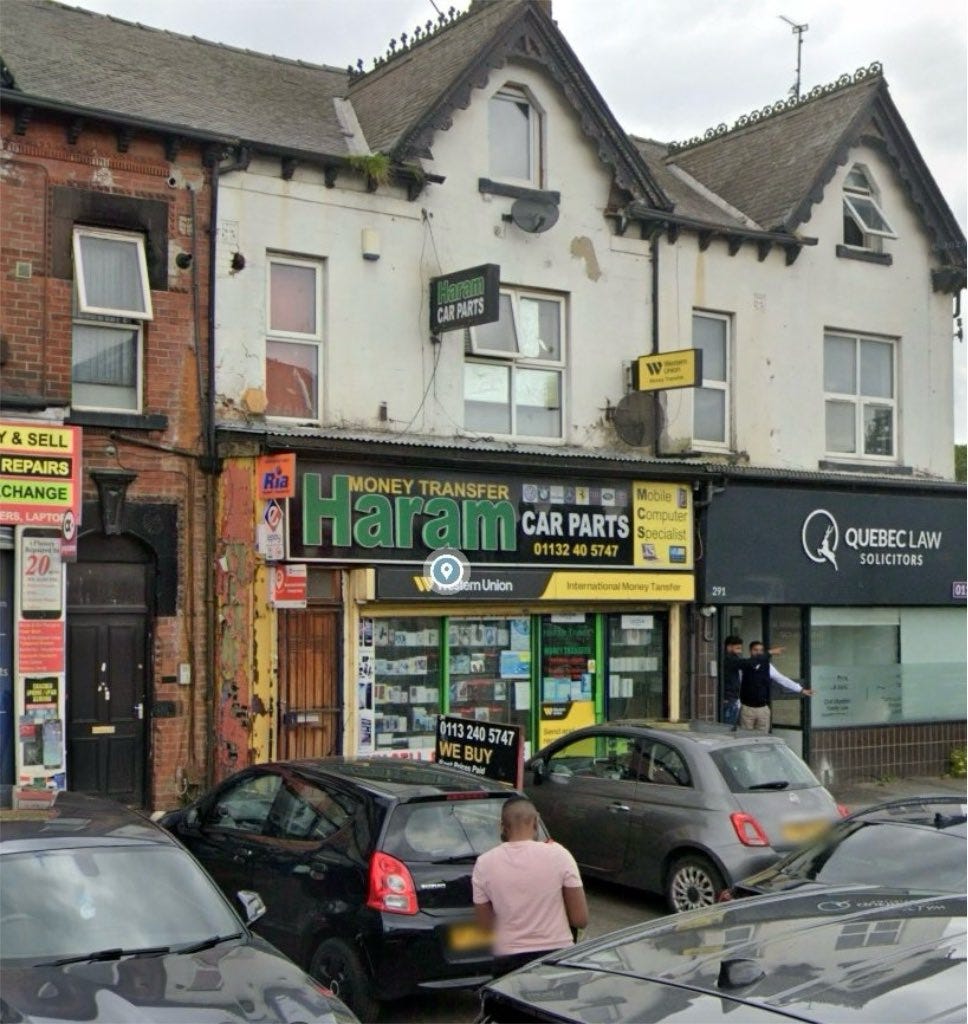
For these buildings in (I think Bradford) all that’s really been done is upgrading the cheap, plastic shop fronts, replacing the windows and generally tidying up the flaking paintwork. The road has also been resurfaced and the pavement has been cobbled.
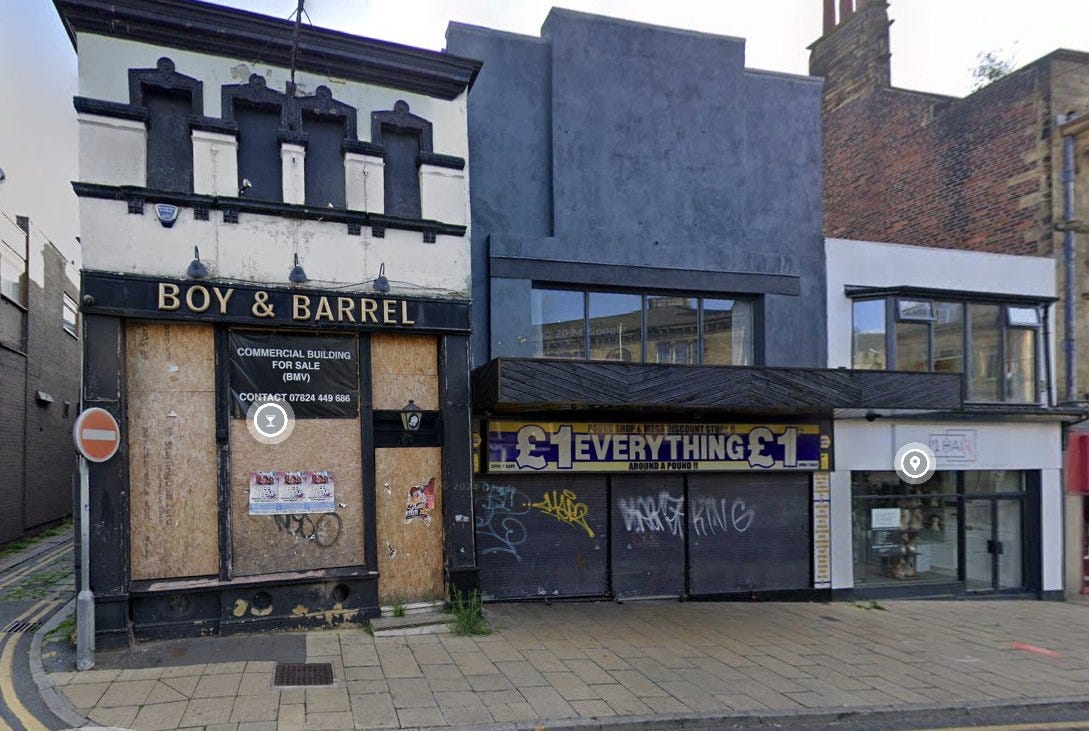
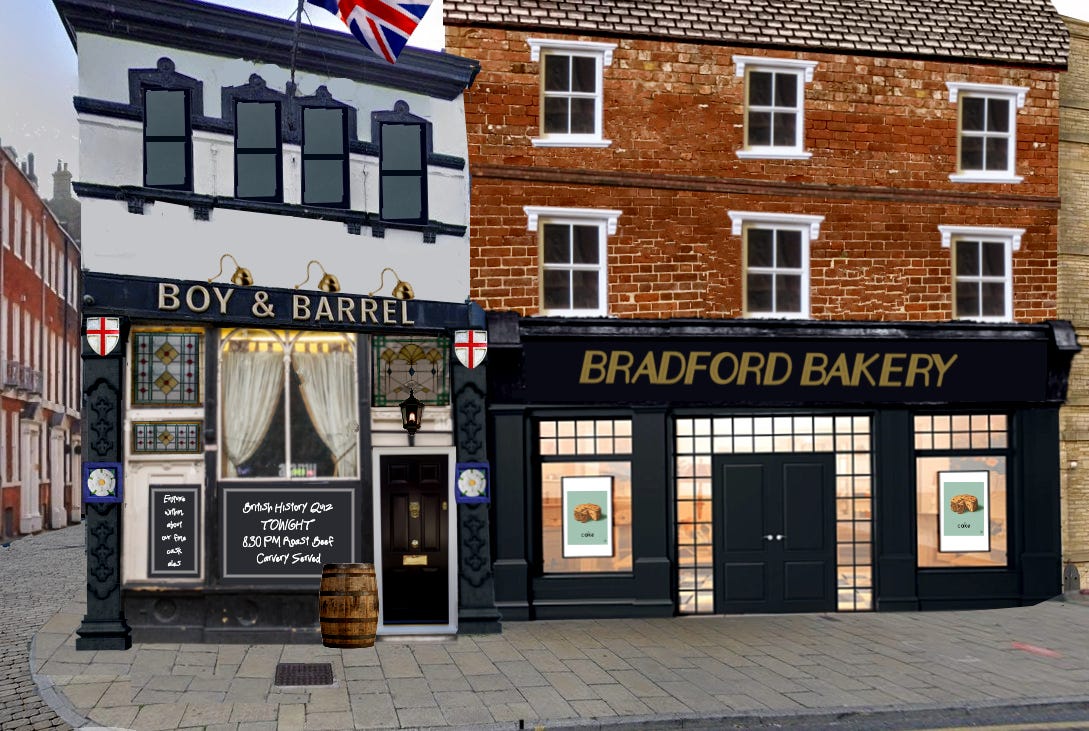
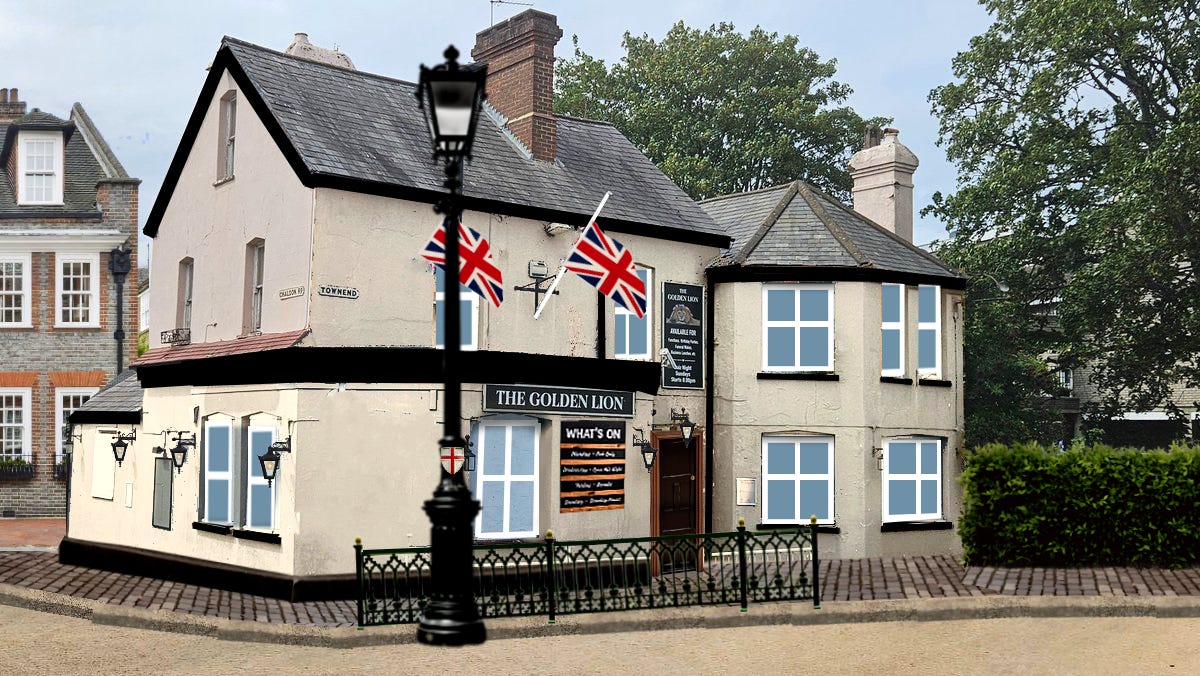
This definitely is Bradford because I saw it labelled as such- boarded up pubs, ugly modernist buildings, weeds growing through the pavement, graffiti, street scars- awful. Here, the pub has been lovingly restored to its former glory and a much grander business premises has been added next door. The street scars have been fixed and the cobbles replaced.
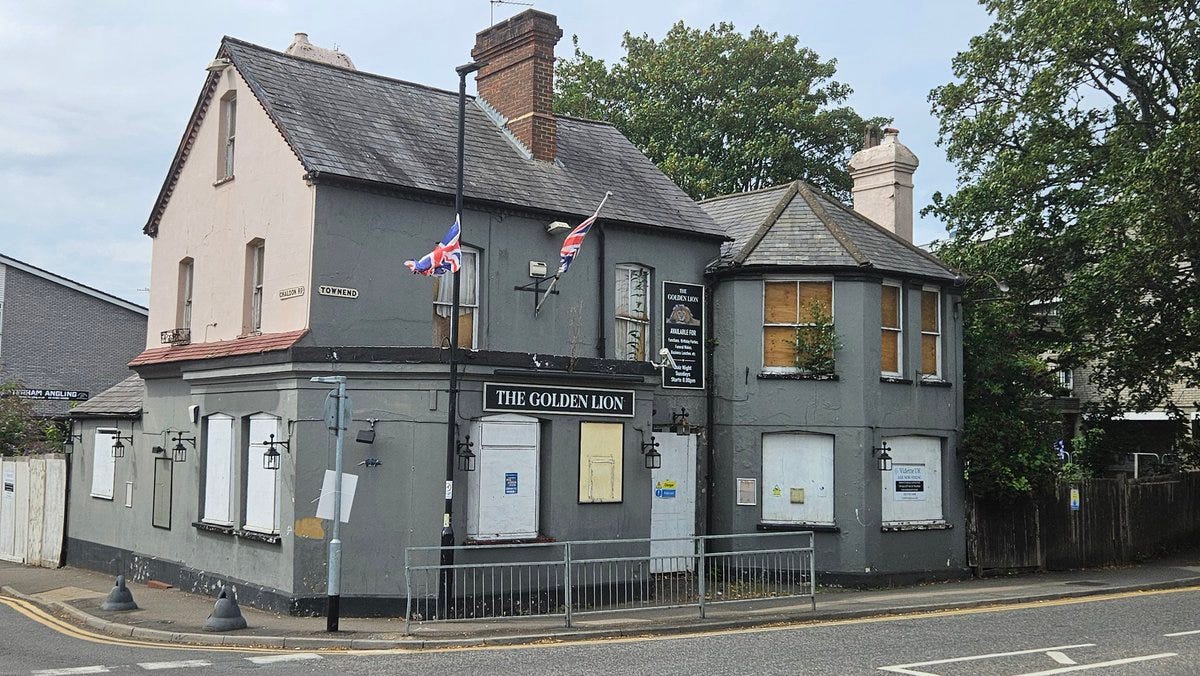
Run down old pub boarded up. Location unknown.
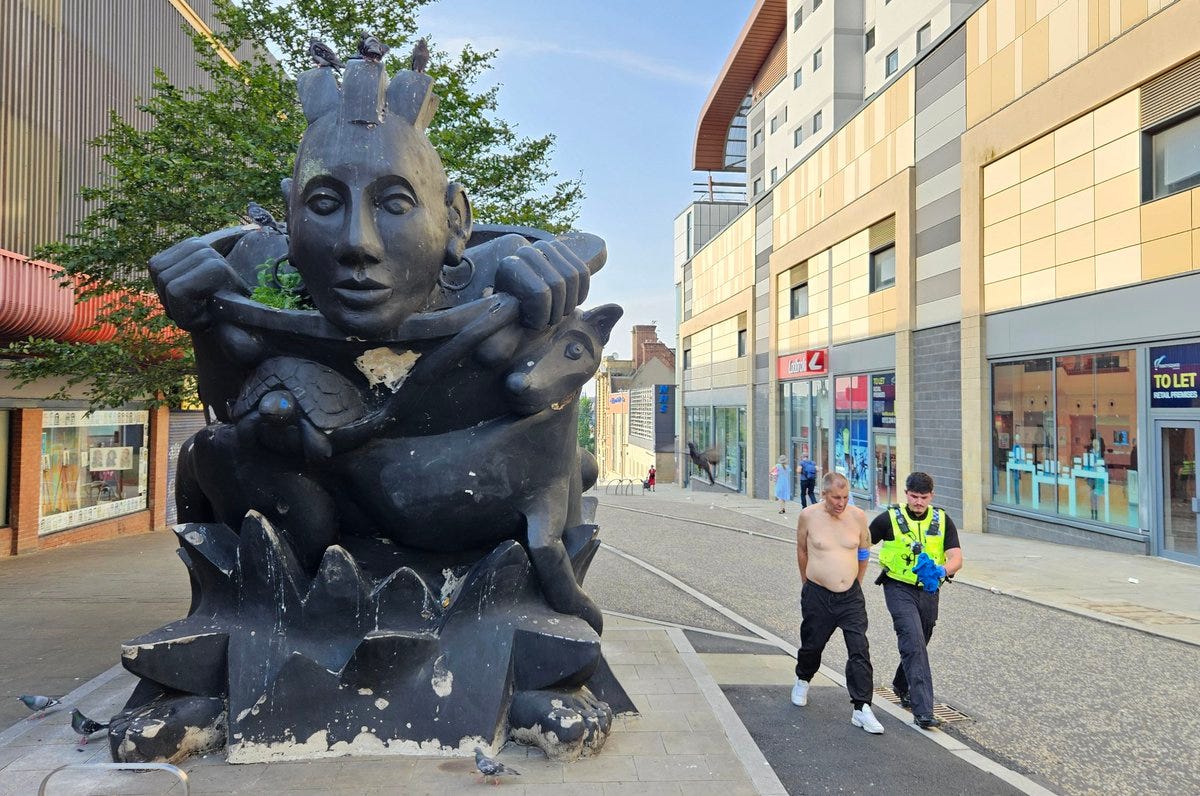
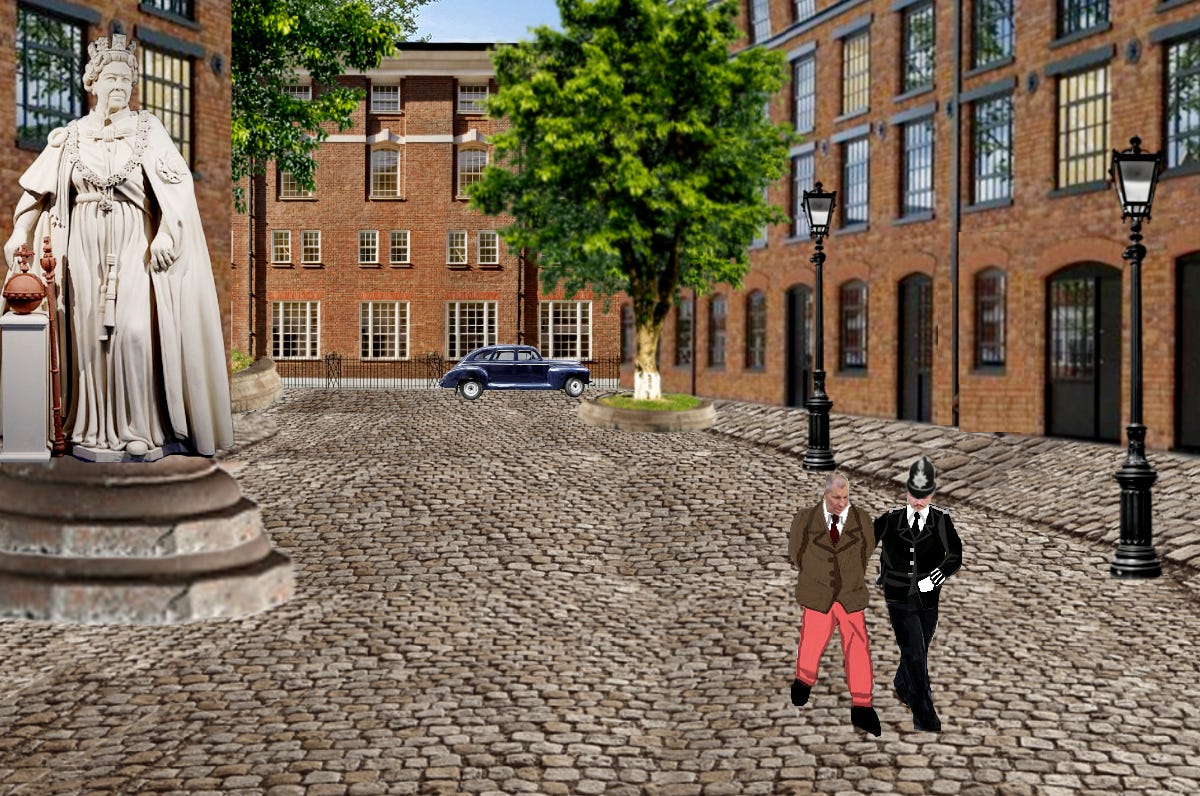
Fixed scene in Gateshead. Weird, ugly statue taken down. Modernist tower blocks replaced with Victorian industrial inspired warehouse buildings.
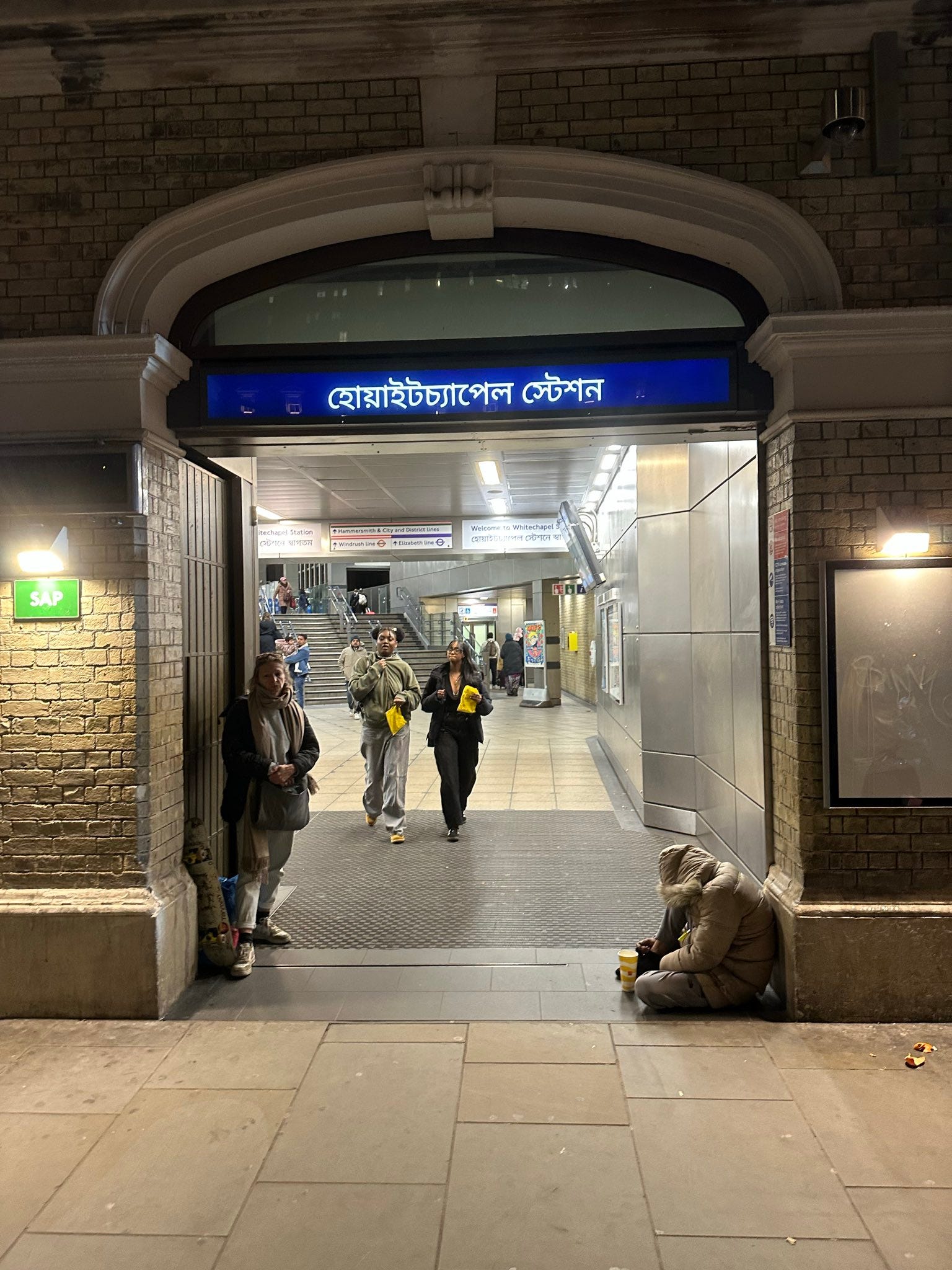
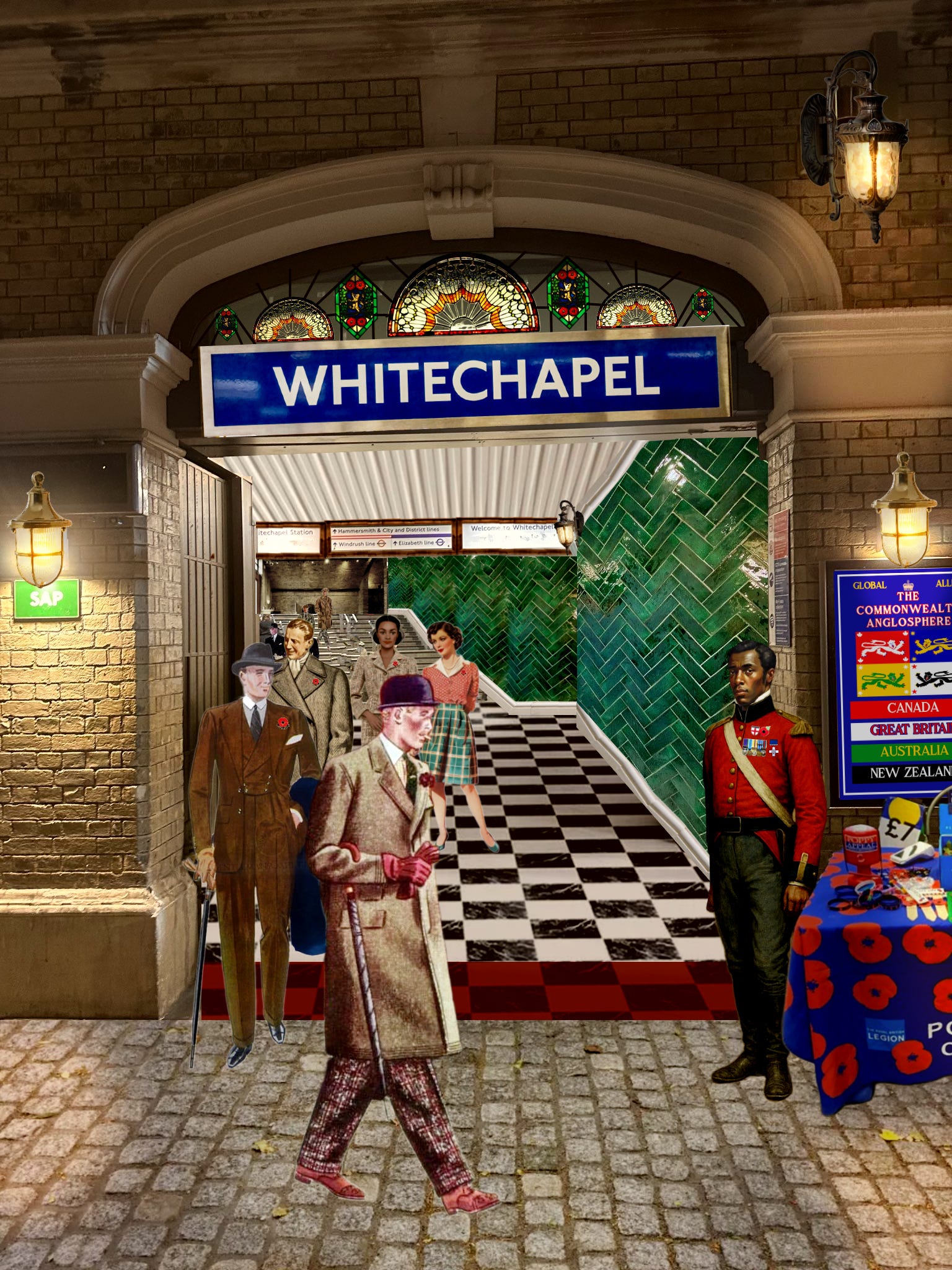
Whitechapel, London’s East End. Architecturally nice station, but badly decorated. Even transitional spaces should be beautiful too. I also think it is a bad idea to have any part of the sign written in any other language than English, with the exception of indigenous Celtic languages eg. in Wales, Scotland, Ireland and Cornwall. This is because I do not want to emphasise cultural difference over civic national unity, and to foster integration from immigrant communities in order to avoid civil unrest amidst a backdrop of growing anti immigration sentiment. I think most people in the world who come here can also read a basic enough degree of English to manage knowing where their station is.
The homeless man will, I hope in future have somewhere to stay which is safe, clean and beautiful. Hopefully our economic situation would pick up to such a degree where homelessness would be very low indeed, if not non existent.
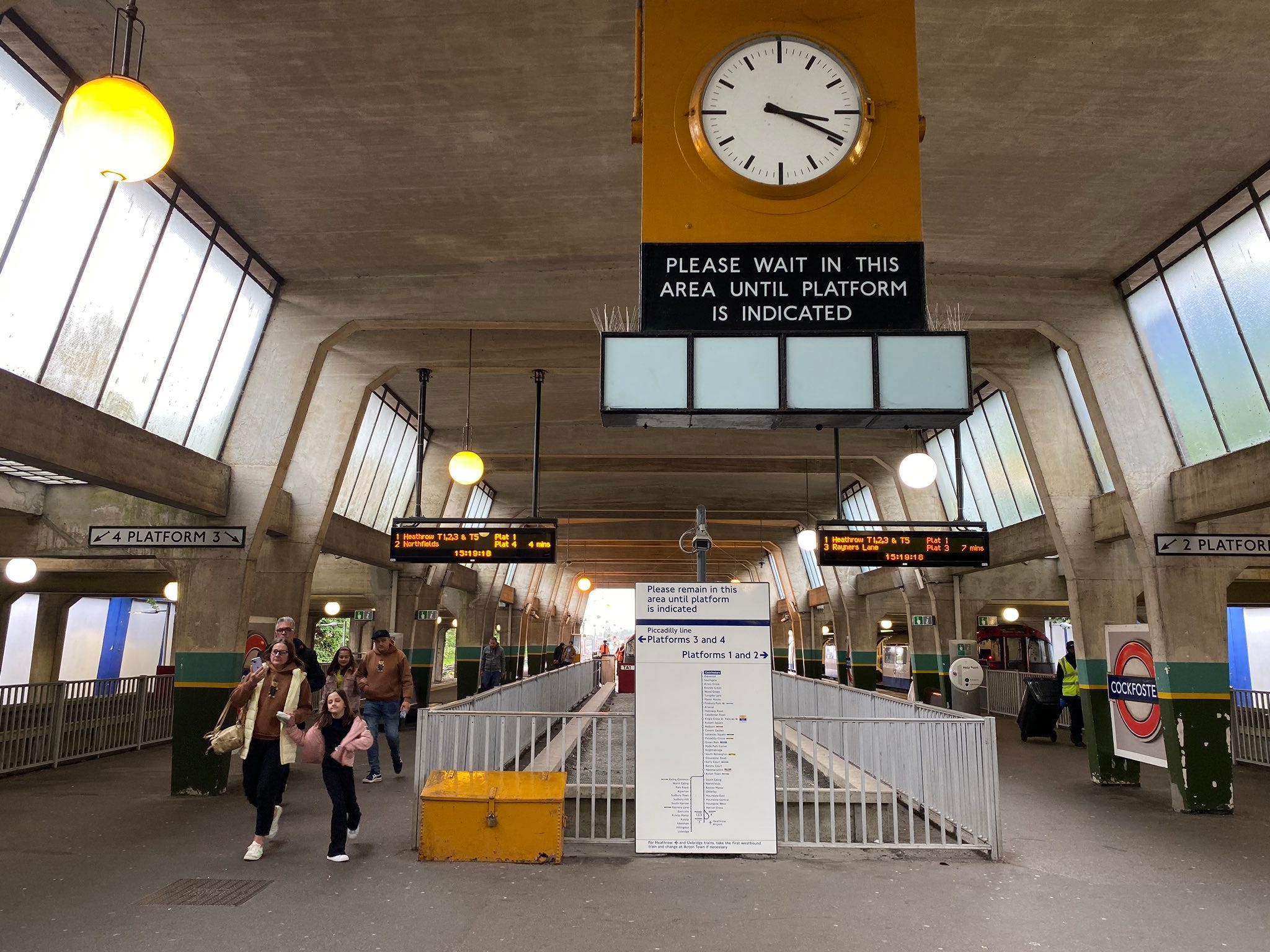
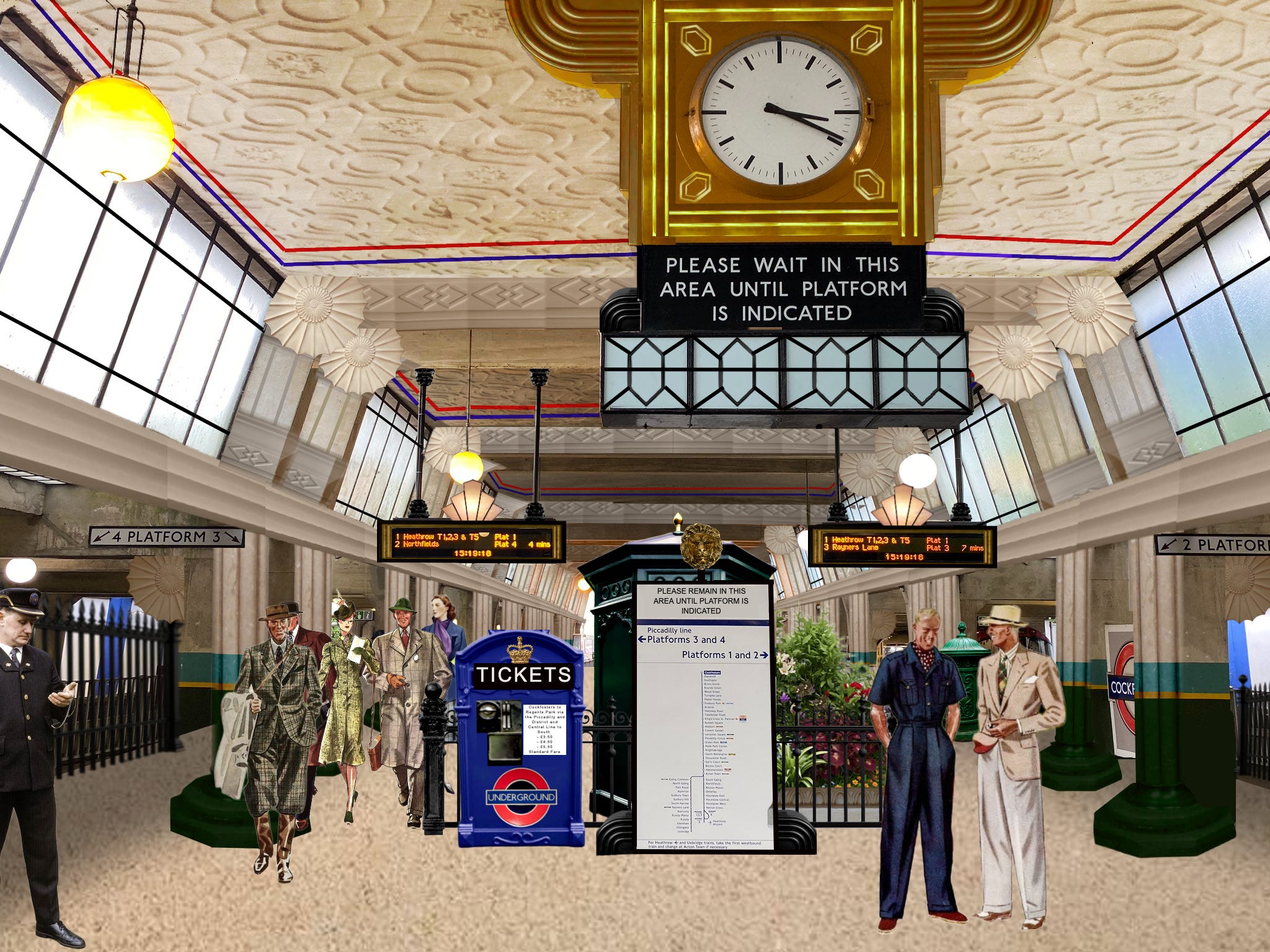
Cockfosters Station, London. Maybe not worth keeping and instead demolishing, but with certain additions of decorative detail, this goes from being a fairly dull brutalist construction to a rather stylish and interesting art deco modernist station.
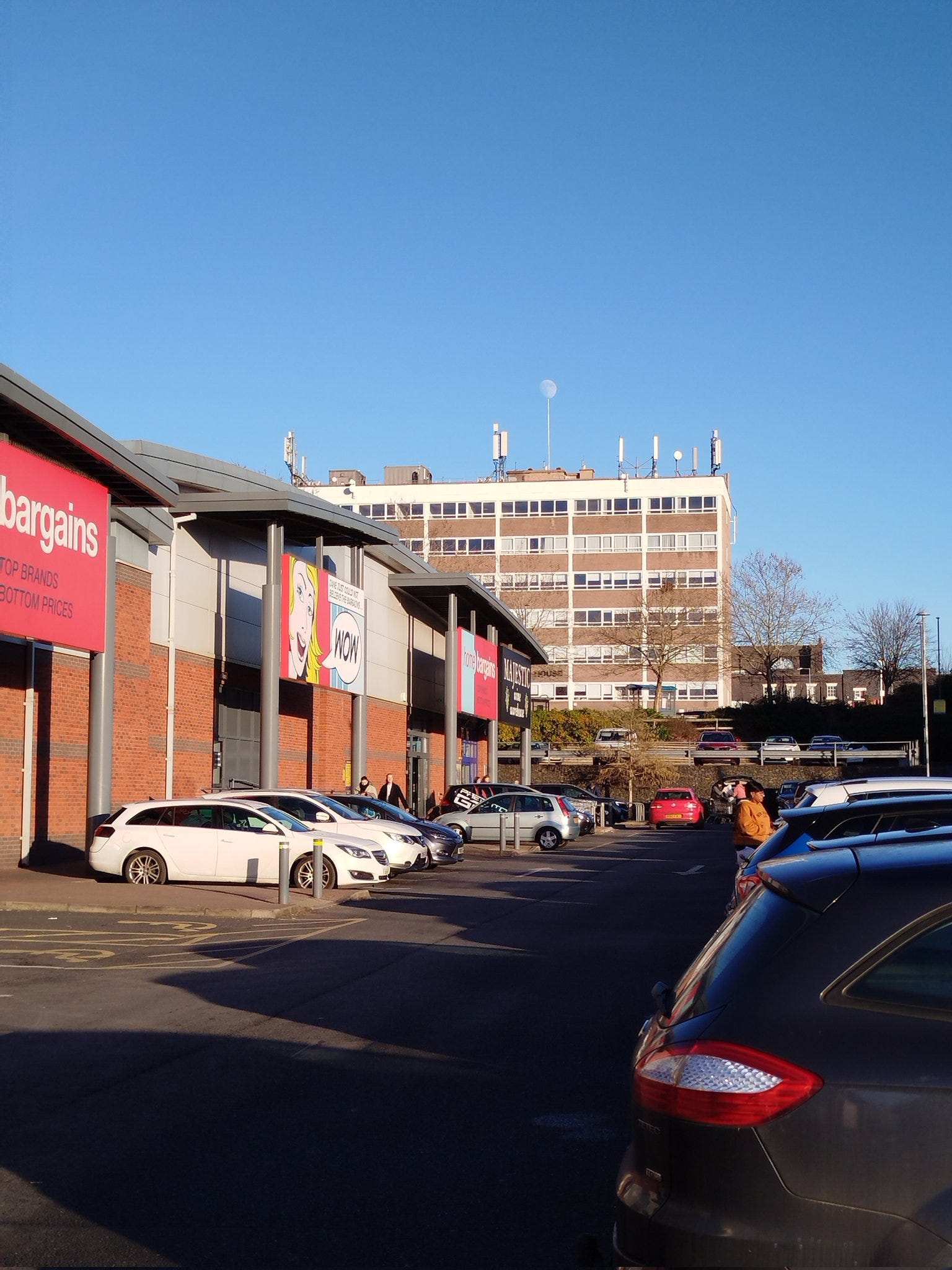
Retail parks like this are very common in Britain but they are incredibly soulless and depressing places. With a little effort and attention to detail, they could be beautiful places.
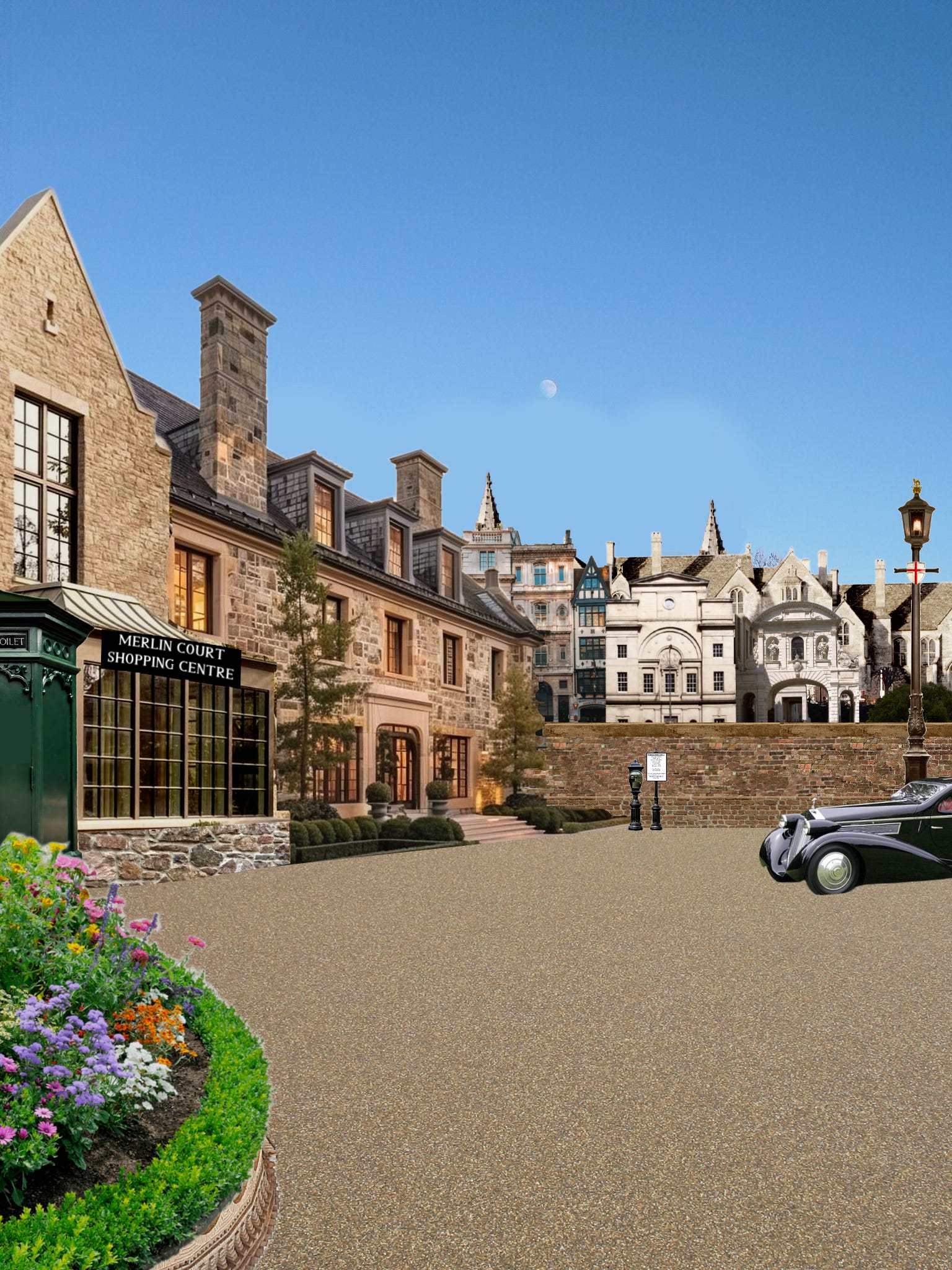
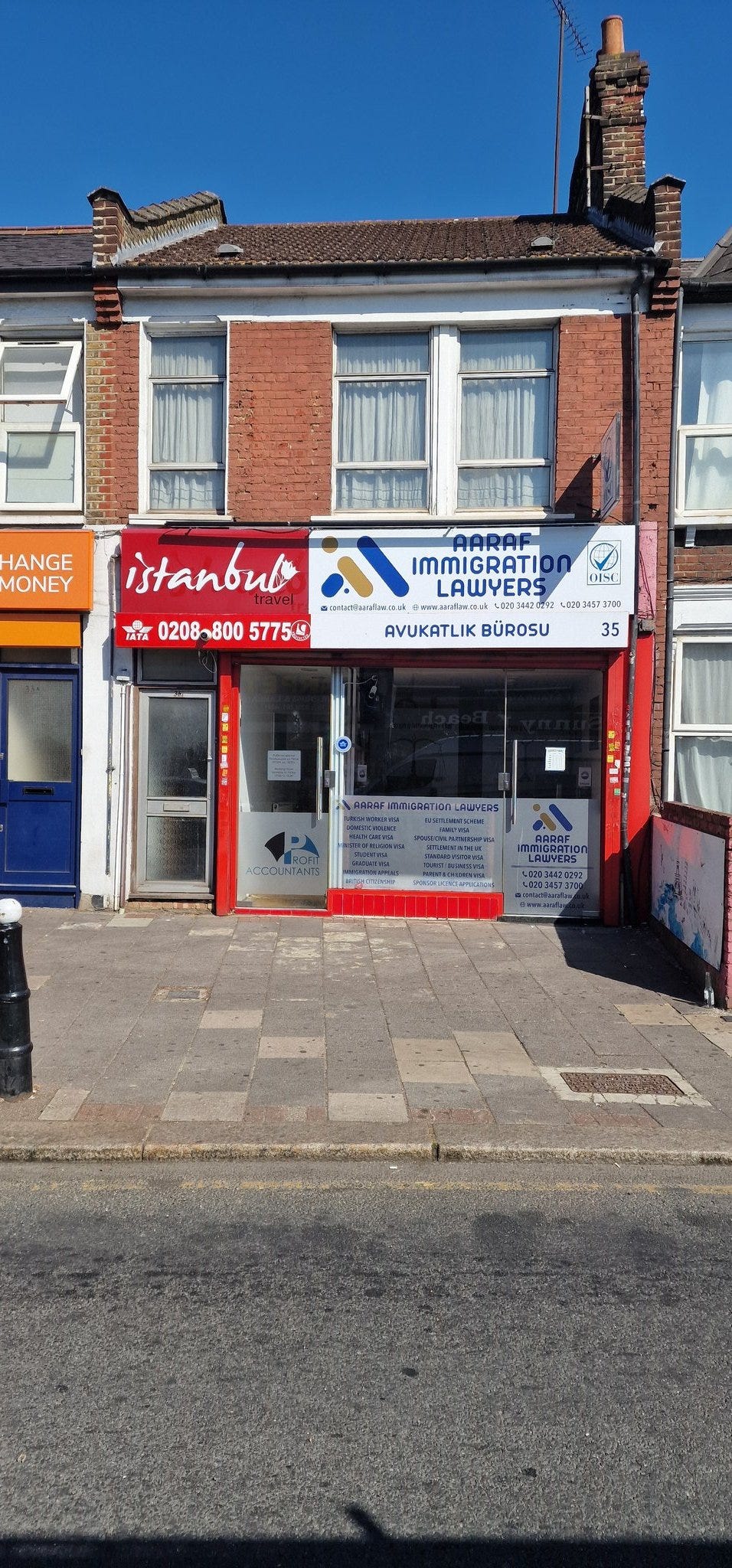
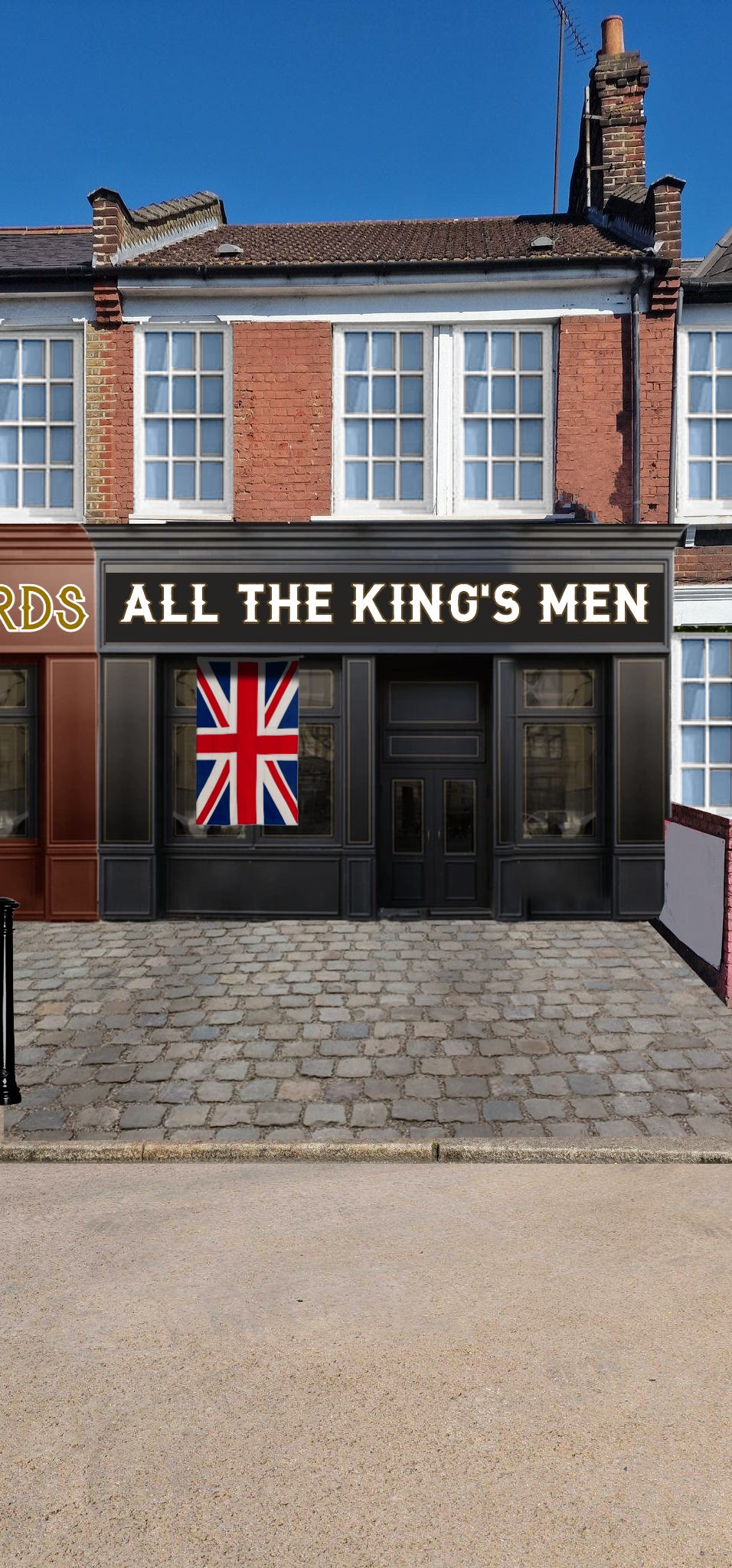
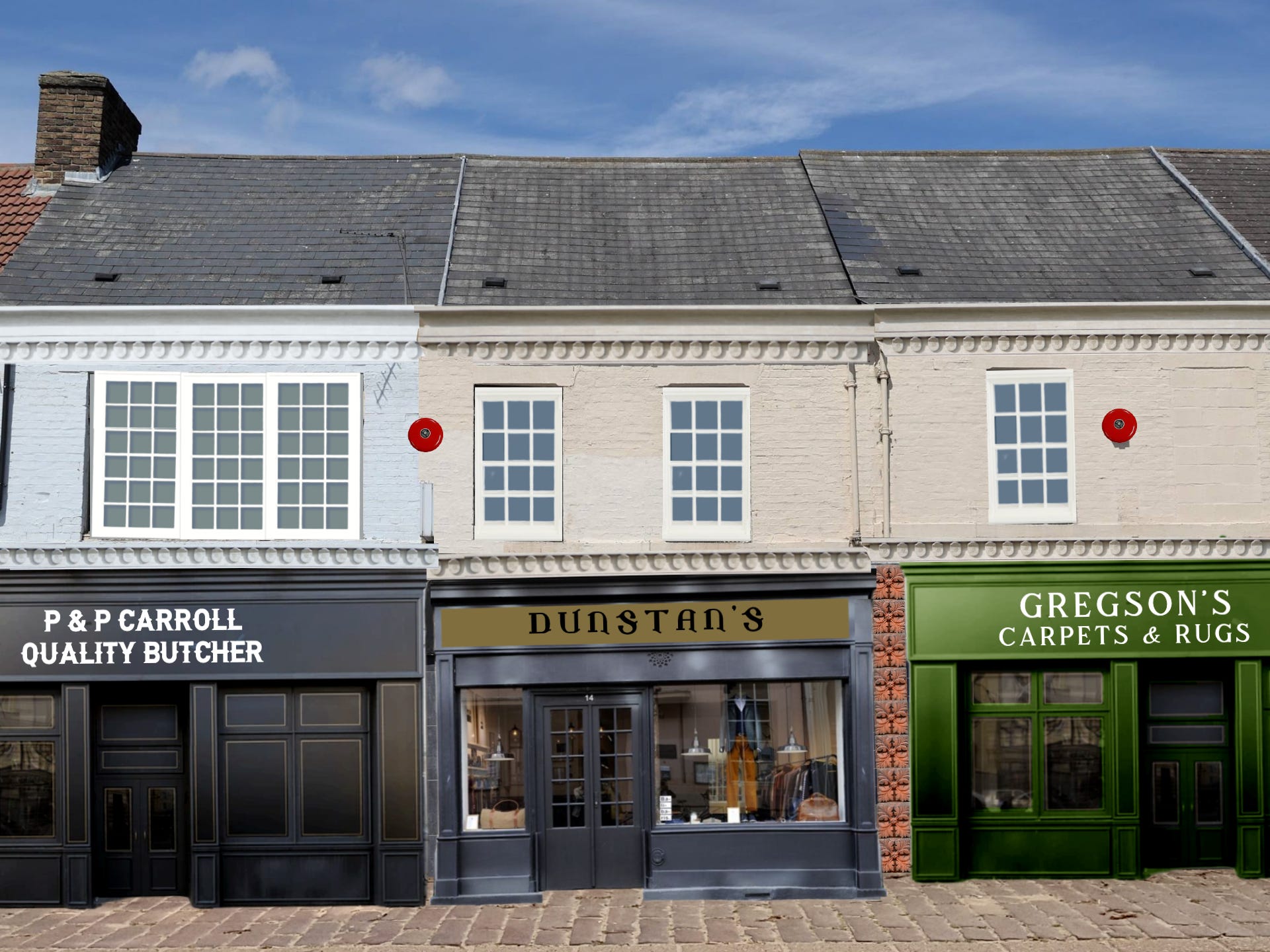
Most of the time the buildings can remain much as they were with only some minor adjustments- better windows and better quality shop fronts.
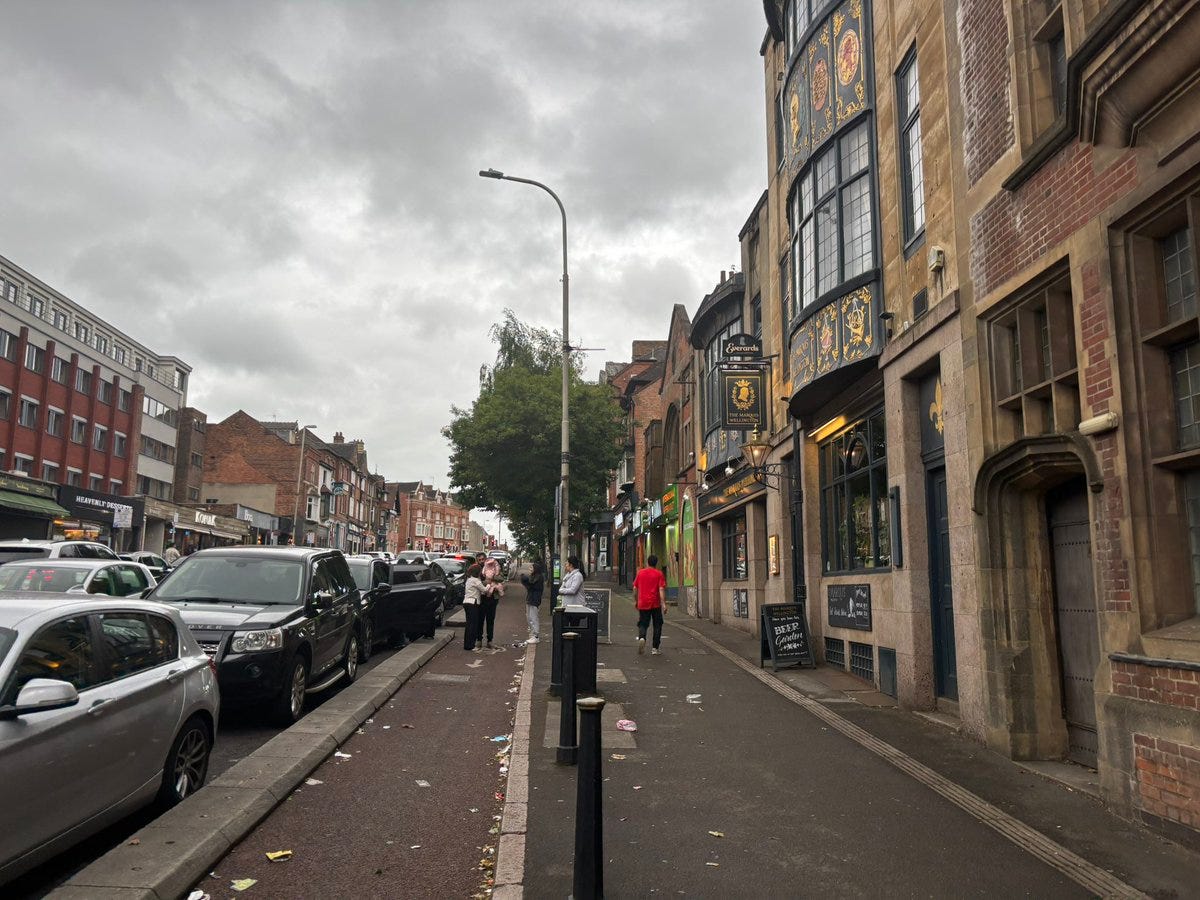
Fixing a somewhat grubby and overcrowded street in Leicester. Minimal changes actually need to be made to the buildings on the right hand side, which are quite nice as they are. There is a lot of very nice architecture that doesn’t shine to its full potential as a result of other factors that make the rest of the area worse, ie. run down pavements, litter, ugly lampposts, too many cars parking on the road etc.
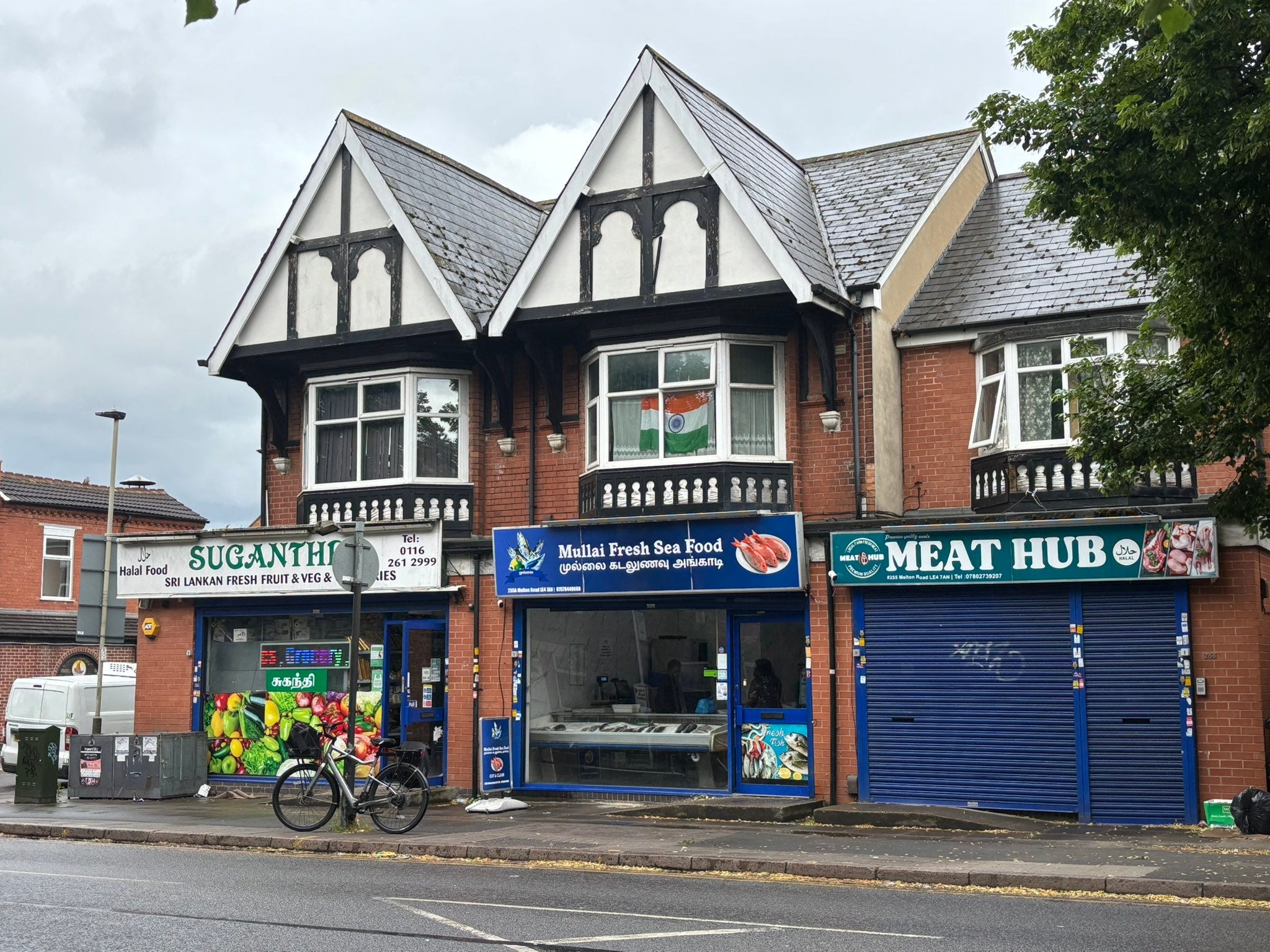
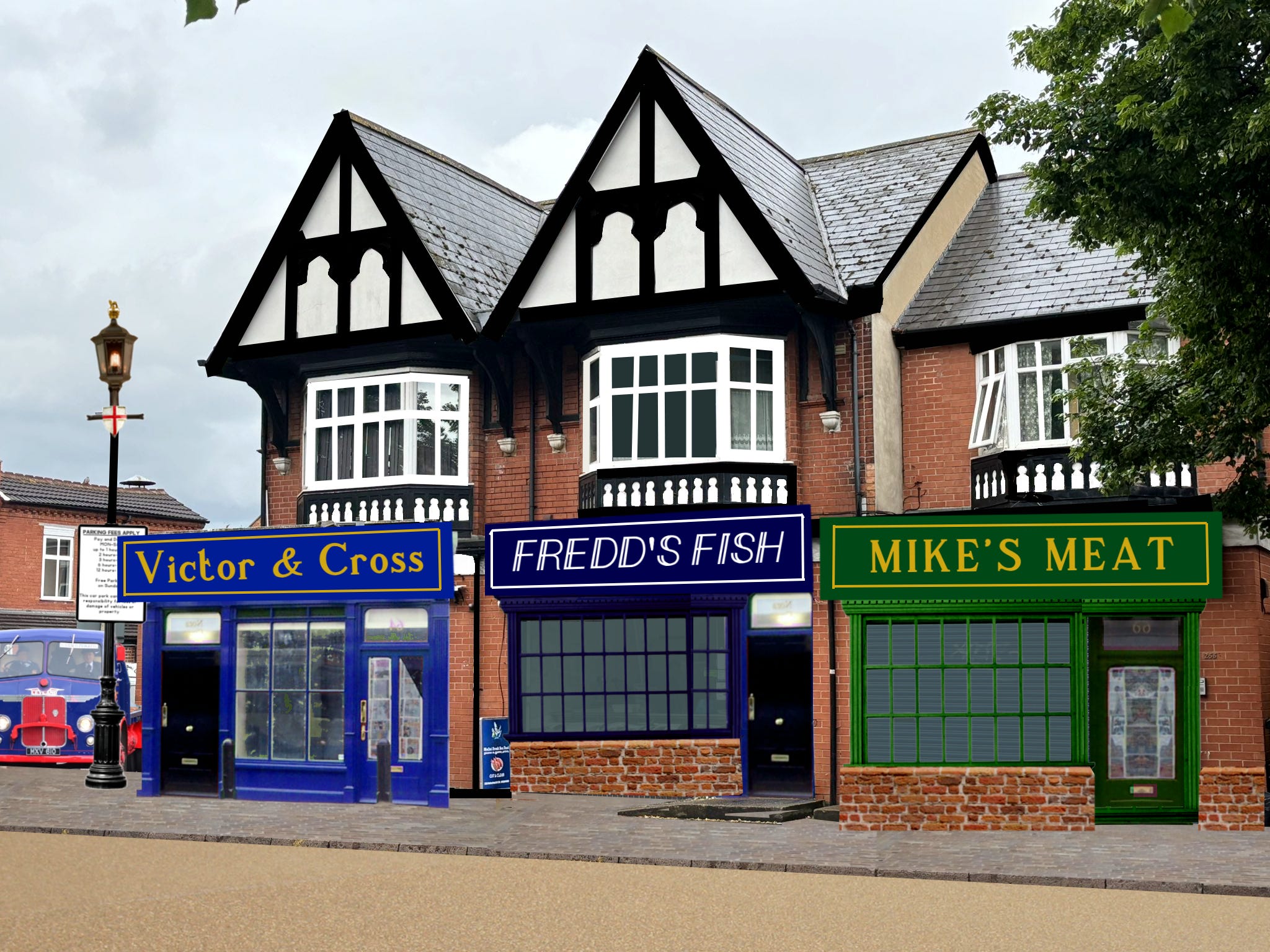
Fixing up a street in Leicester to have more traditional shopfronts and a general spruce up of the paintwork.
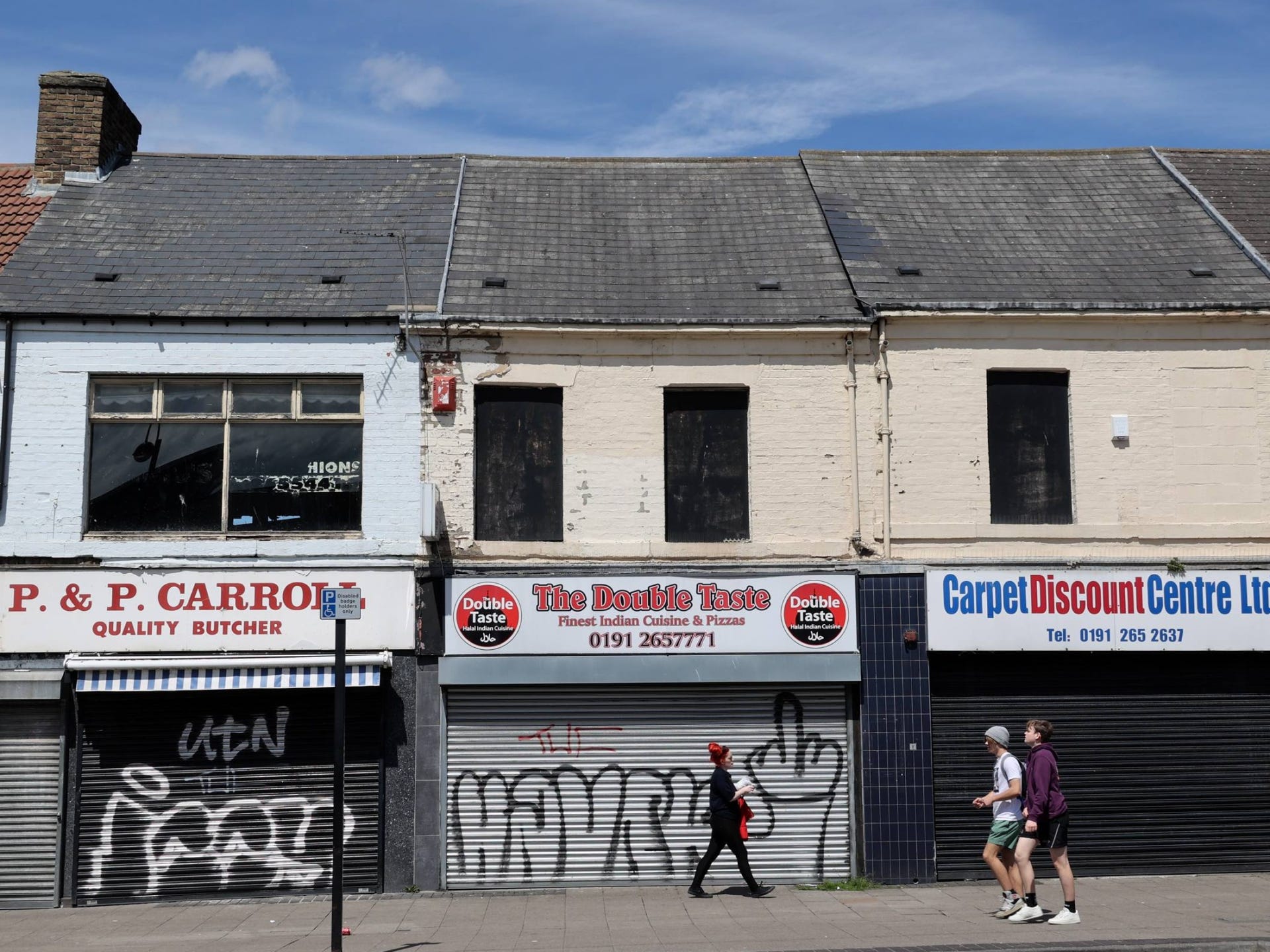
Sad looking street fixed. New windows, new shopfronts, new paint jobs. Making British high streets attractive places to be again will be great for local businesses.
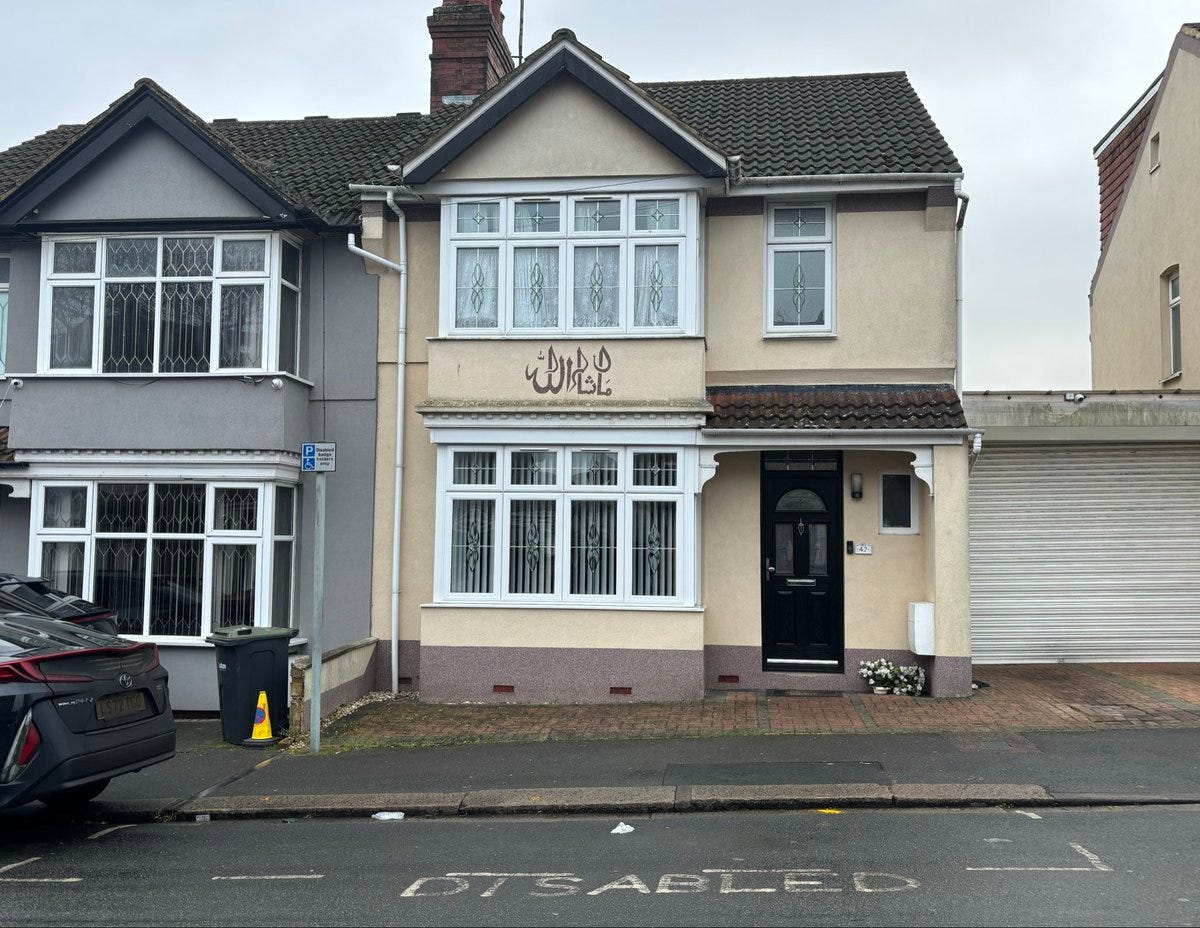
Run down terraced houses upgraded to a more warm, homely street environment. As with any of these pictures, if this happens to be your house, please don’t take these changes I’ve made personally. This is more what I’d do if I were a property developer with lots of money to make such changes.
The main reason I chose this picture is because I really saw potential in these houses. They are a good example of how you could elevate modestly sized houses on an average street to be much more attractive with a major renovation that doesn’t necessitate demolishing anything structural, since they’re actually nice enough in that regard with a few tweaks- removing cheap looking white uPVC plastic elements, improving the street covering and street furniture etc.
I believe in the democratisation of beauty for everyone. Beauty should be present in the everyday domestic landscape. We are of a time now of mass production where we can absolutely make this happen in a way that is affordable. The only thing really stopping us is we choose not to because we don’t think it matters.
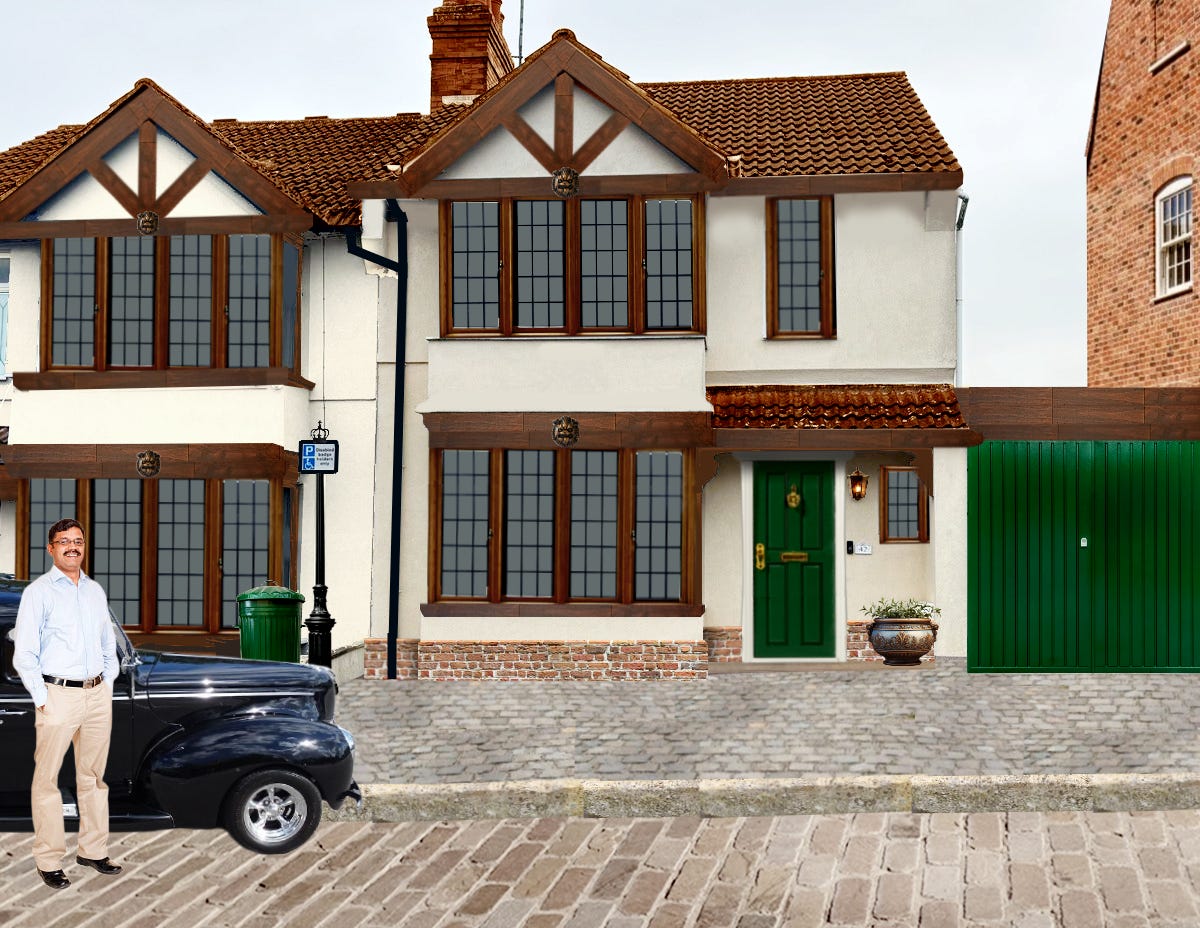
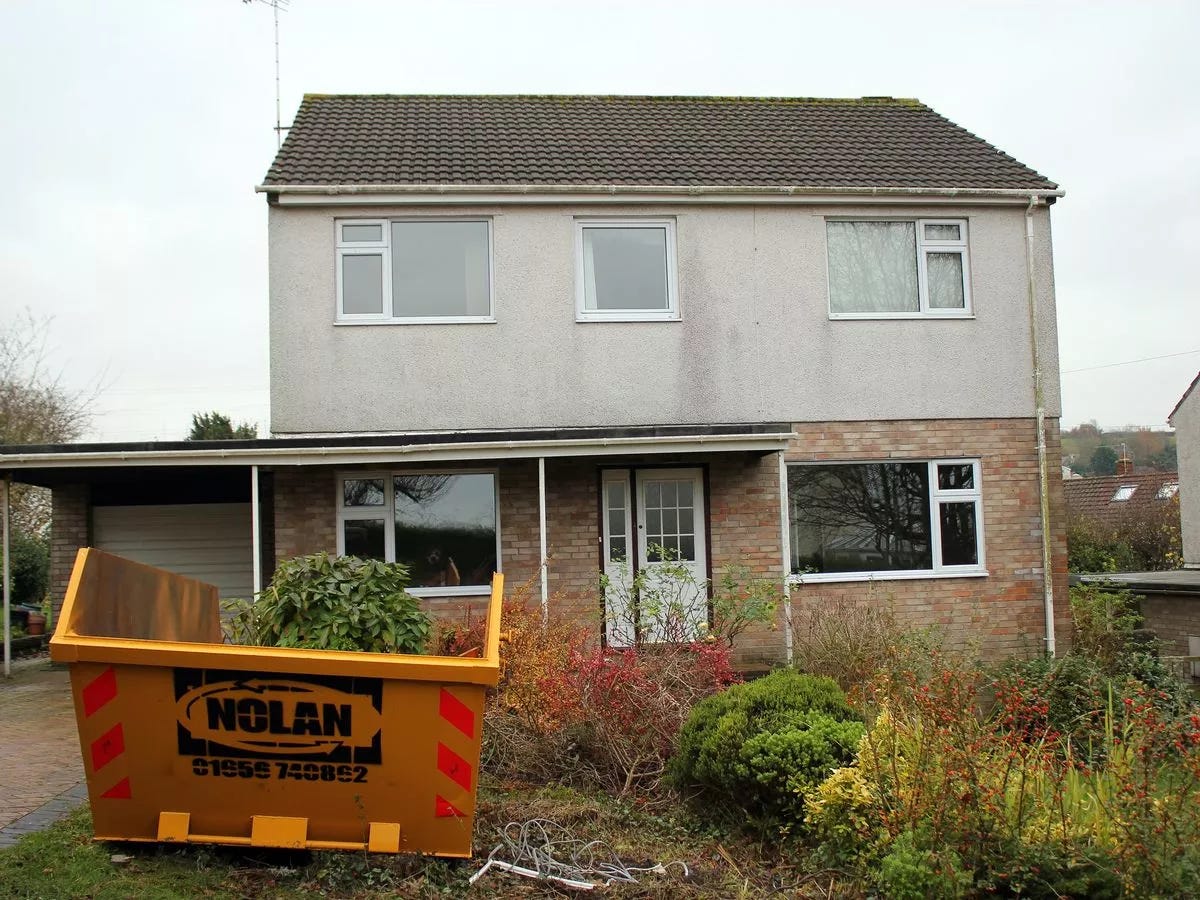
Another fairly drab and bog standard house made more attractive.
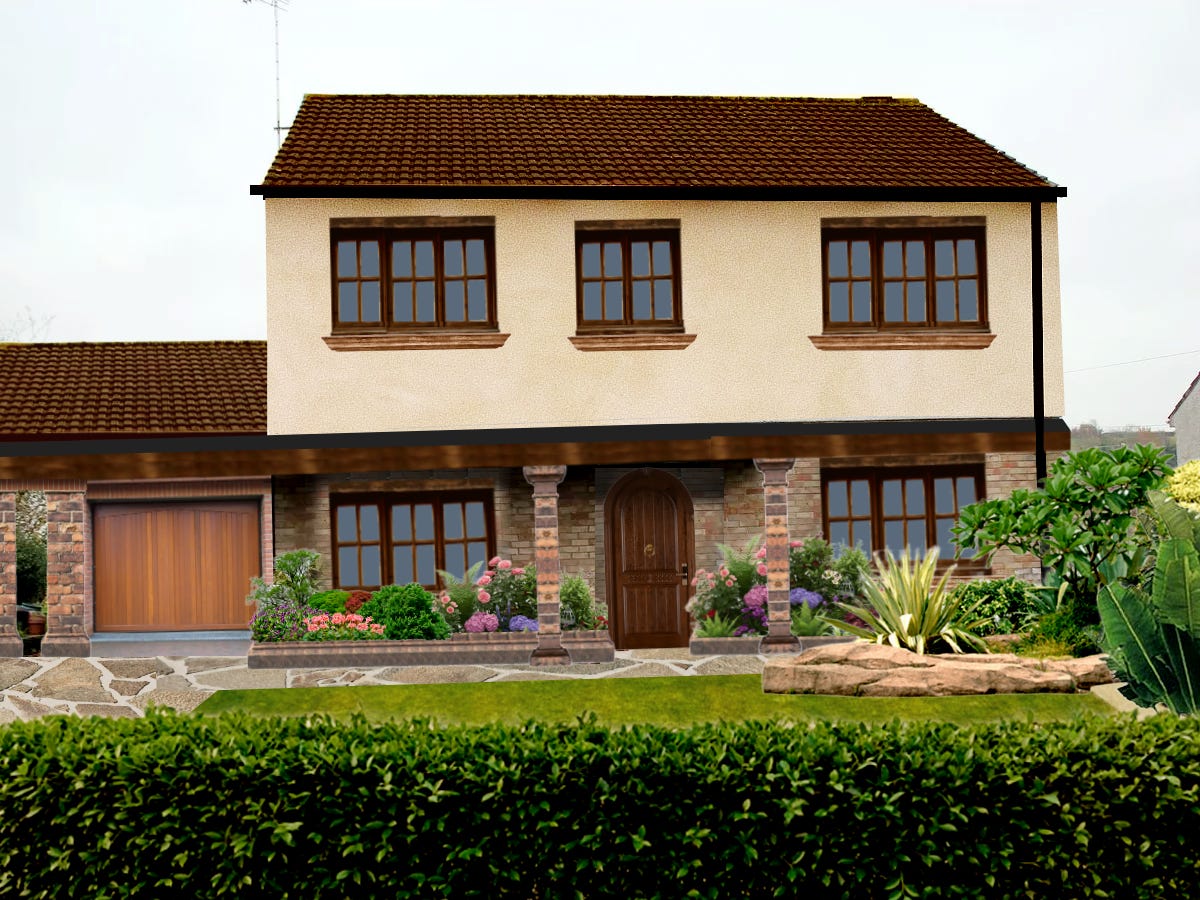
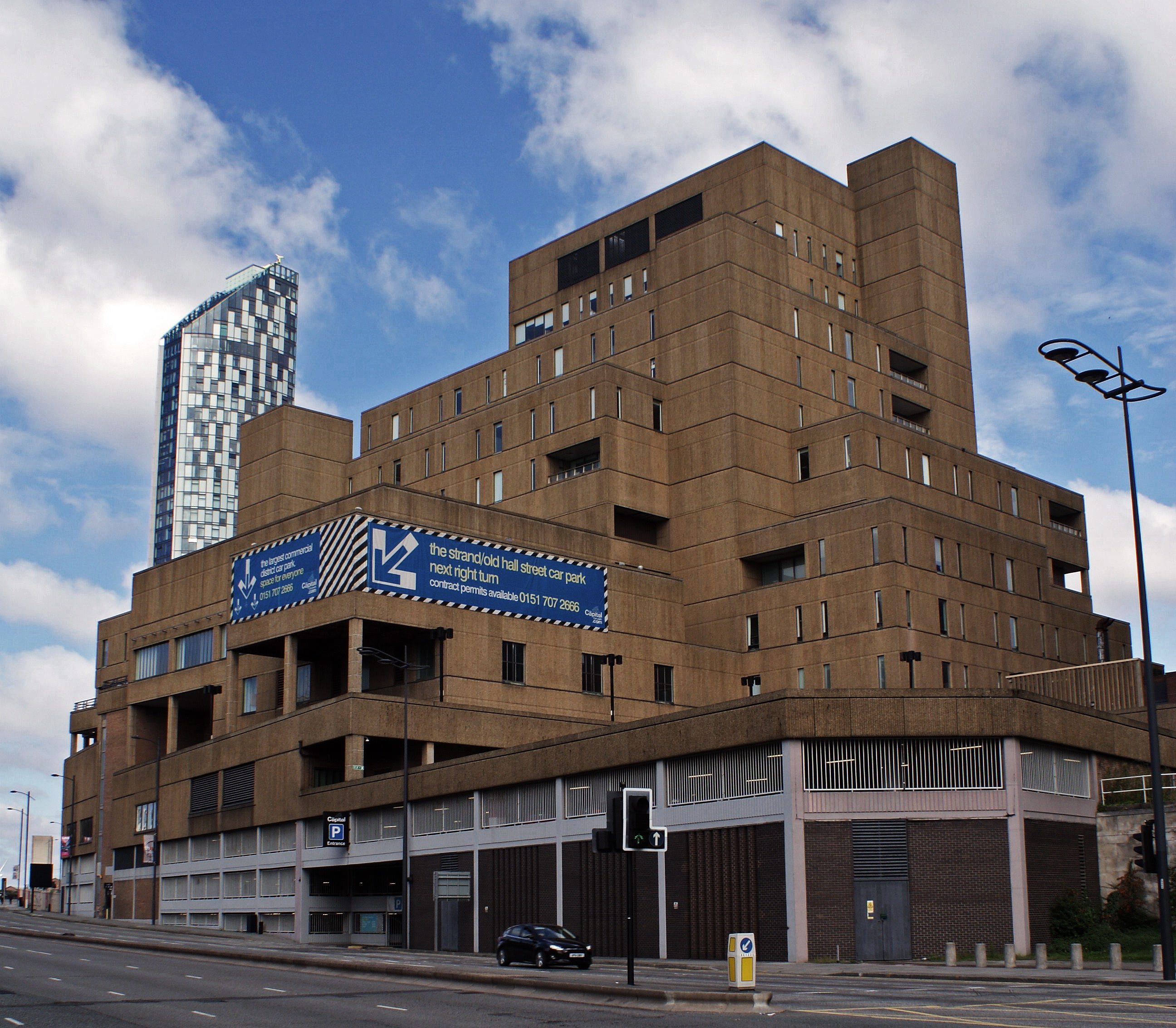
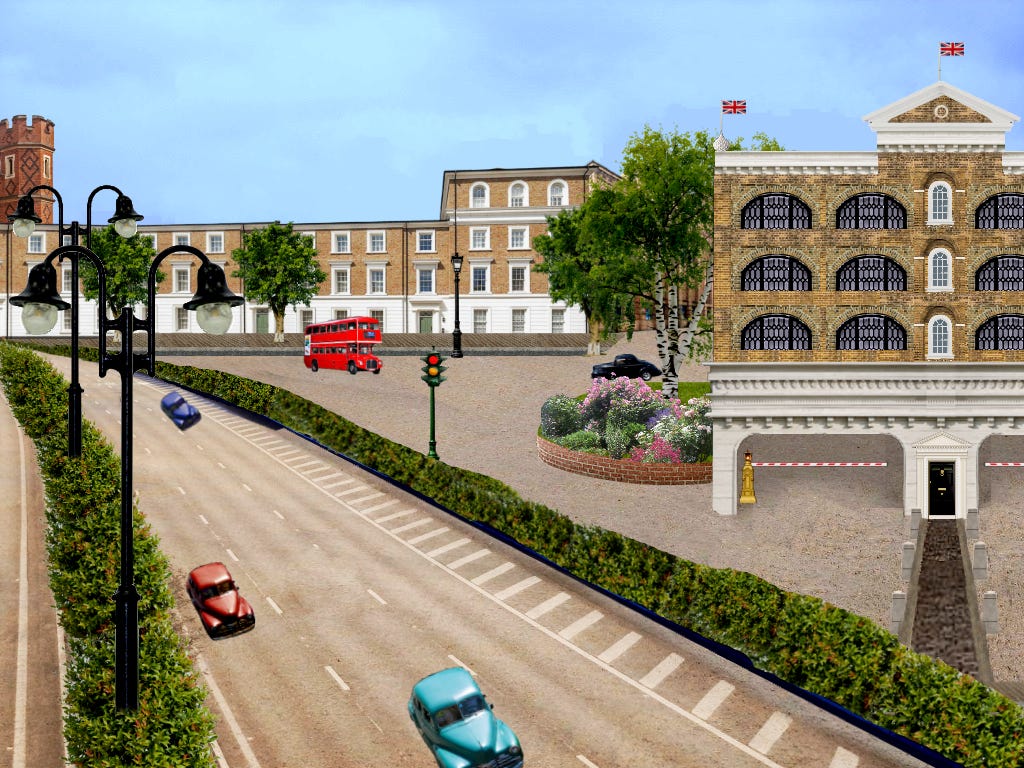
Ugly multi storey car park becomes a series of stylish Georgian flats. This is how to build a decent amount of urban density in an attractive style.
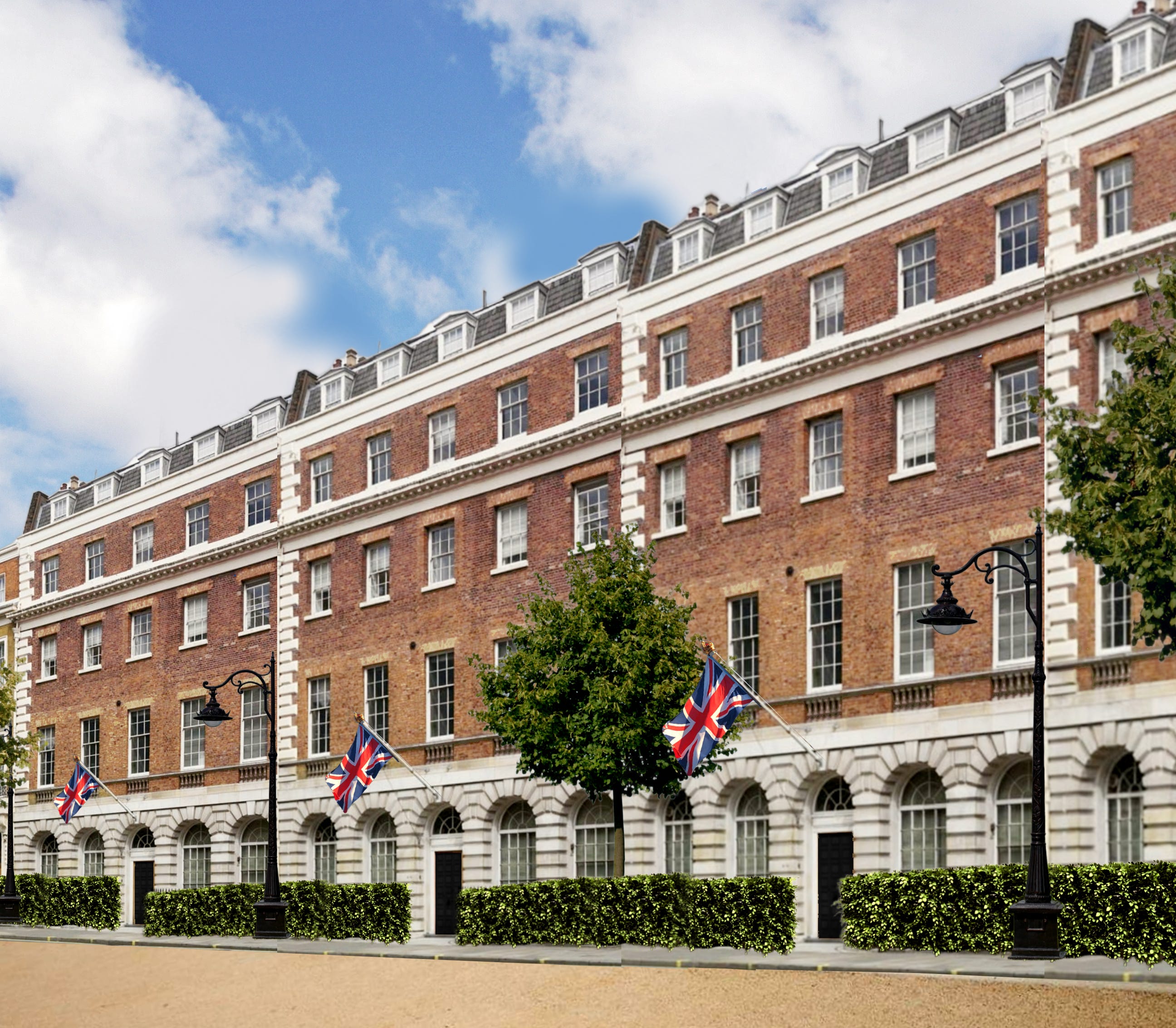
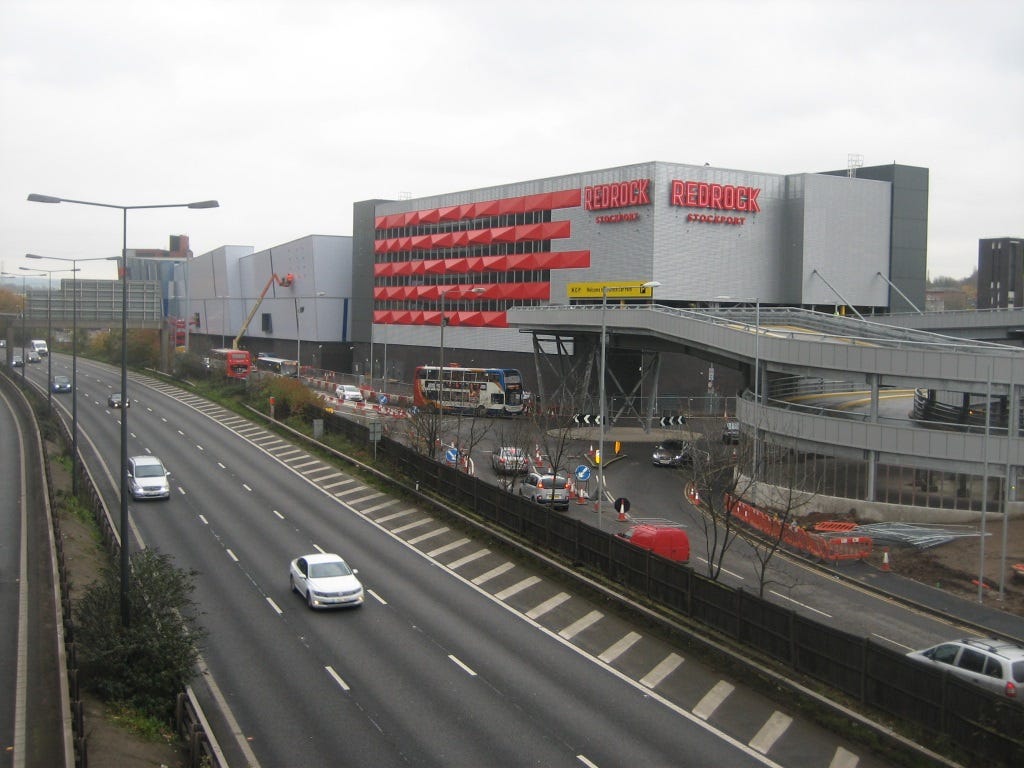
View from a road overlooking Stockport sent to me by a friend. I’ve inserted one of my multi storey car parks in a Georgian brick design. More greenery is added. Again the road is a brighter sand colour which is more uplifting than the sad, demoralising dark grey, but road markings are still visible enough on the bigger road where they need to be. Attractive terraced houses replace the ugly warehouses. The Redrock is apparently a cinema complex so perhaps a more attractive Art Deco type cinema could be constructed instead?
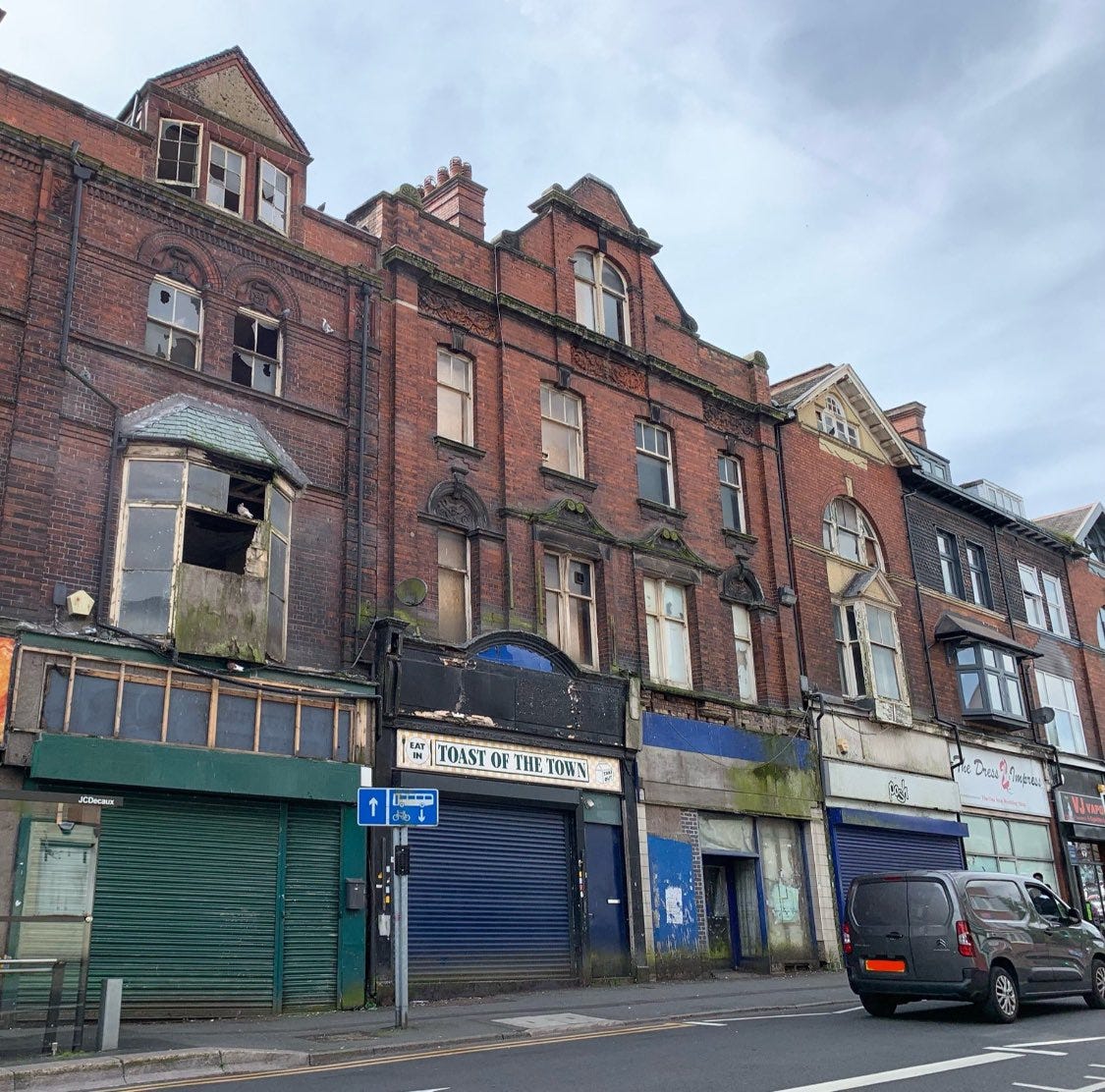
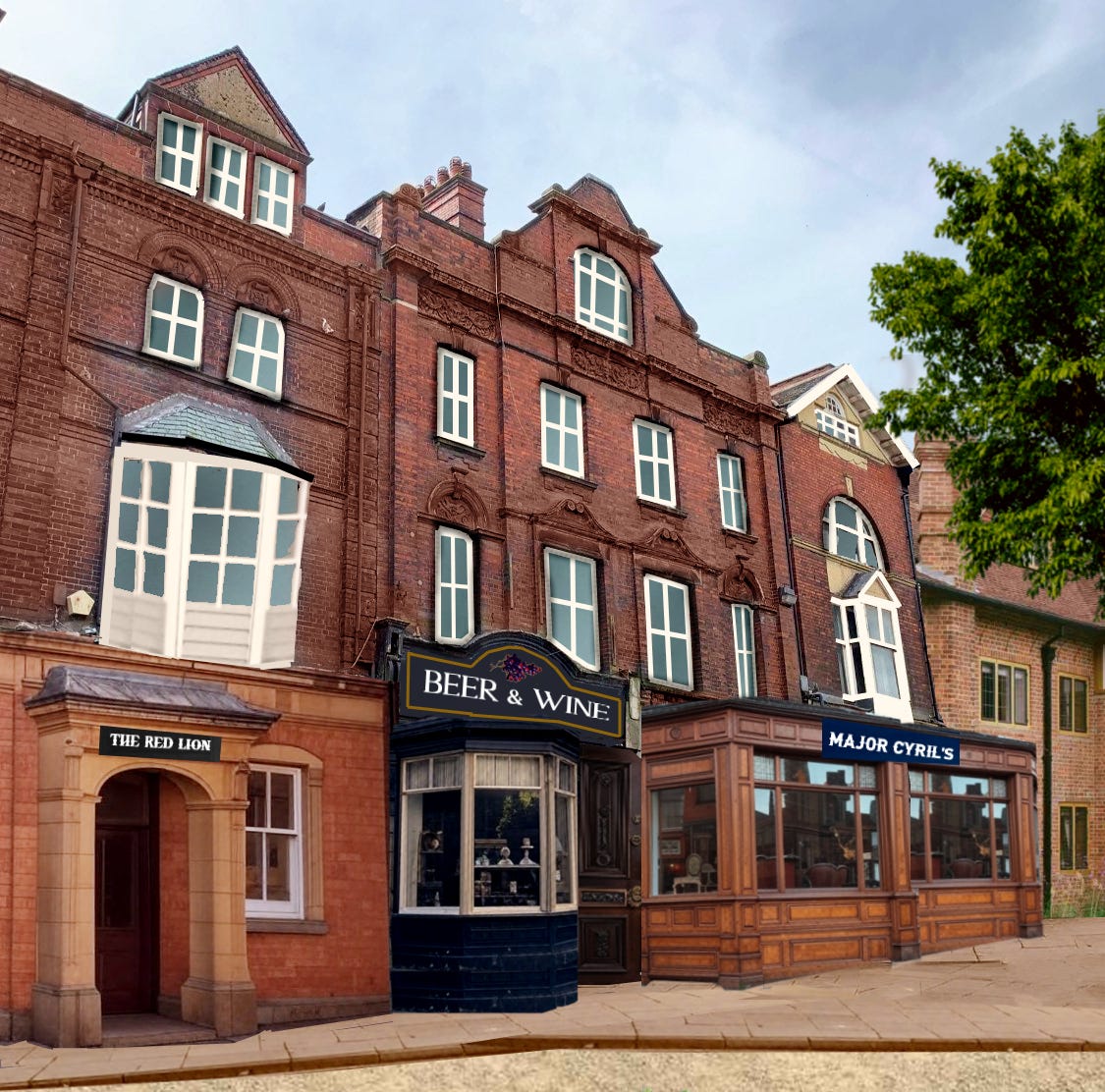
Seeing this makes me really sad. These aren’t ugly buildings, these are really quite lovely buildings being neglected and falling into decay and disrepair, not being utilised to their full potential. Again, in many cases all that’s needed is cleaning, tidying, brightening up, replacing old windows and fixing up shop fronts. Although in the right of the picture some newer buildings have been replaced.
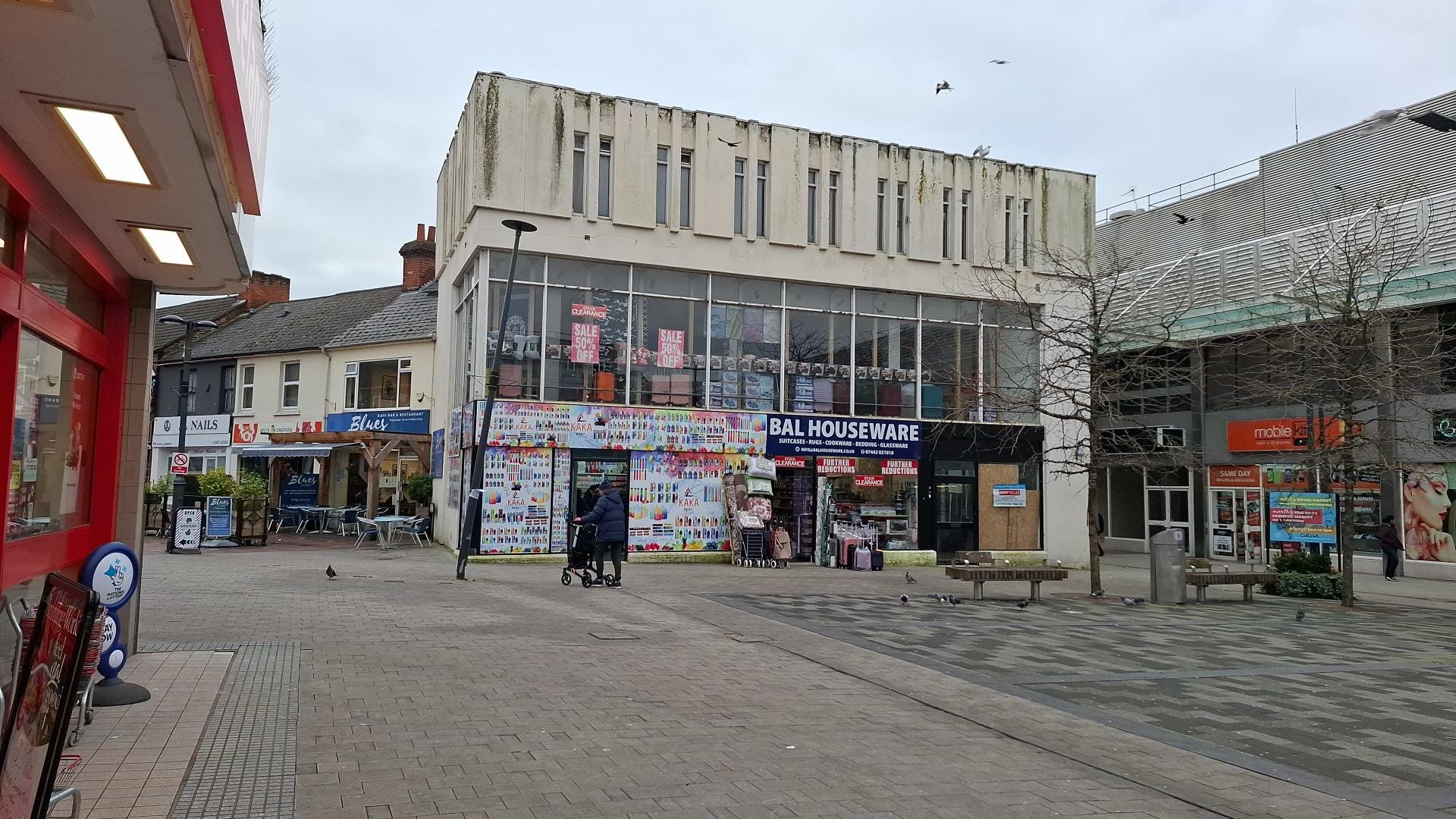
Swindon goes from dingy and depressing to proud and prosperous.
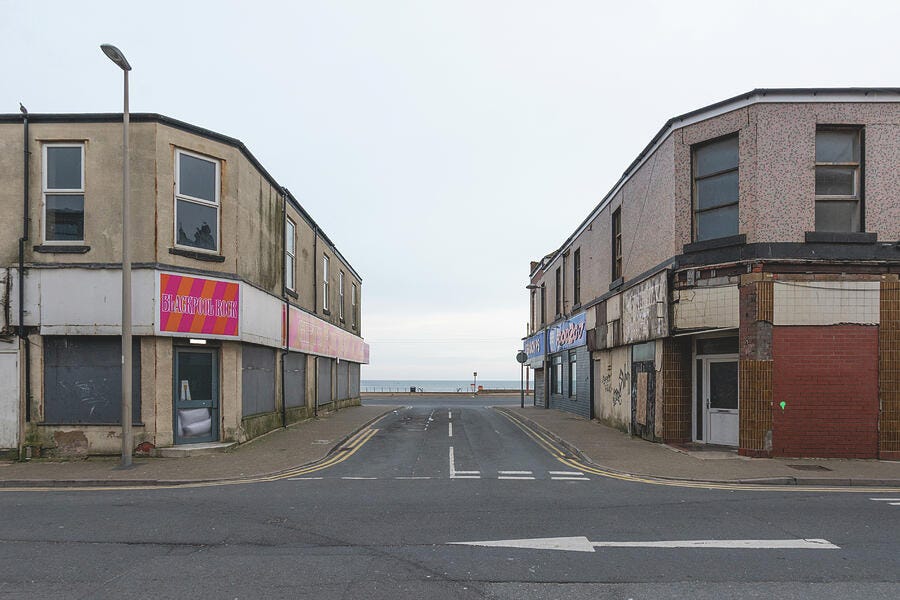
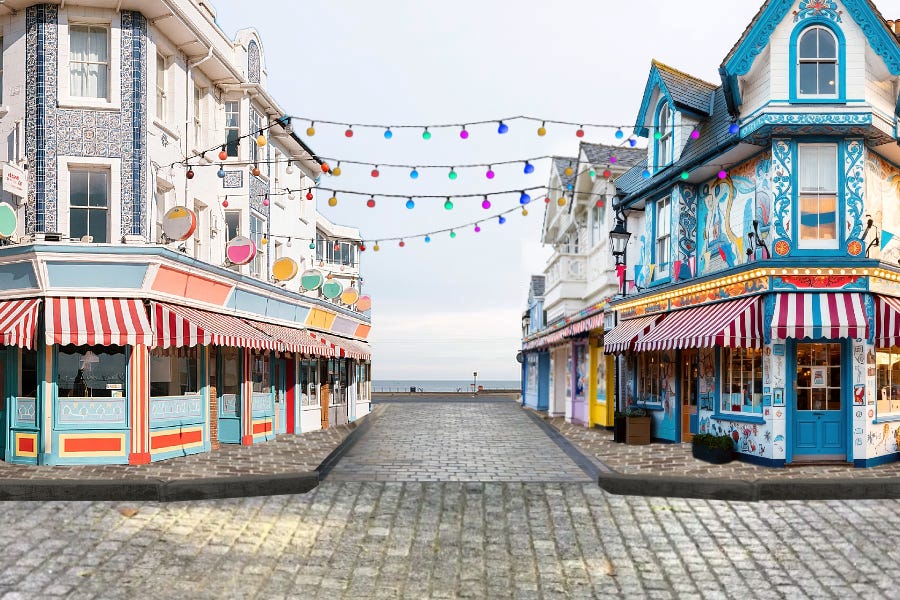
Blackpool (photo credit Stuart Allen)- here we have whimsical seaside joy rather than grimness.
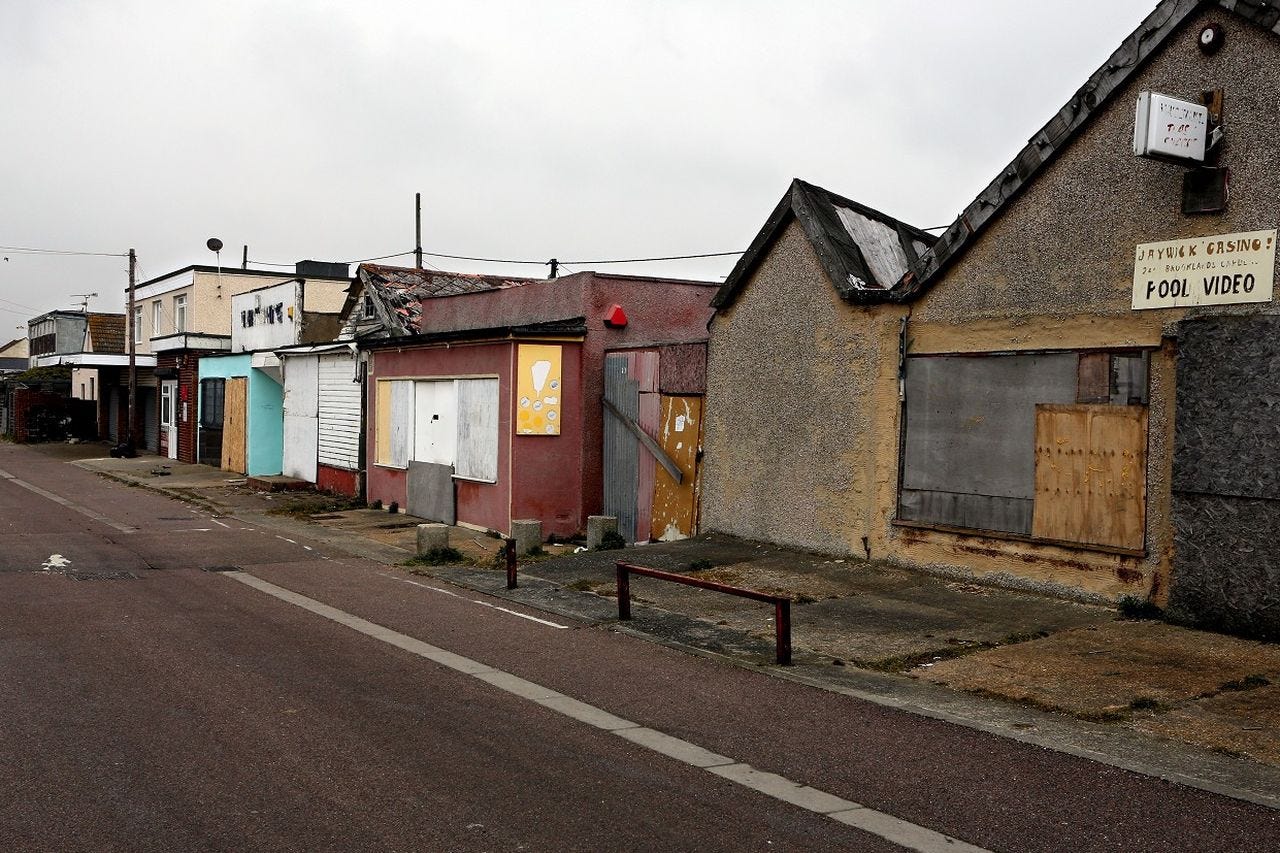
Jaywick, Essex, is one of the most deprived towns in Britain. Here, it is reimagined as a beautiful, homely, vibrant seaside community.
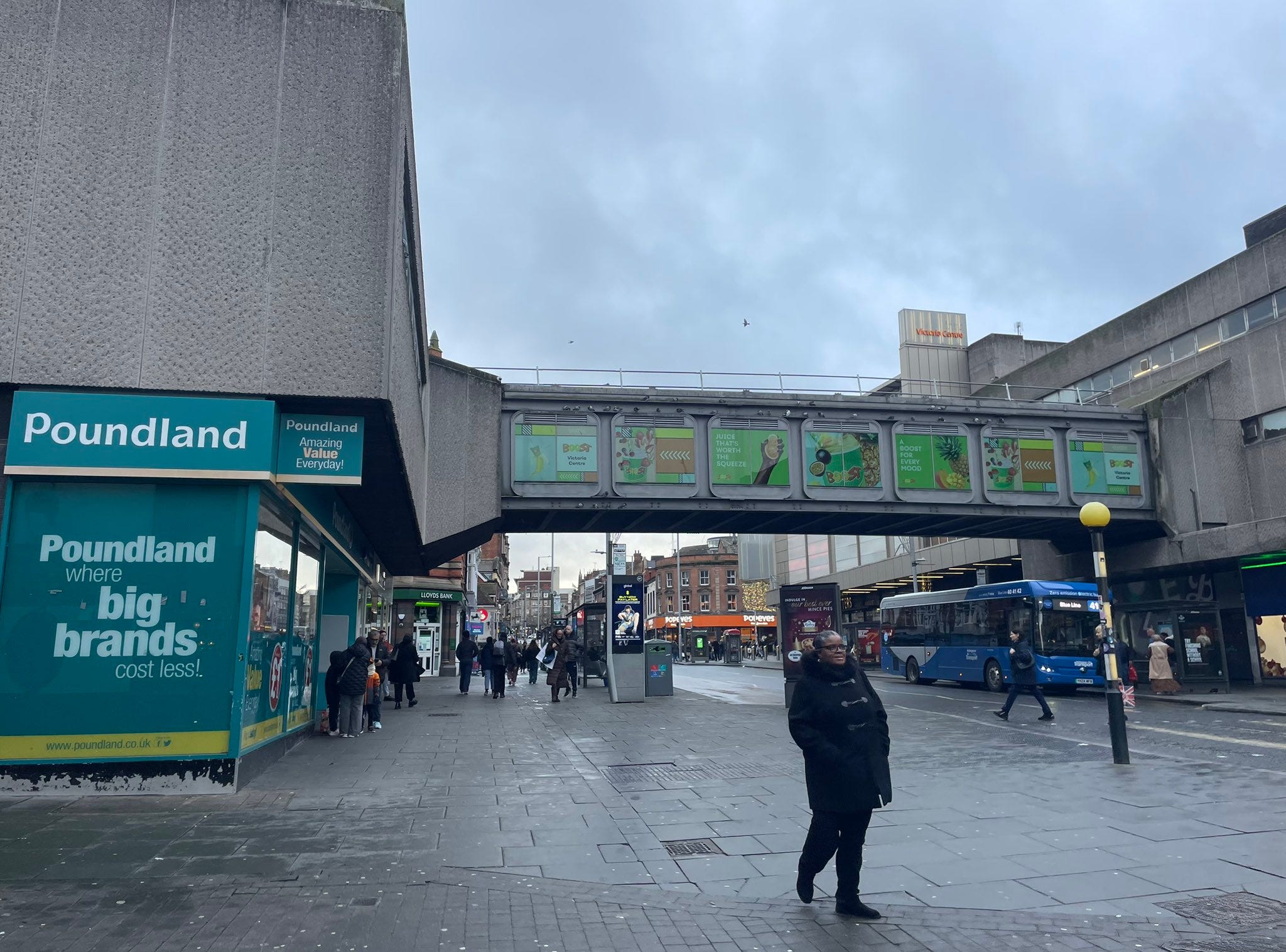
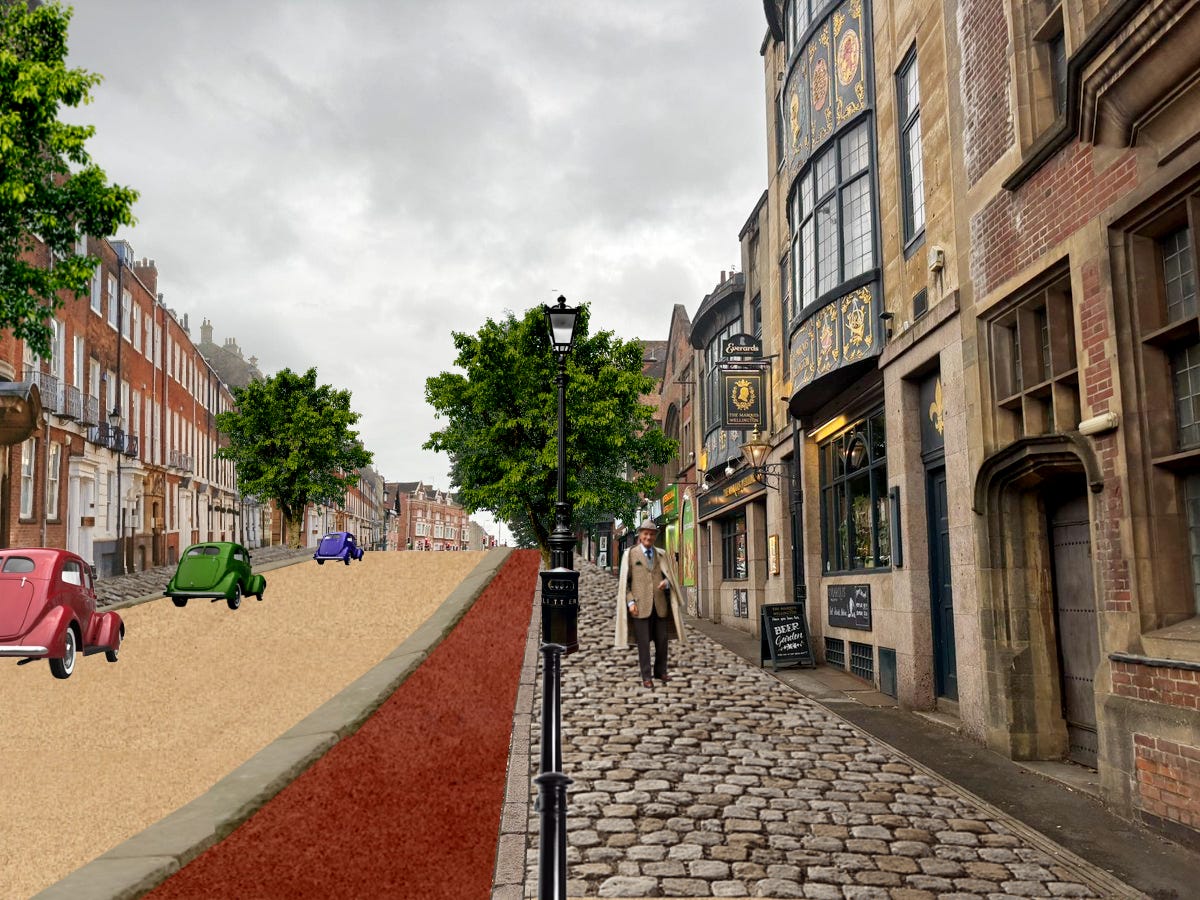
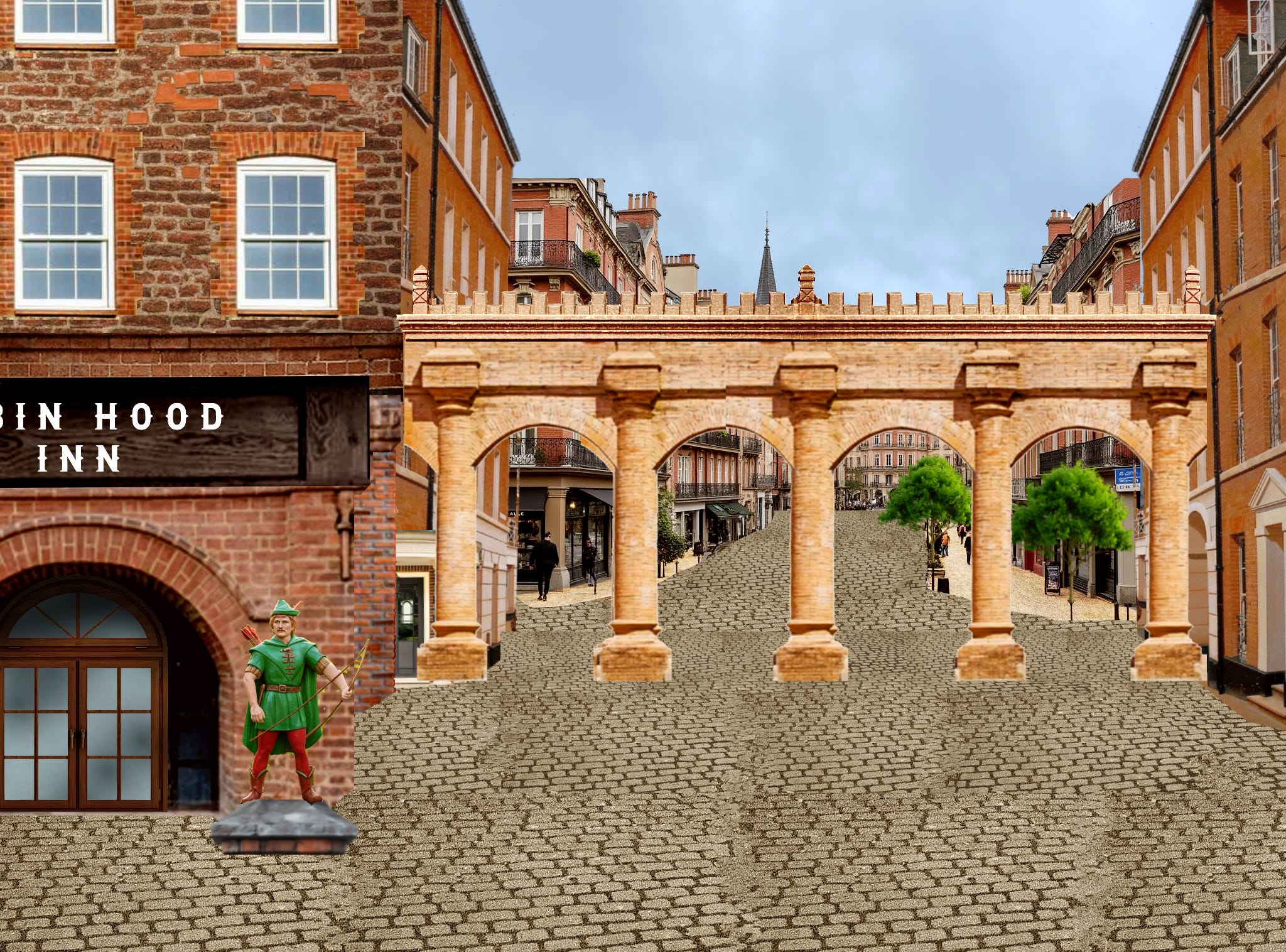
You really do not hate people like Le Corbusier enough for the visual impoverishment they inflicted upon the world. This is Nottingham, a historic city best known for Robin Hood. Here, I have totally bulldozed this grey concrete Soviet monstrosity and replaced it with a variety of more traditional buildings in warm brick. The walkway remains, but is now a crenellated brick bridge rather than a dingy concrete tunnel. This part of the city has been pedestrianised. Whether that would actually work in this particular part of Nottingham I don’t know because I’ve never been there but it is an interesting illustrative tool to imagine it that way. In the foreground, a pub with a nod to Nottingham’s local folklore has opened.
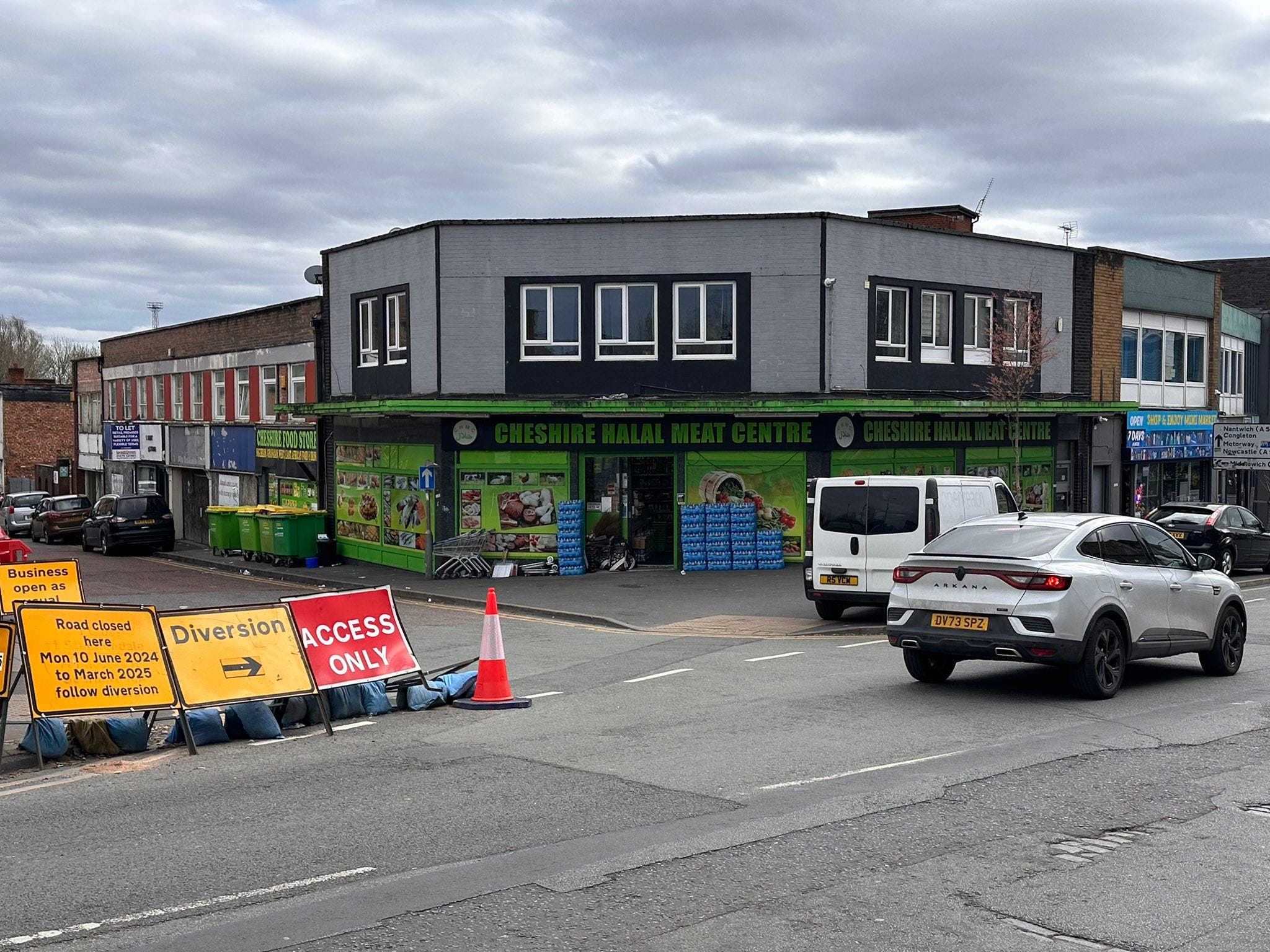
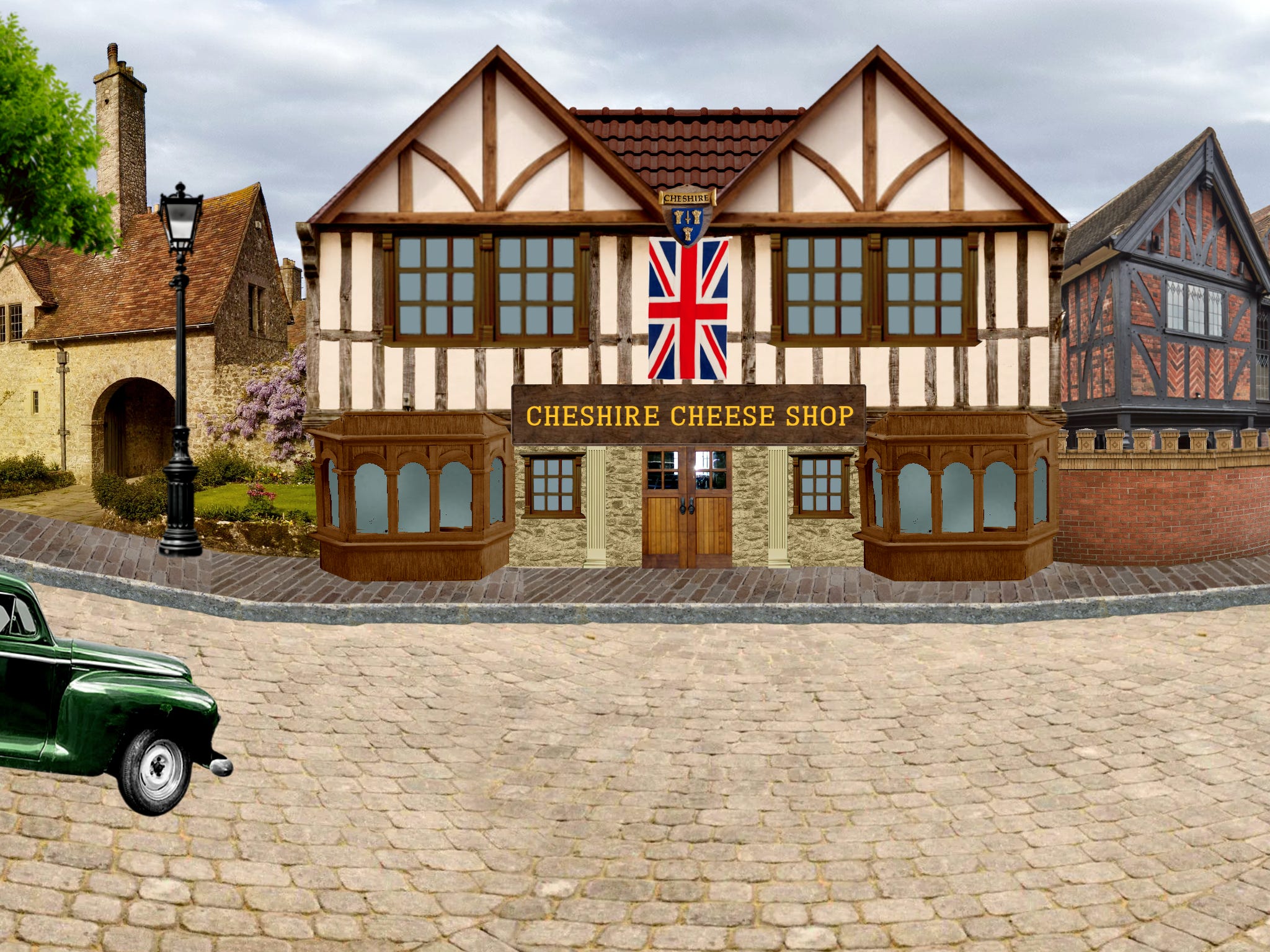
What a sight! A shabby looking shopping district, road closures, potholes so deep you can see the original cobblestones underneath, which is quite something. Tasty Cheshire cheese for sale in a beautiful Tudor style shop (the sort of magnificent architecture that Chester is known for) The roads have been cobbled because you might as well. A lovely scene rooted in a sense of place.
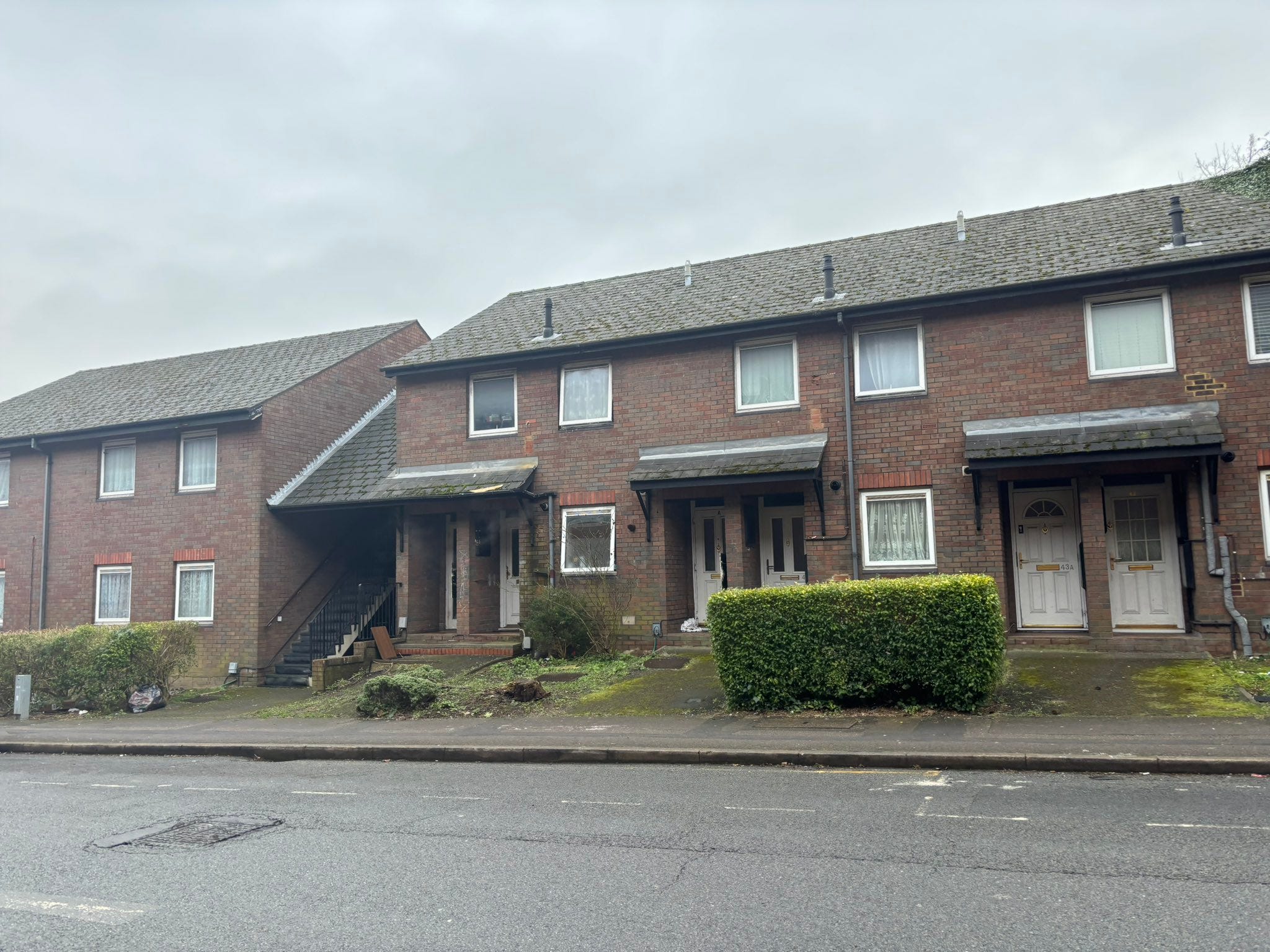
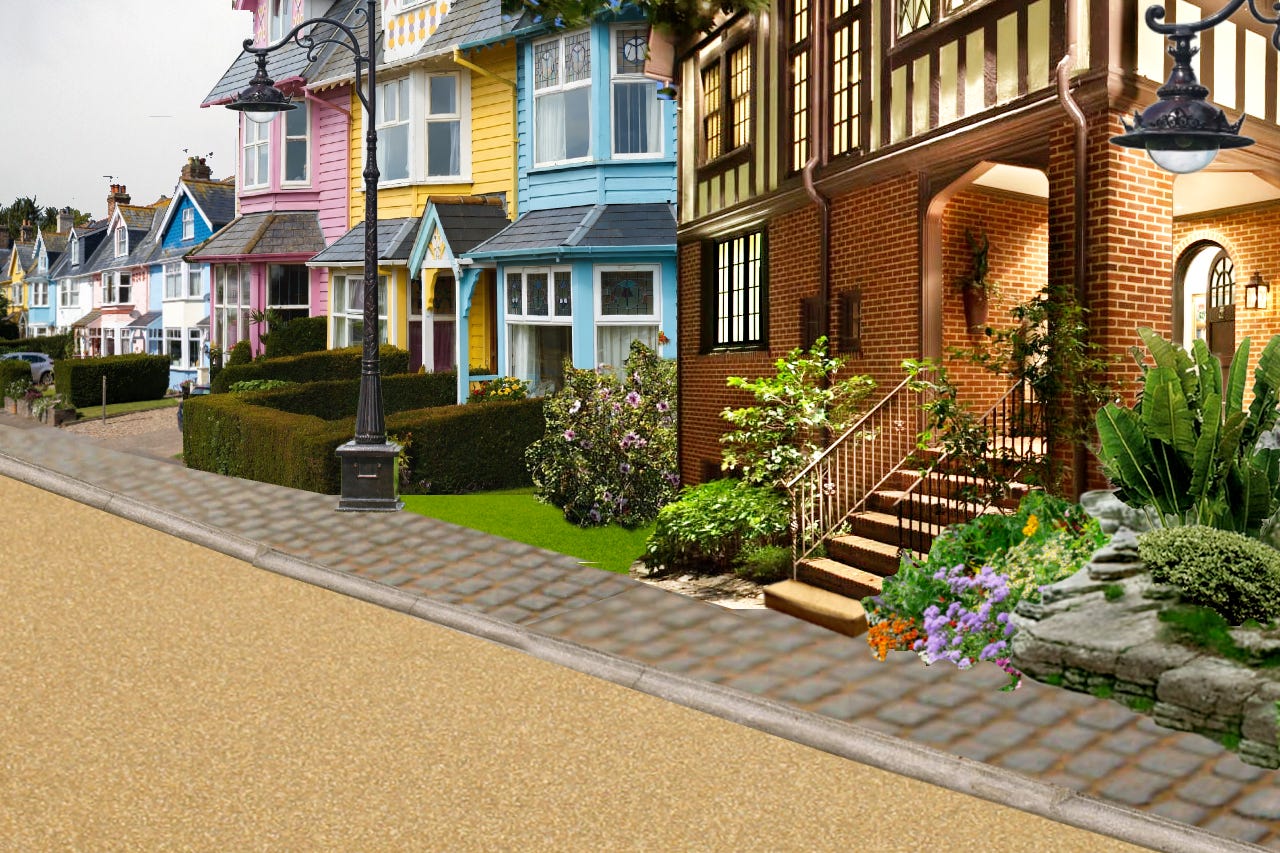
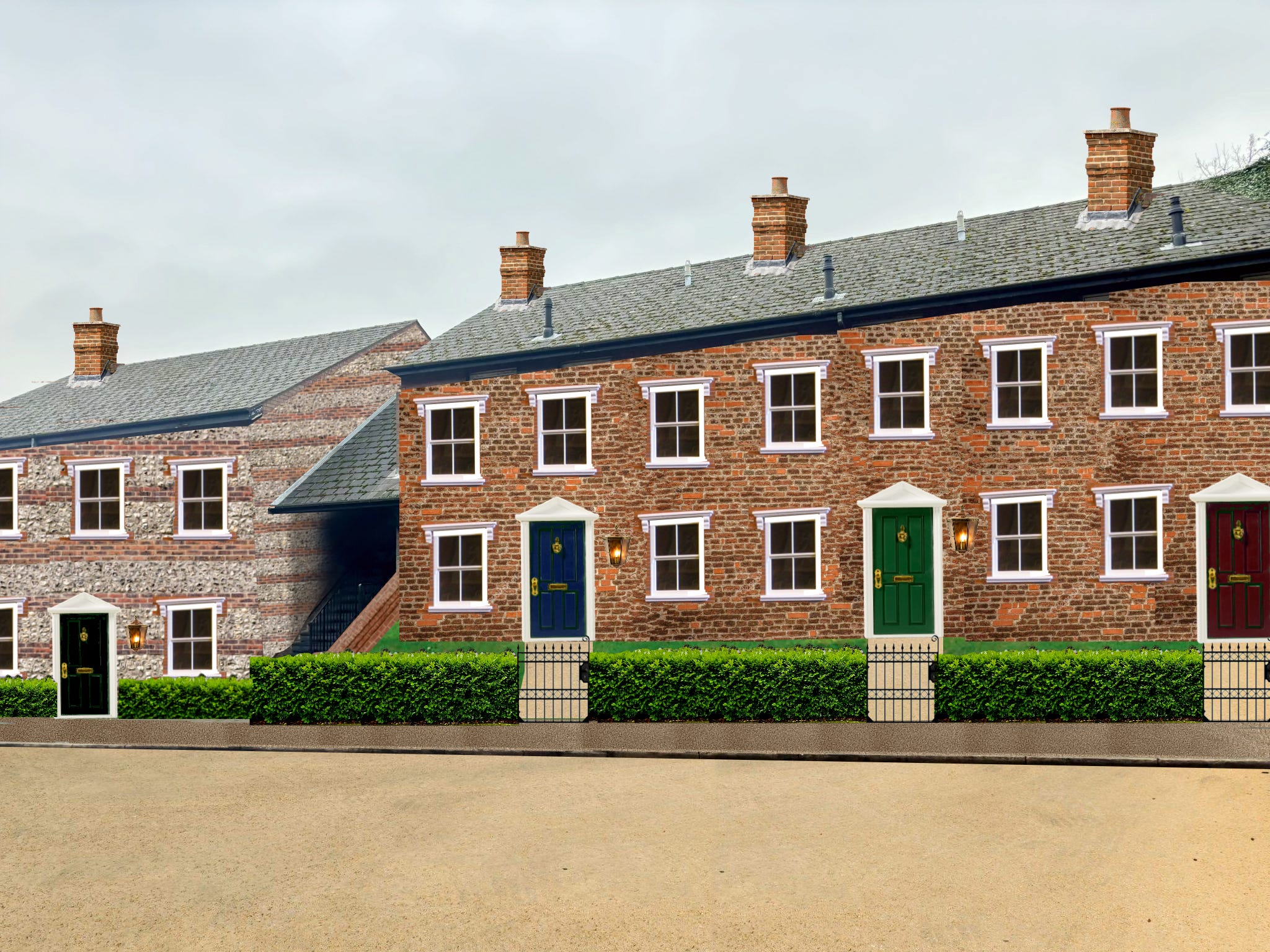
Some terraced houses in Luton. I have rebuilt them in a more rustic brick, with traditional windows and doors, added front gardens, hedgerows and metal gates to create a sense of enclosure. The dark grey road has been replaced with a sand coloured tarmac to brighten the street area.
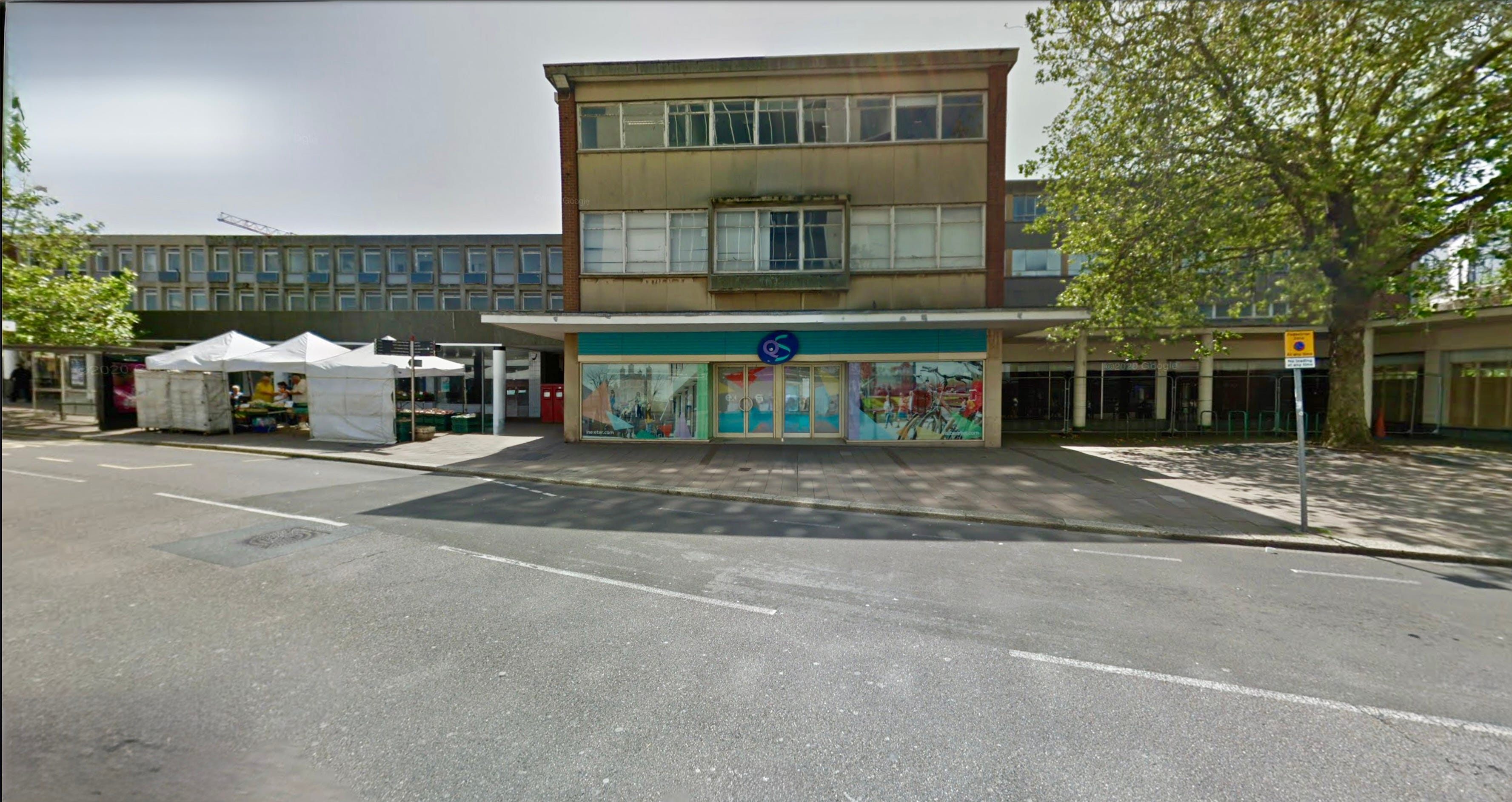
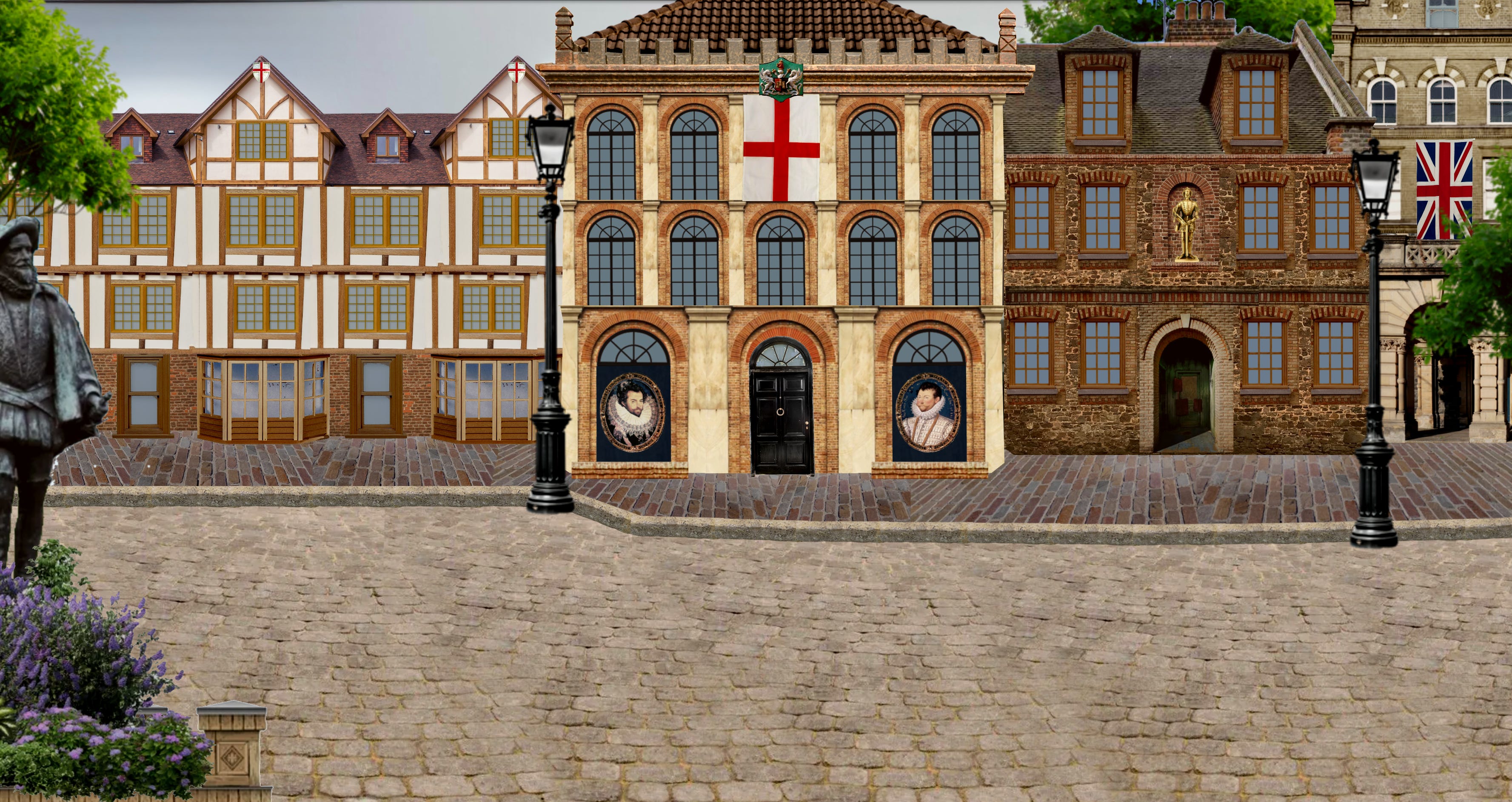
Exeter’s Sidwell Street, probably the worst part of Exeter. Grim 1960s shopping precincts looking grimy and falling apart. Here it is fixed, showcasing the traditional vernacular architecture of Devon as well as murals of my county’s heroes, Sir Francis Drake (born in Tavistock) and Sir Walter Raleigh (born in Budleigh Salterton) in the style of Nicholas Hilliard, the Elizabethan era portrait painter born in Exeter. Similar murals did exist on the side of the building leading into Gandy Street but have since been sadly removed. The coat of arms of Exeter features on the top of the central building. Exeter really has the potential to be the South West’s answer to Stratford Upon Avon or the Bruges of Britain.
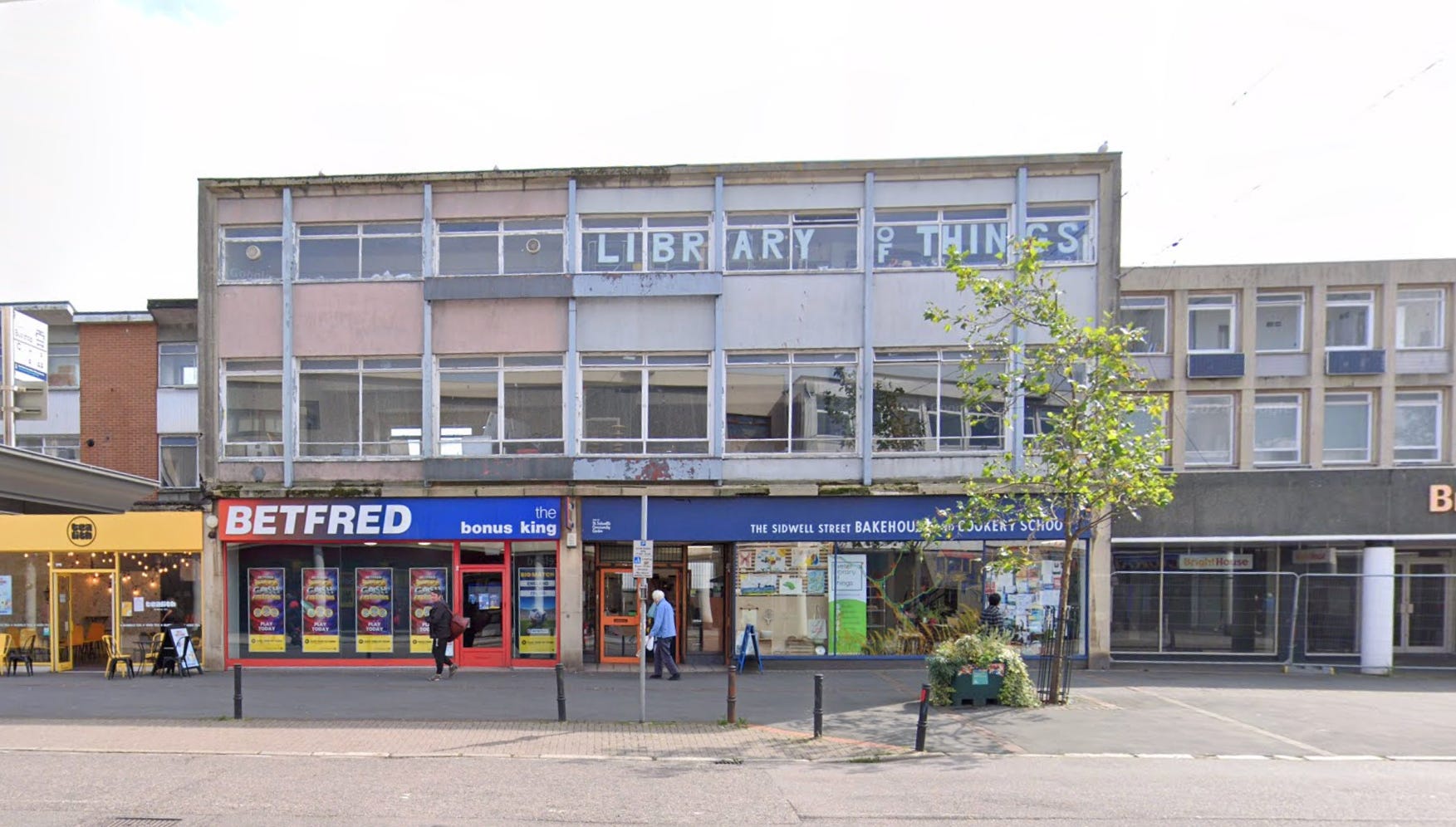
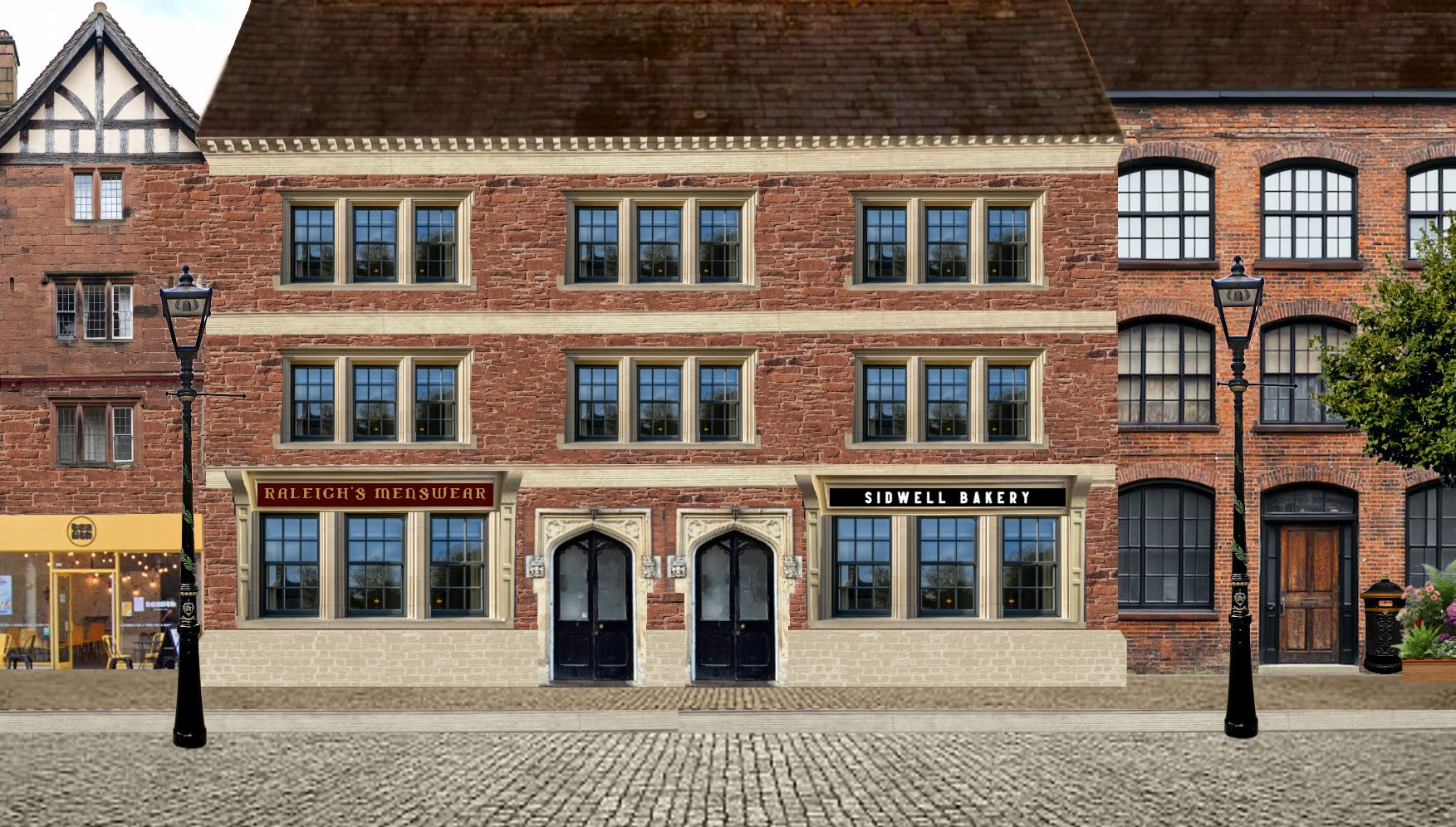
Sidwell Street further up. This has never been a particularly nice part of Exeter, but it’s clear this place is really on its last legs and that the 60s architecture is at the end of its lifespan. Whilst once dull but liveable, it now feels completely tatty and run down. This street, probably more than any other in Exeter is the one that needs the biggest overhaul, and it really does have potential provided it is redeveloped in the right way, eschewing yet more bland corporate modernism (which itself will date quickly and thus have a limited lifespan) in favour of more durable, attractive traditional styles.
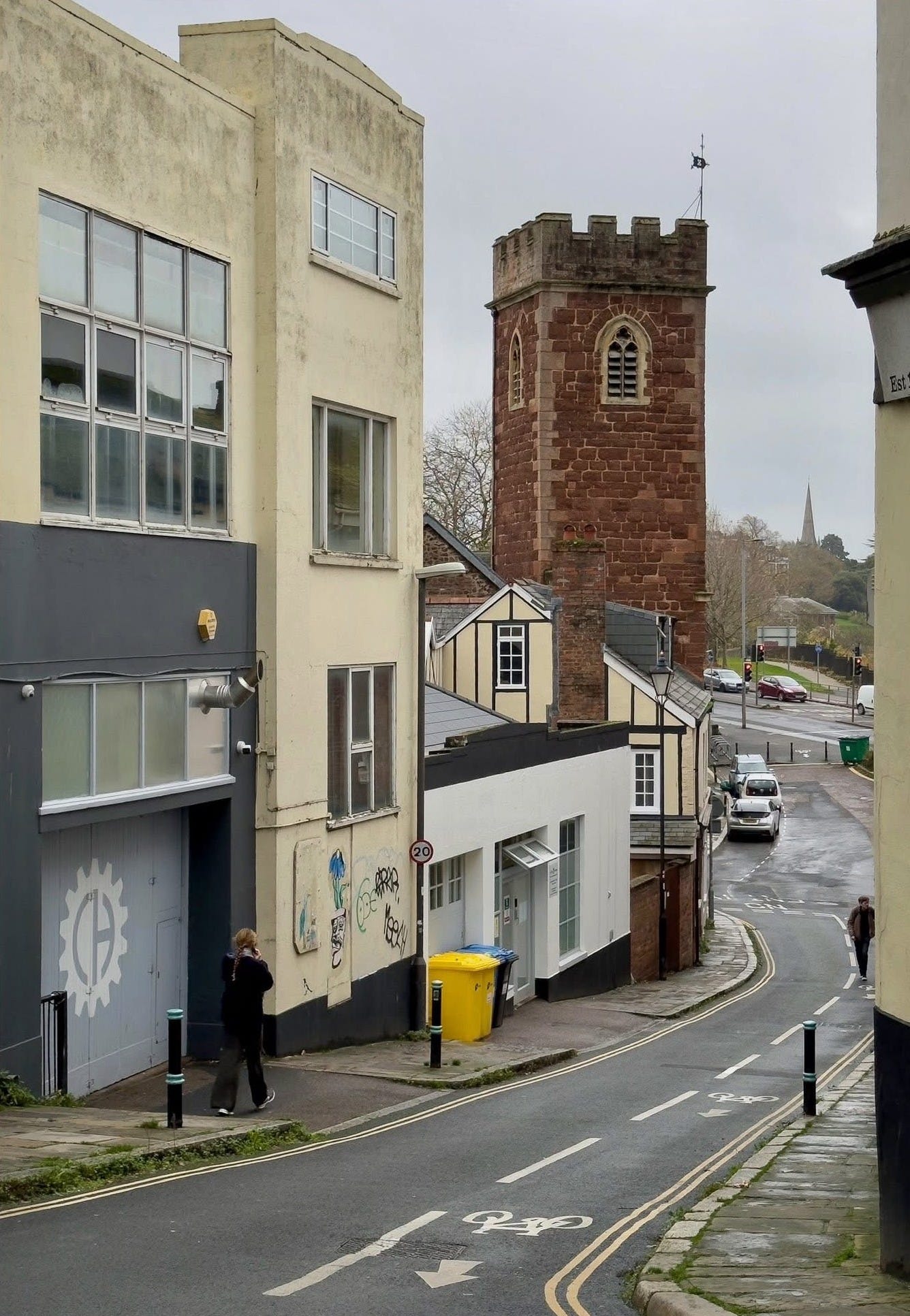
What should be one of the nicest parts of Exeter near Stepcote Hill and the famous “house that moved”. The house around the corner from this (not visible in the photo) was originally located in nearby Frog Street. The building, built originally somewhere between 1420-1460, was completely disassembled, transported to its current location and subsequently reassembled. This street leading down to the house that moved and the St Mary Steps church (this sandstone tower seen here) ought to be a magical, historic feeling street, but it isn’t. The grubby, ugly buildings, plastic skips, graffiti, overgrown pavements and pointless, excessive road markings make it look crummy and run down. Instead cobble the whole road surface and build structures from a similar era to the house that moved and to the far left, one in the same stone as the church.
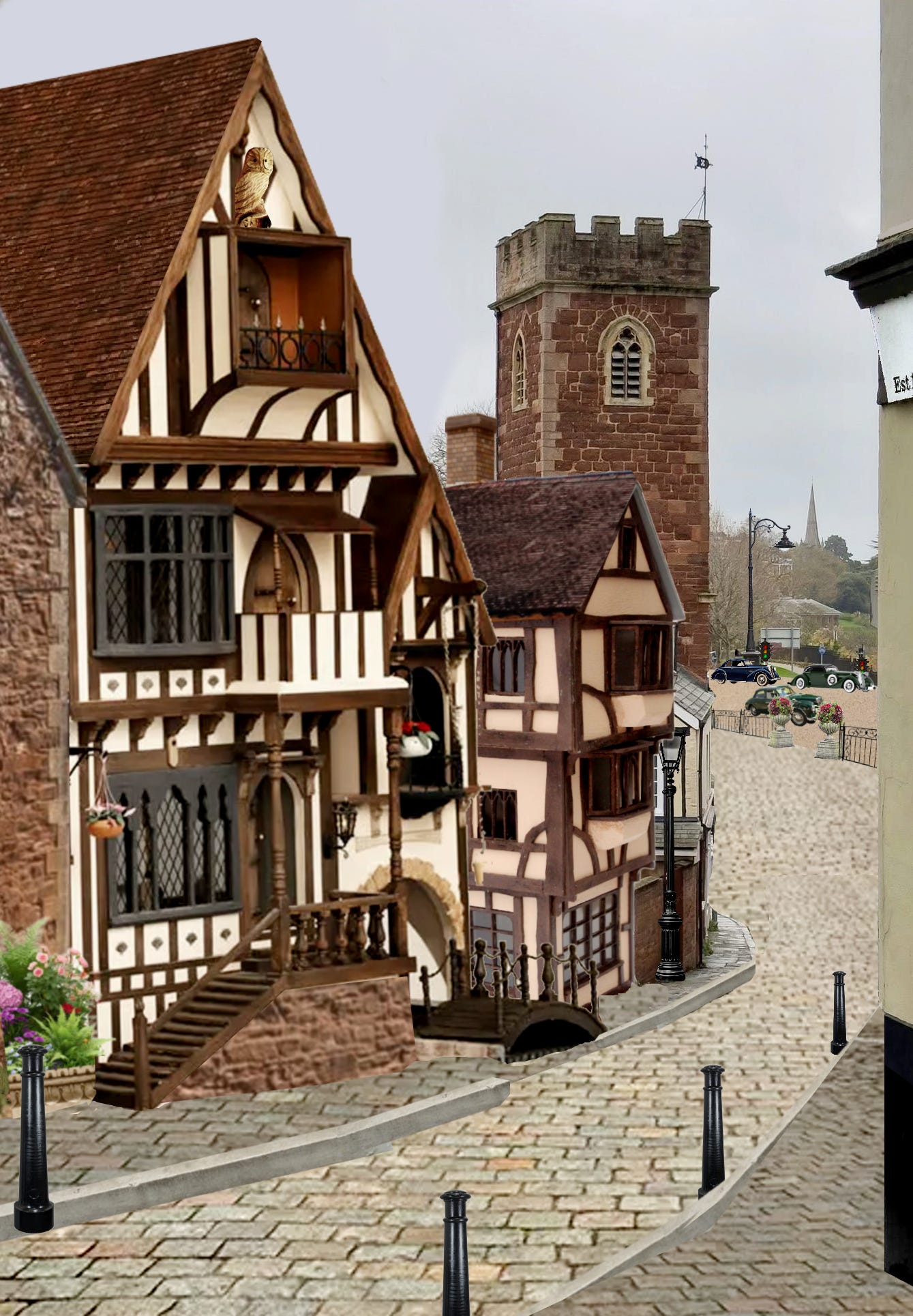
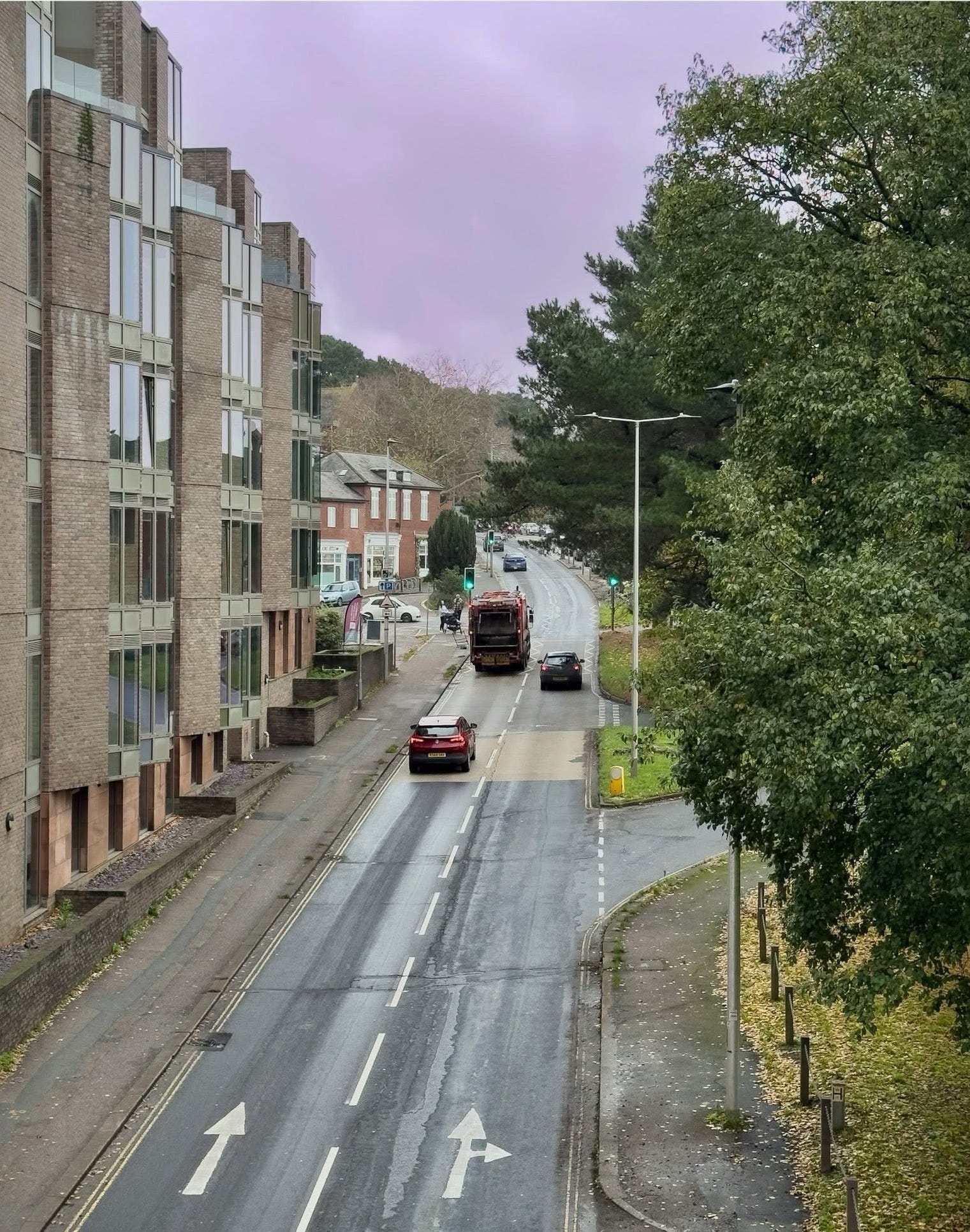
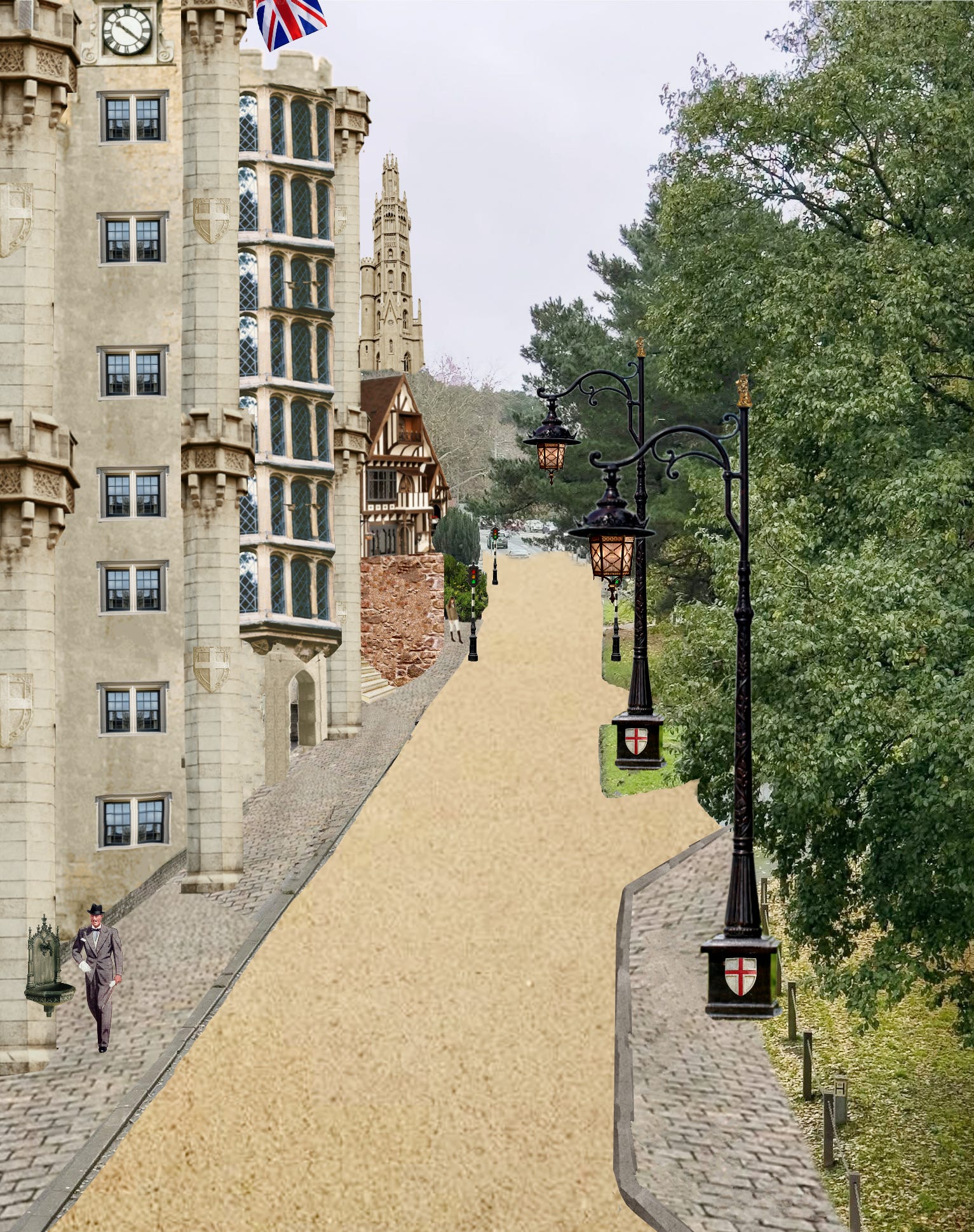
Road from Frog Street in Exeter. Again, another completely wasted space totally ruined by hideous student accommodation that has utterly consumed the soul of the city. These apartments are for Exonians, not students.
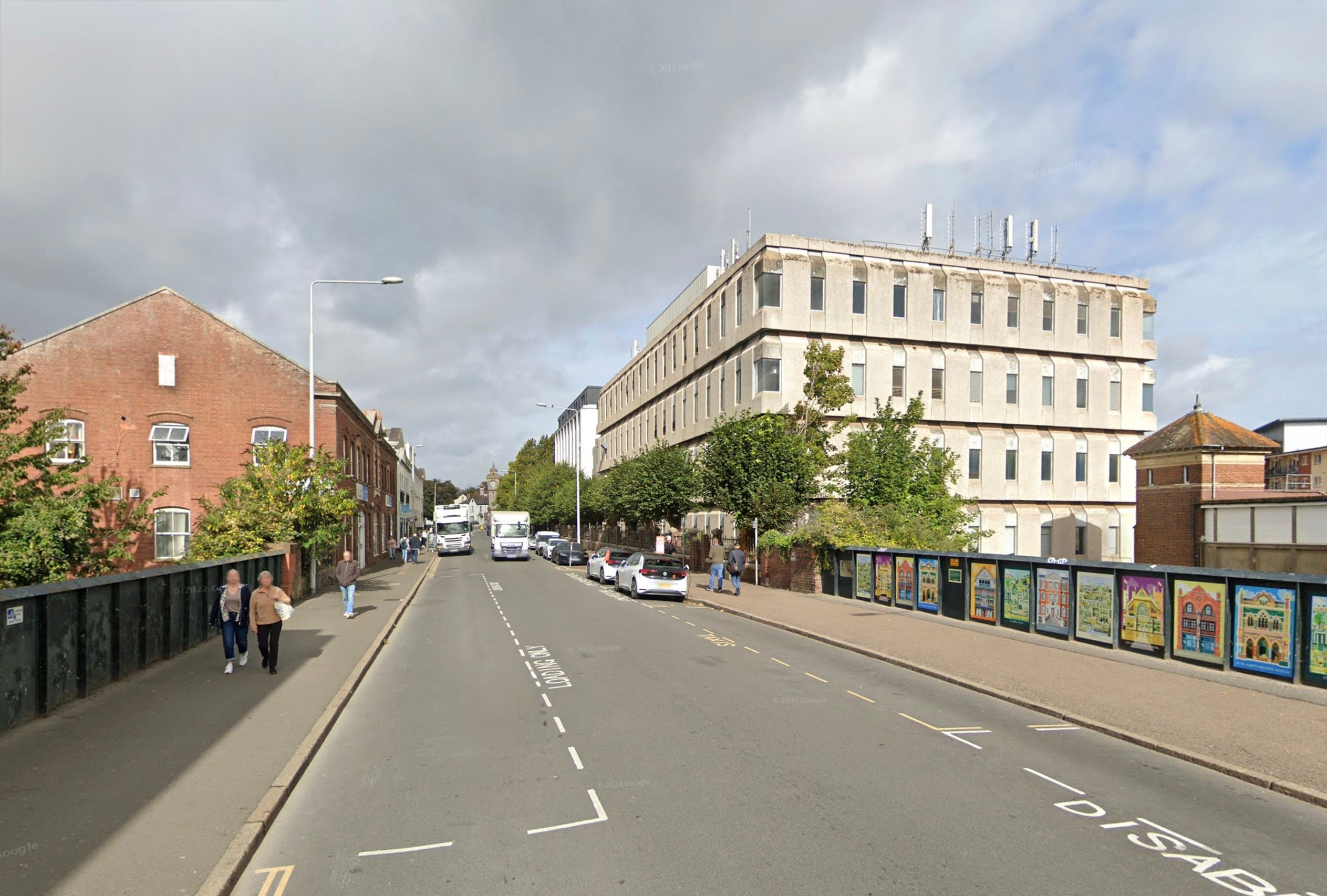
Queen Street, Exeter
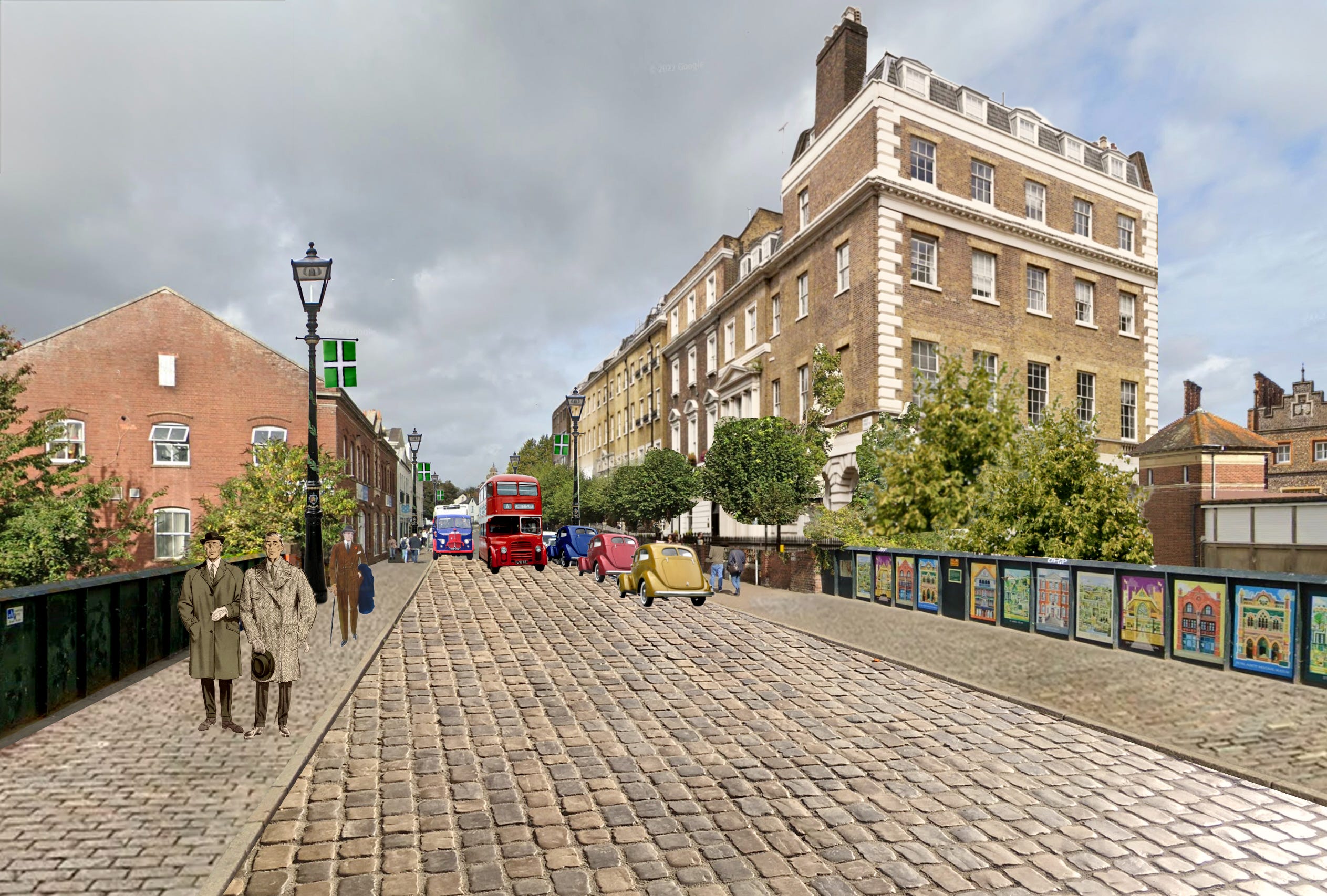
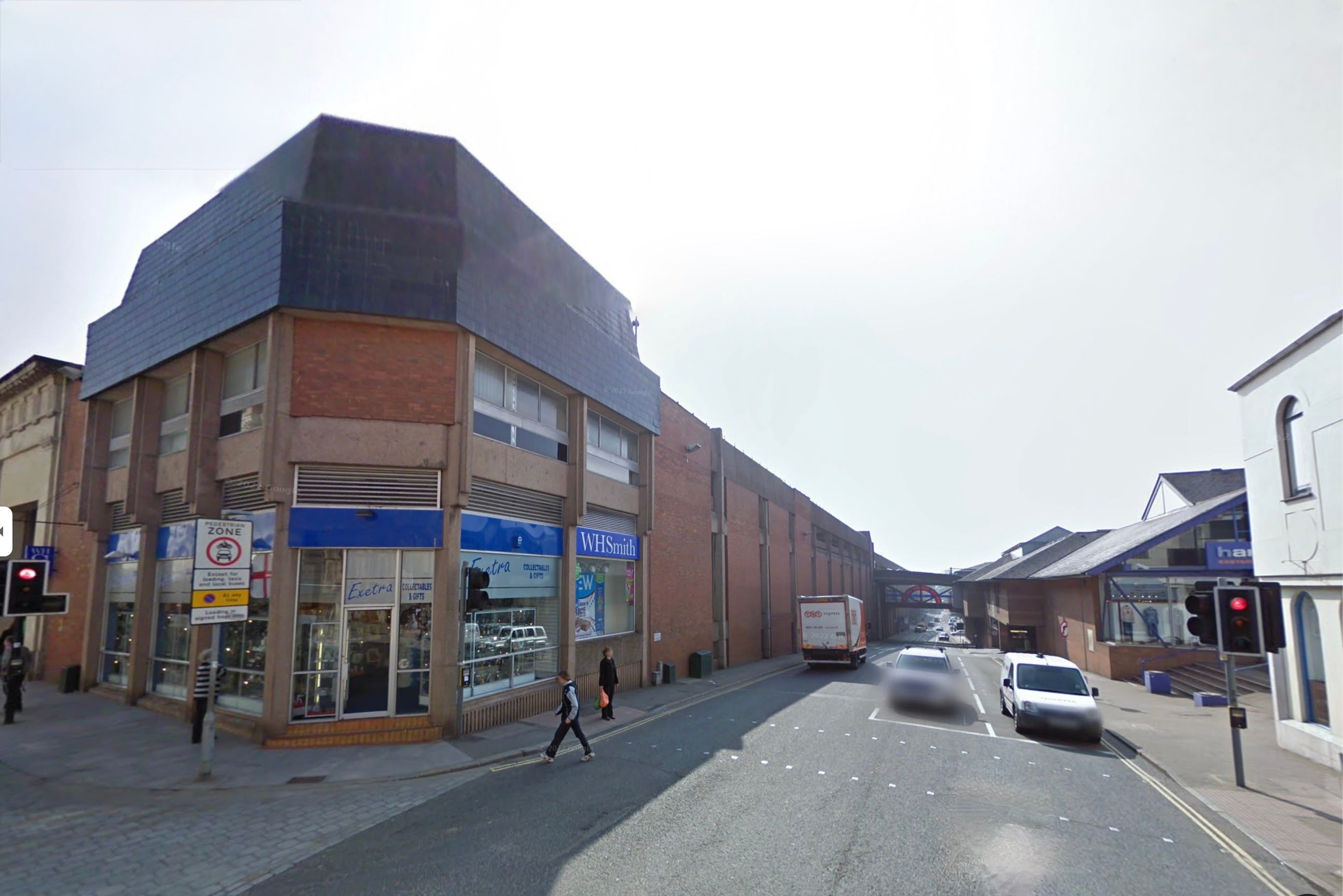
Exeter Queen Street- corner where the Harlequin shopping centre (now closed) meets the Guildhall shopping centre.
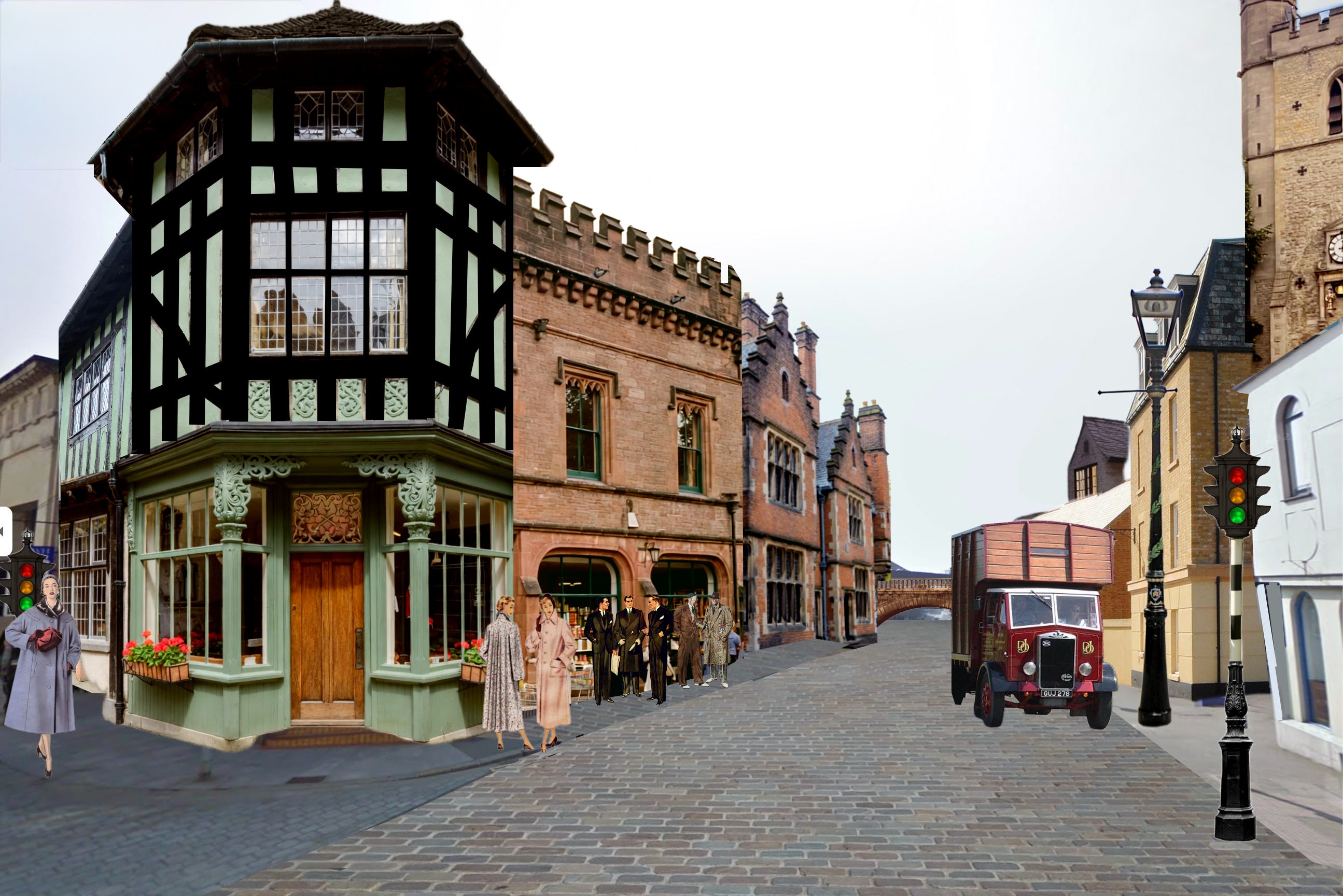
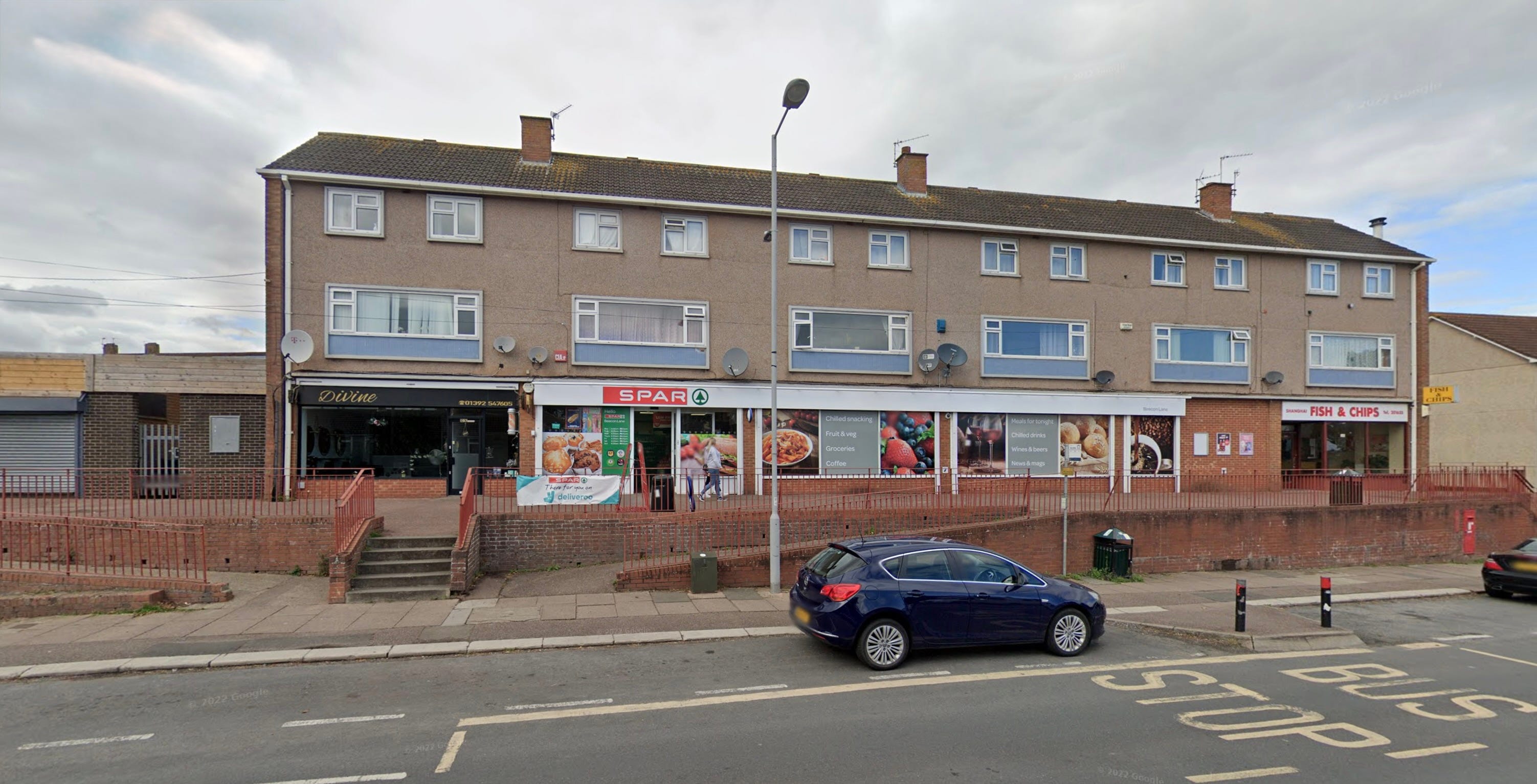
Beacon Heath- Exeter. The building has much the same footprint, but is far more pleasant to look at and made from materials that will last much longer. Either side, better use has been of the space with attractive homes built in a similar style. The good thing about this Georgian style is that it’s attractive, with broad appeal, very distinctly British, but also simply and not that hard to build. The lamppost is one from Exeter Cathedral Green, but which could be mass produced for use all over the city to show a municipal identity.
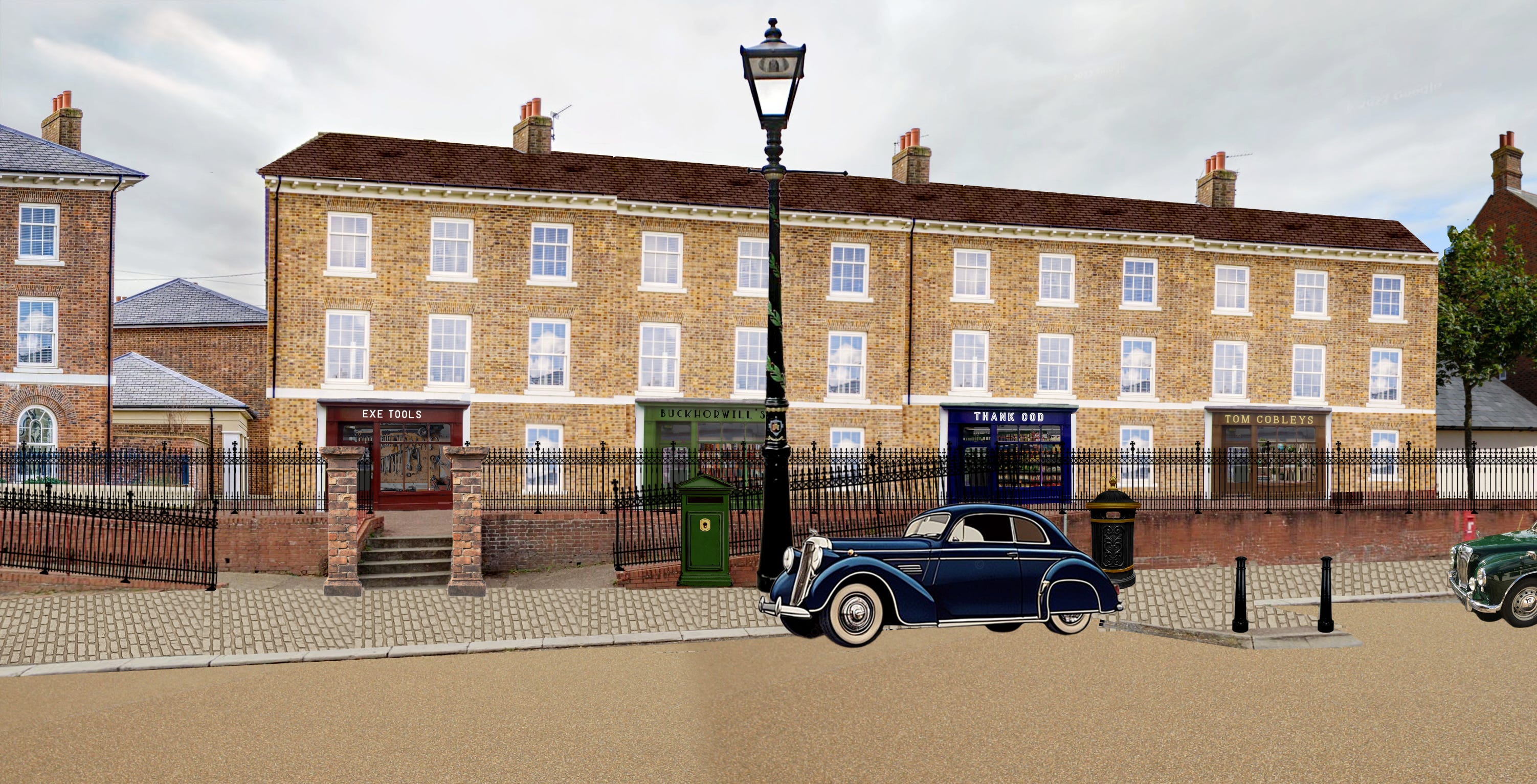
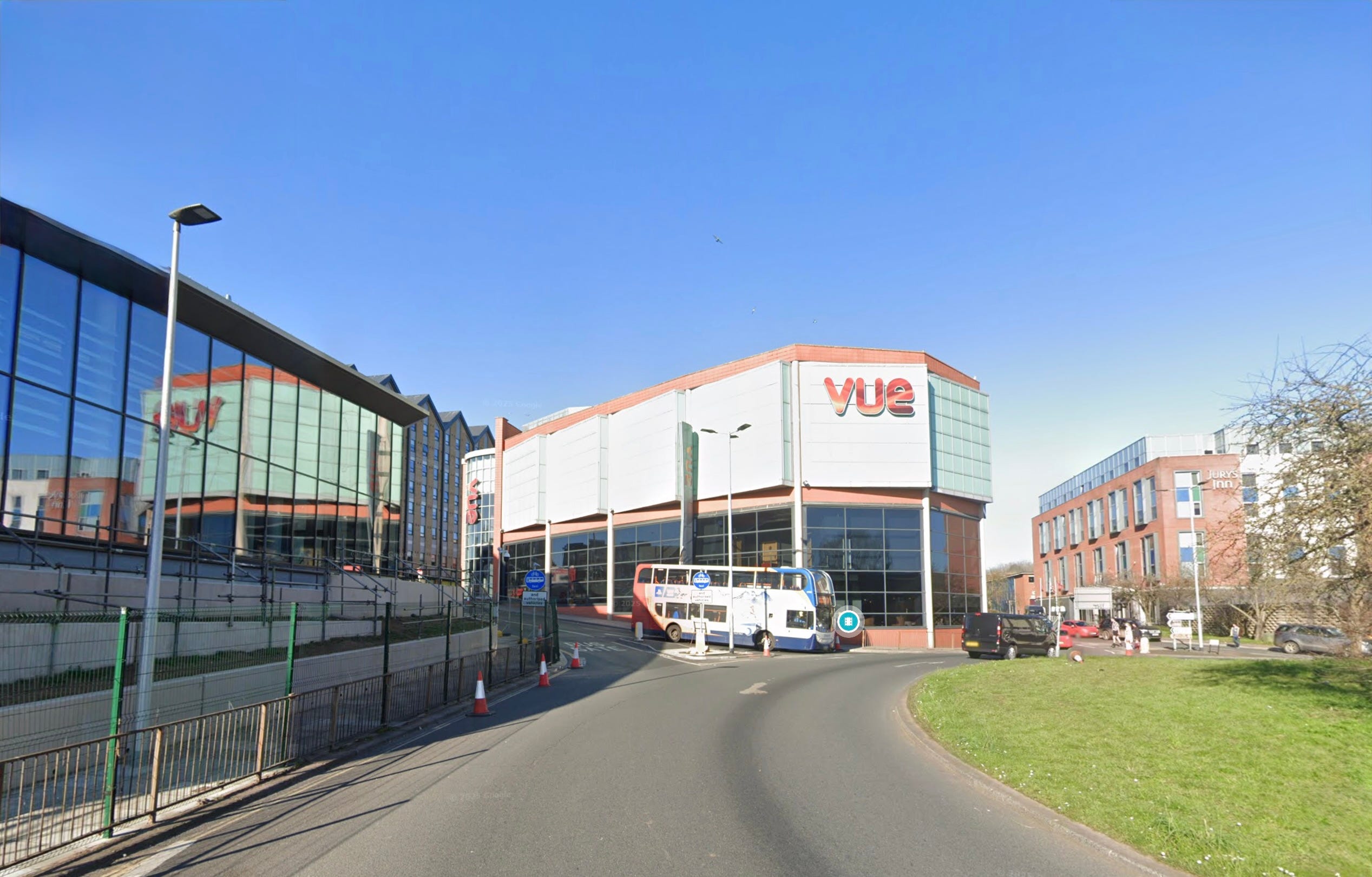
Much improved Exeter.
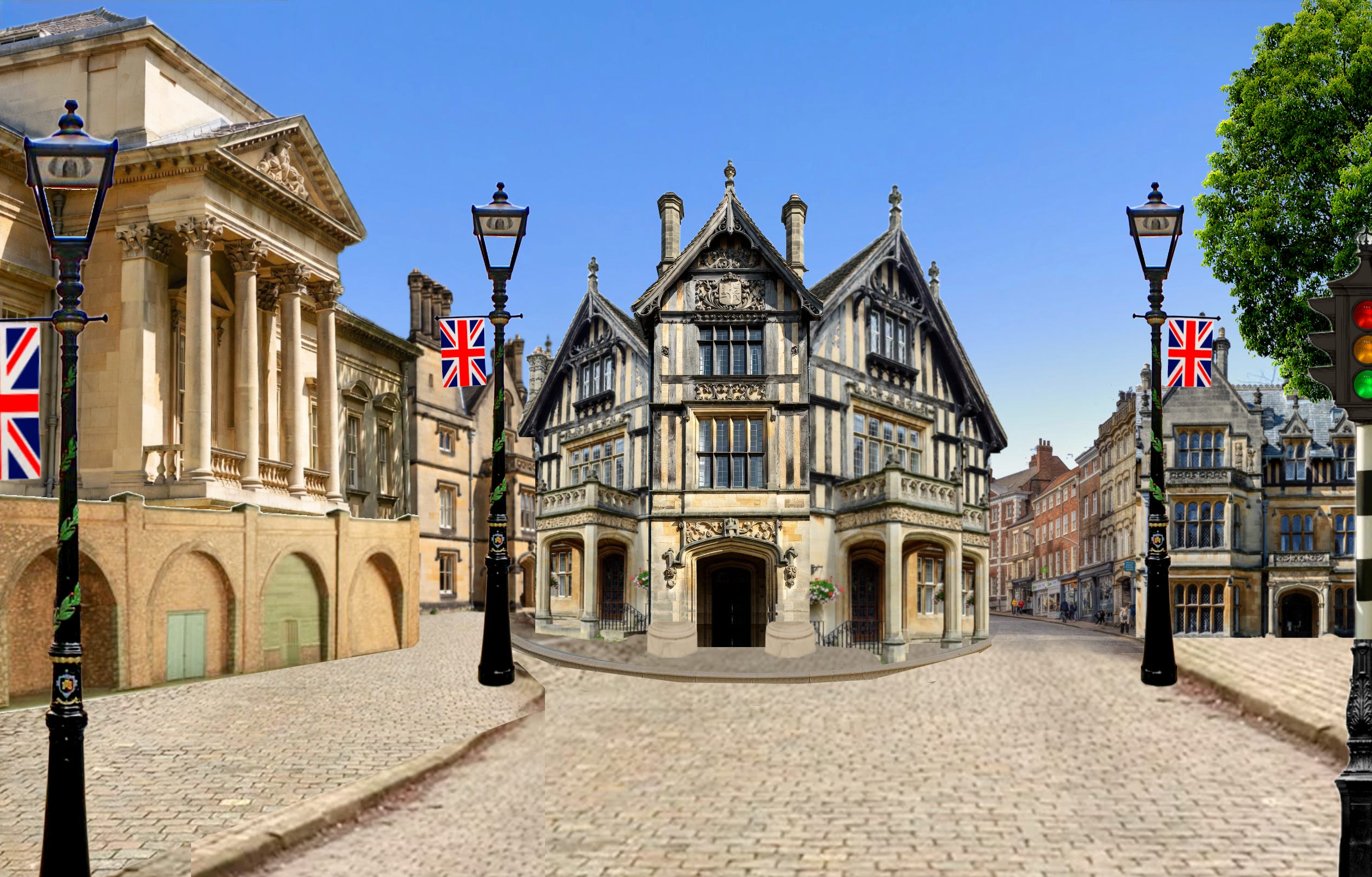
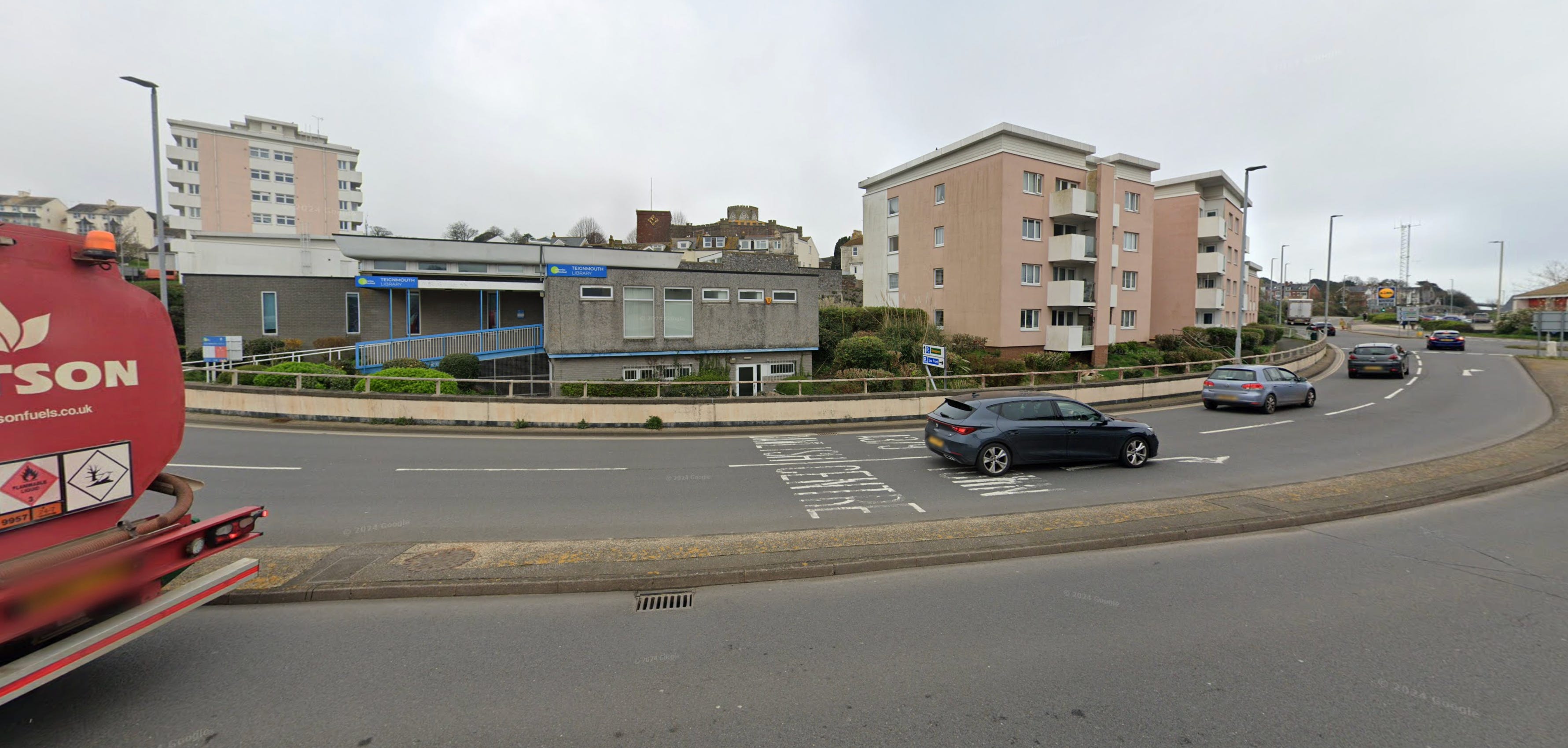
Devon seaside resort Teignmouth. None of this would be hard to do.
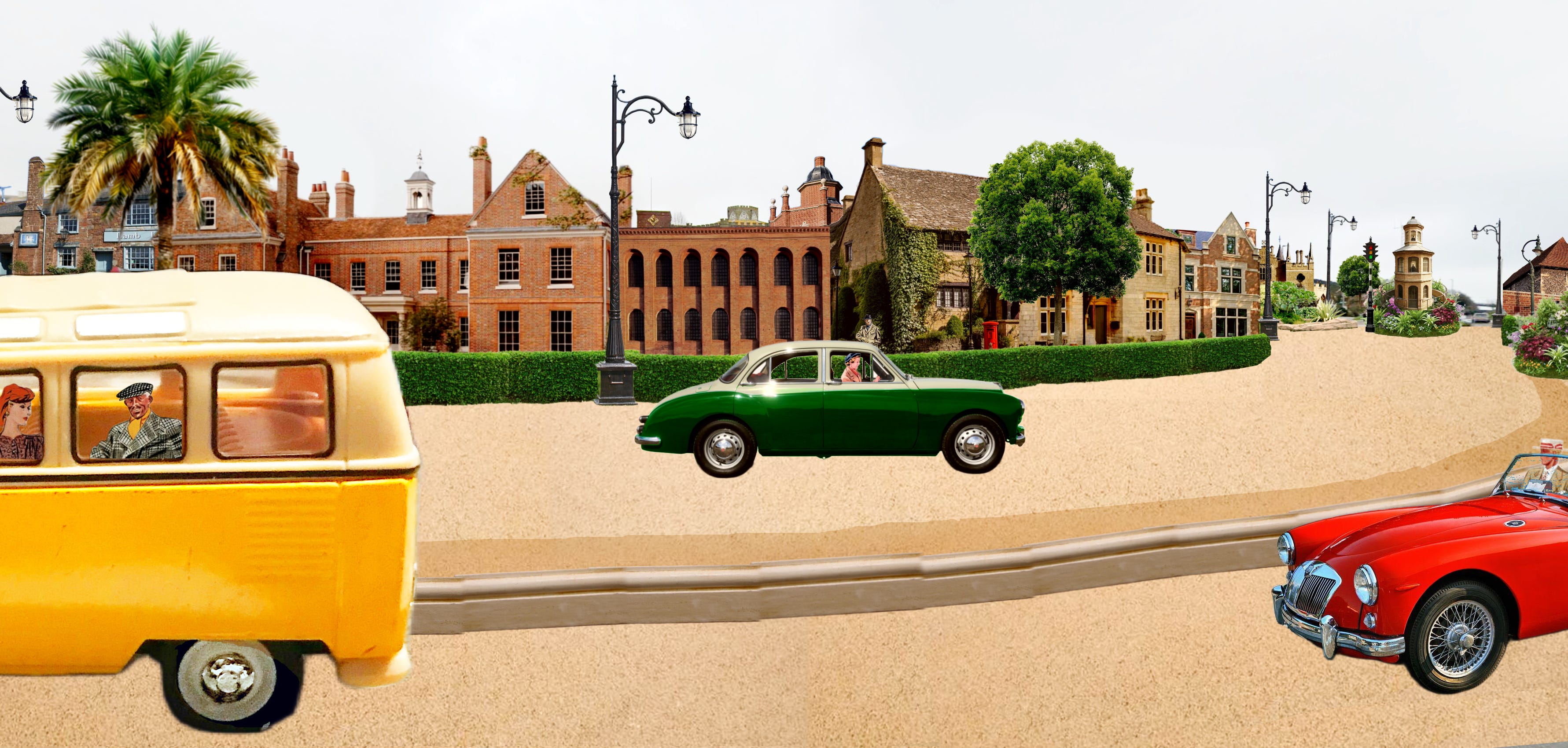
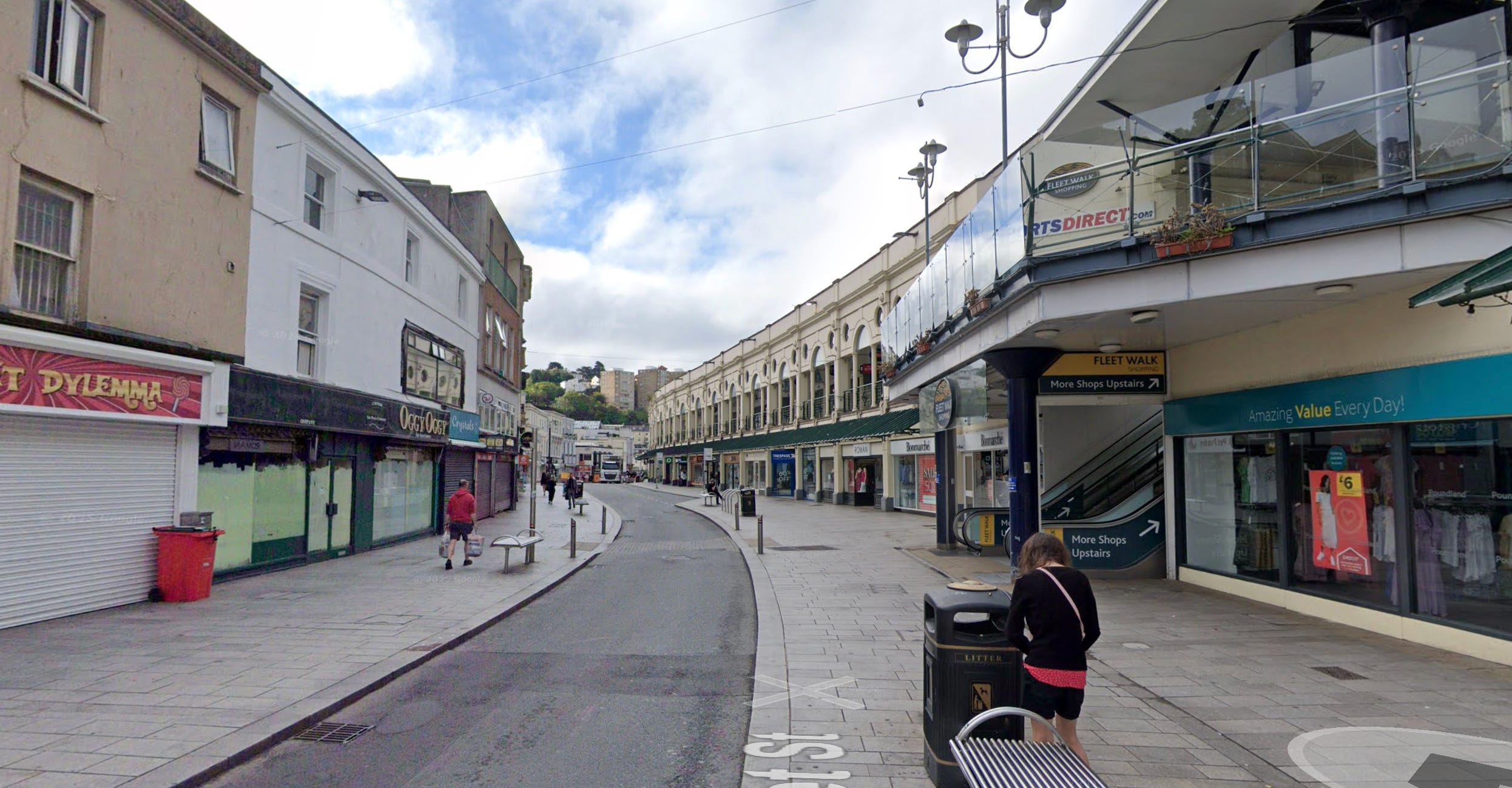
Here we have Torquay, another seaside resort in Devon. These places were once very popular holiday destinations and could be again, but they don’t reach their full potential because of boring architecture and street furniture.
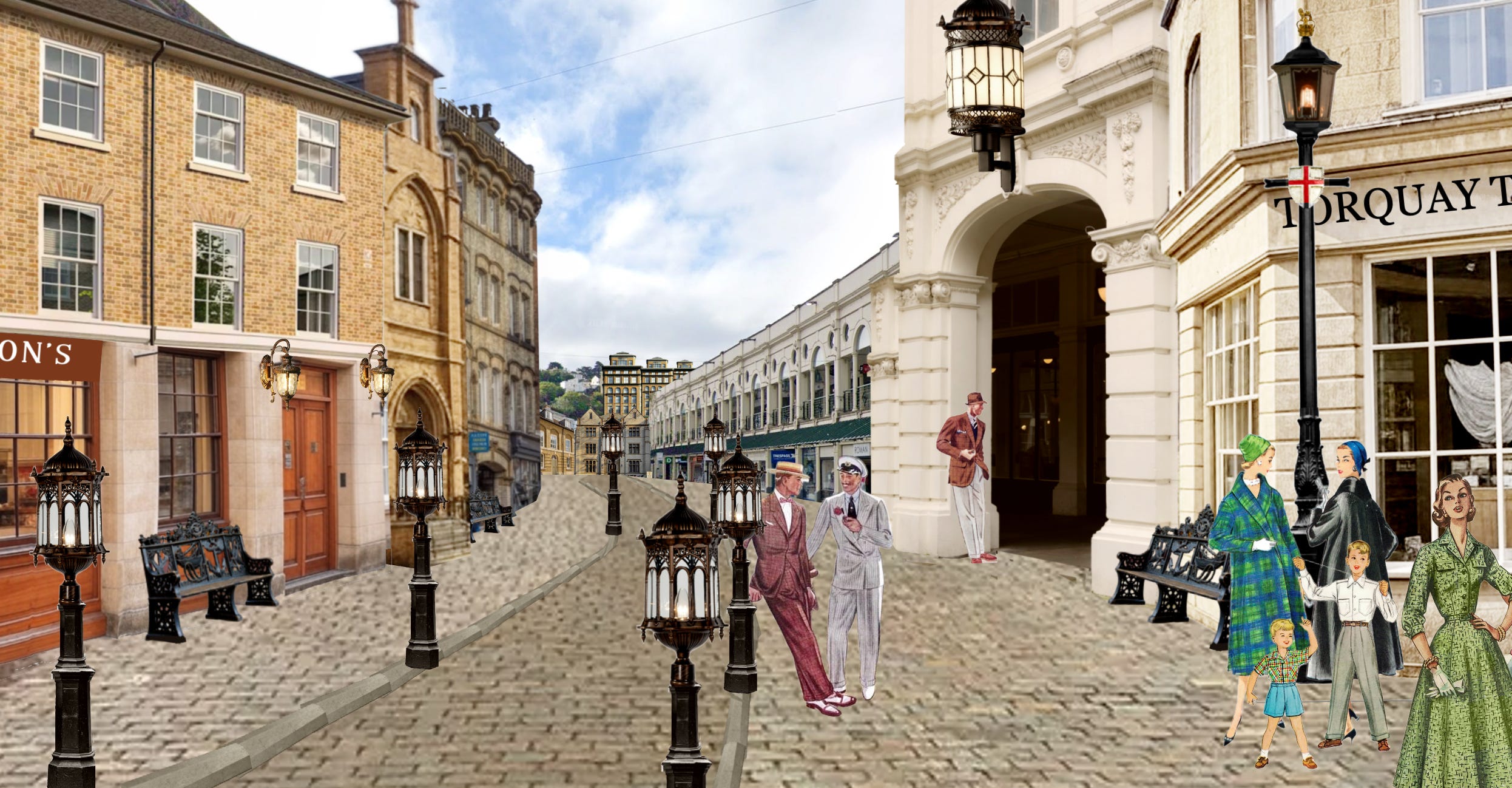
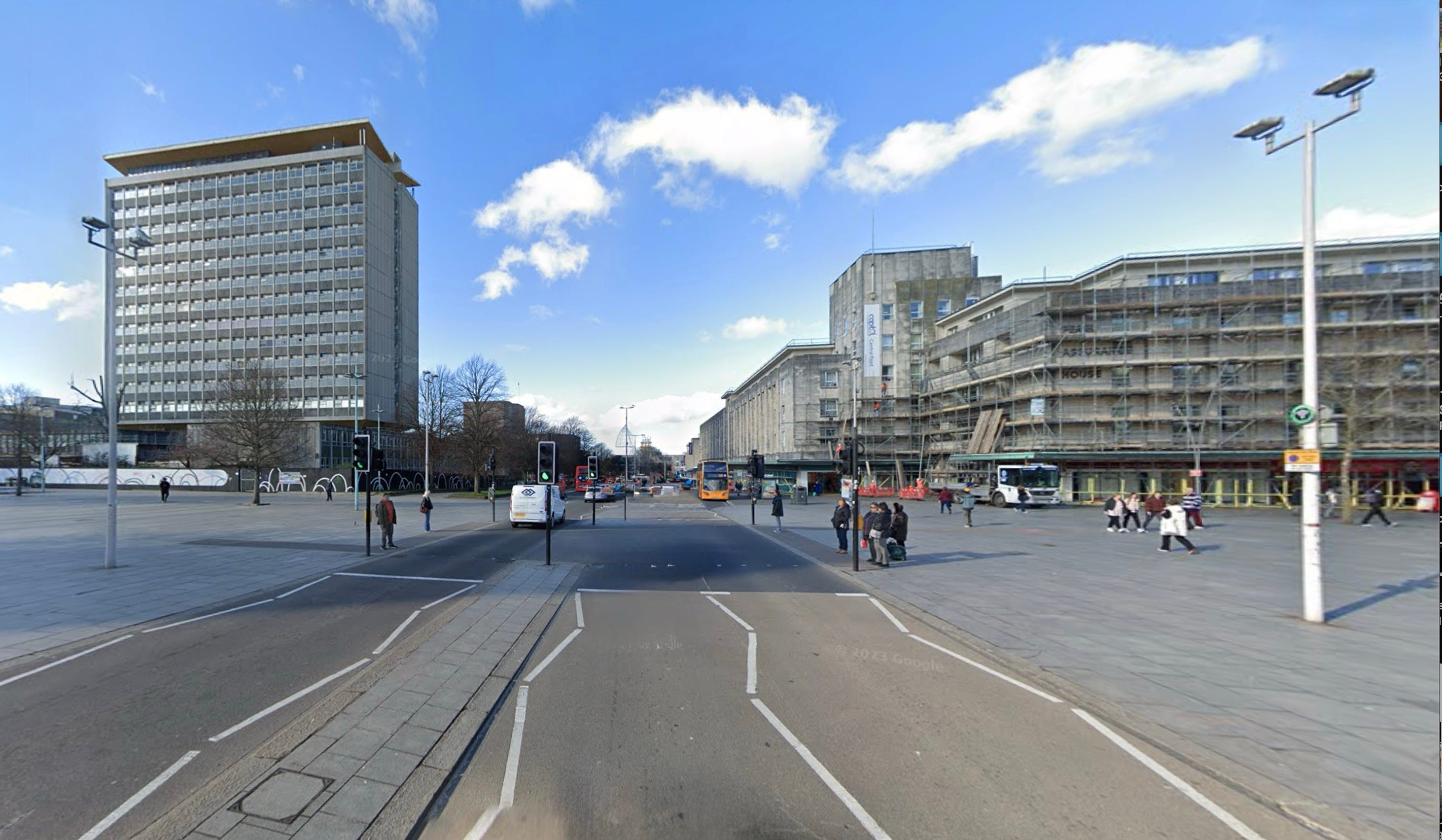
Plymouth is a typical casualty of the postwar brutalist scarred British city, which is a shame because it’s set in such a lovely location. Incredibly grey and depressing place. Now a sense of British identity has been restored, it no longer looks like East Germany. It is warm and pleasant with much more greenery integrated into it.
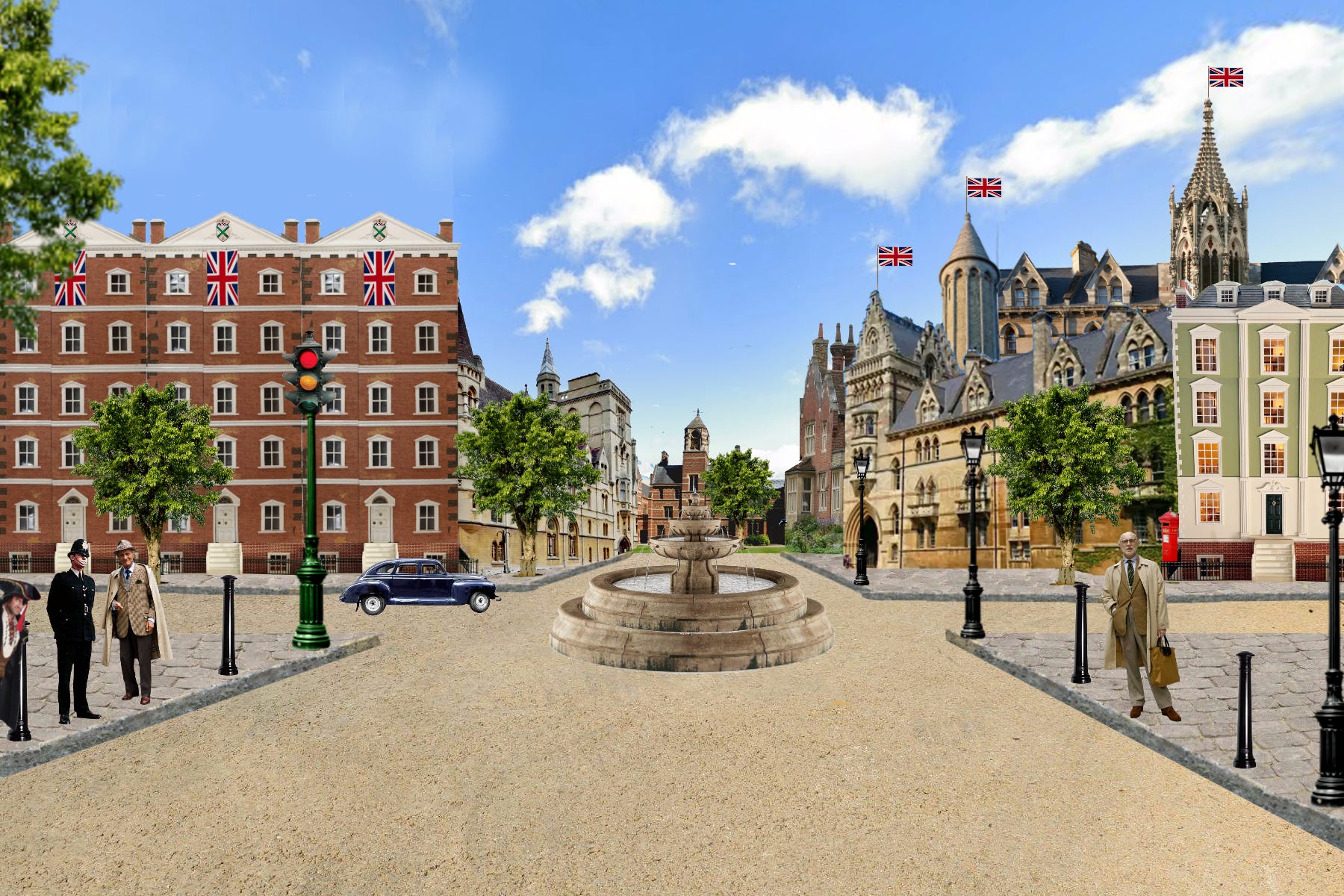
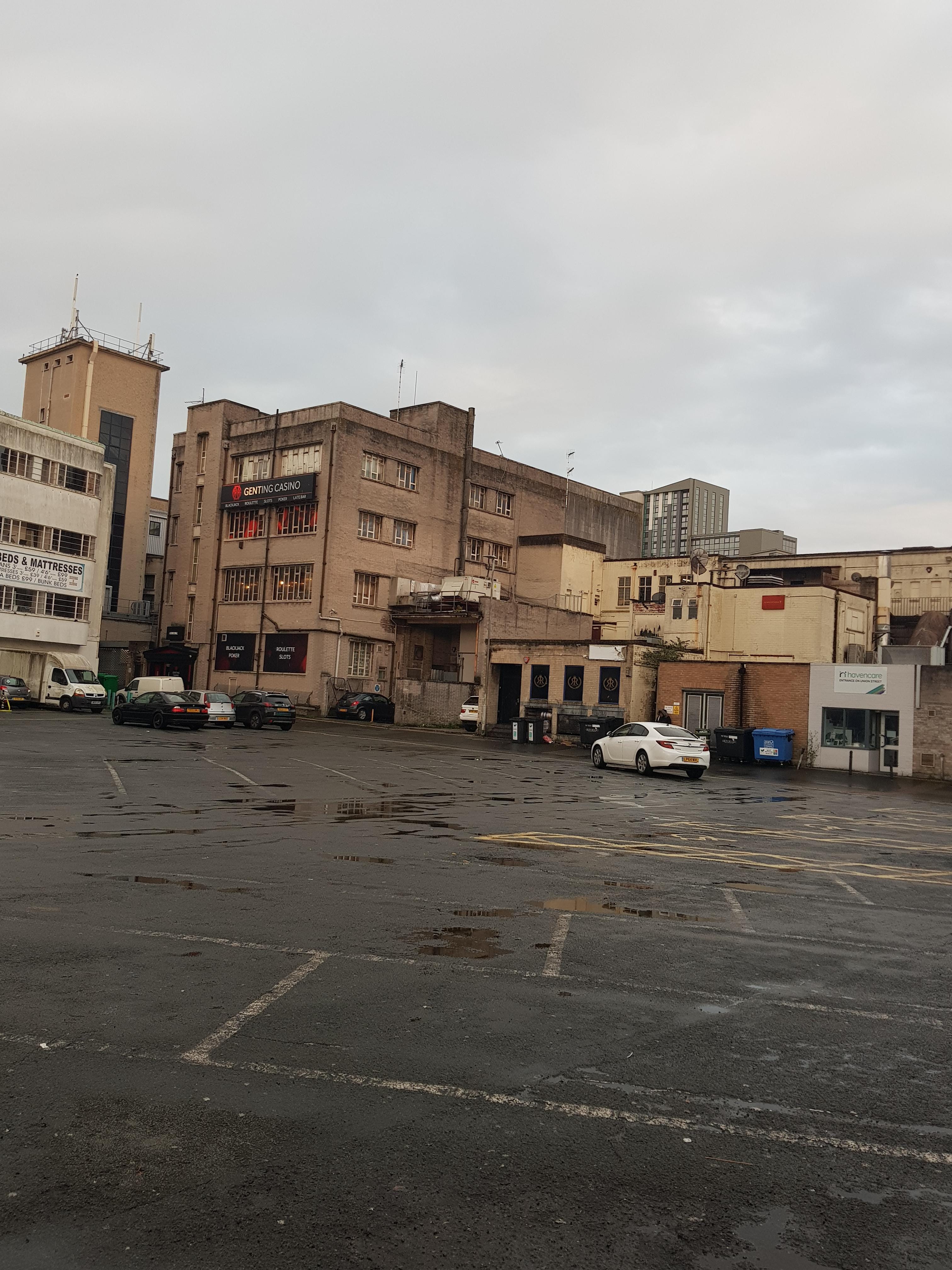
Car park in Plymouth. A much more pleasant place now.
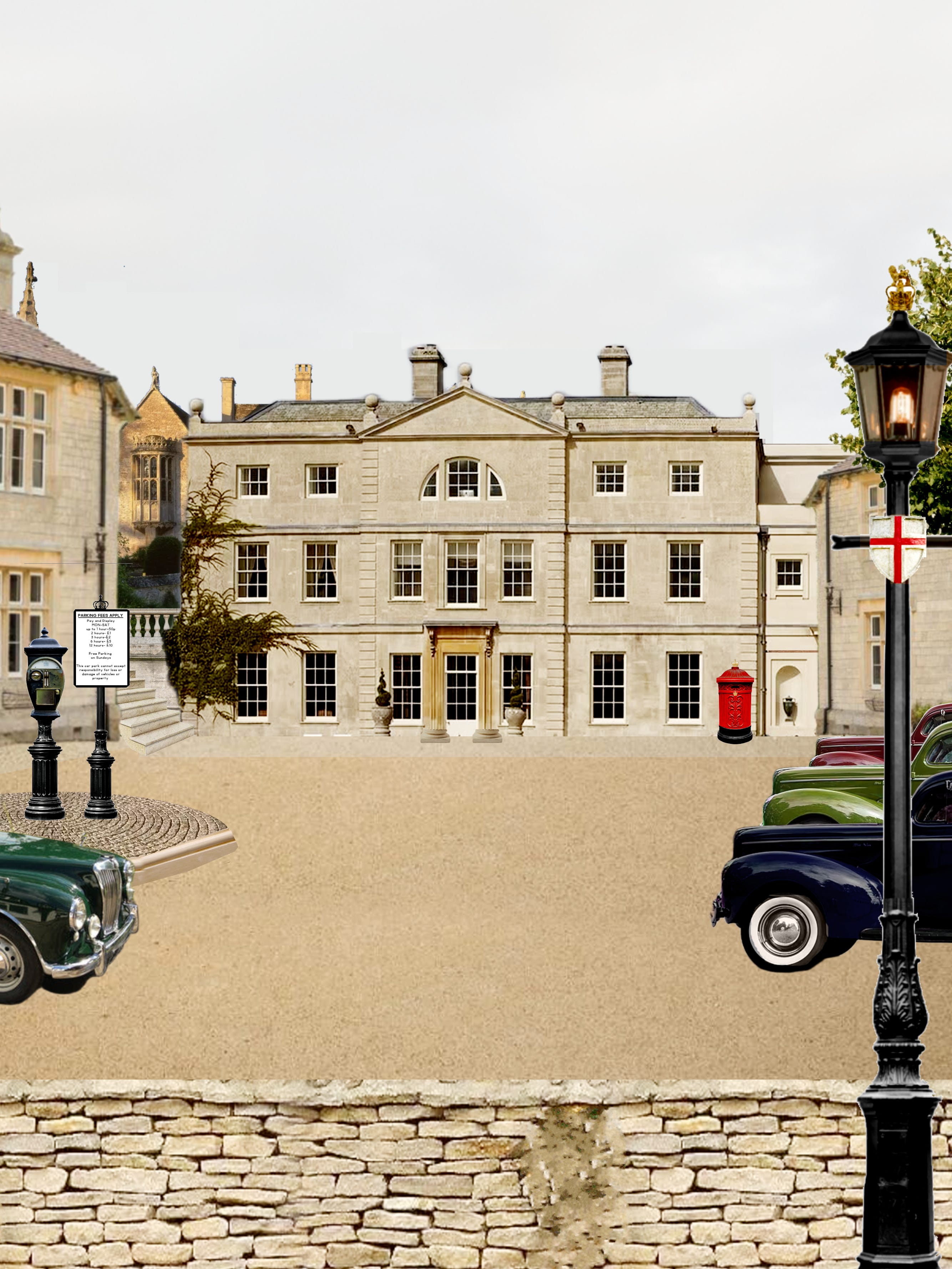
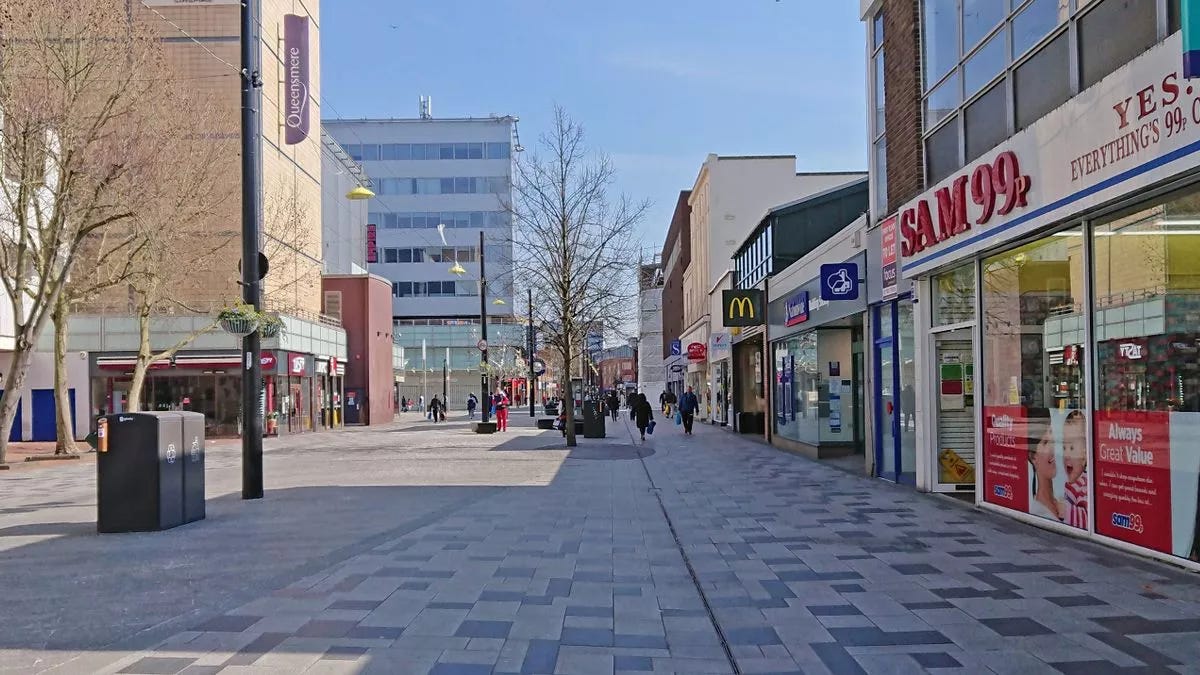
Slough has often ranked as among the worst places to live in Britain. However, it doesn’t have to be.
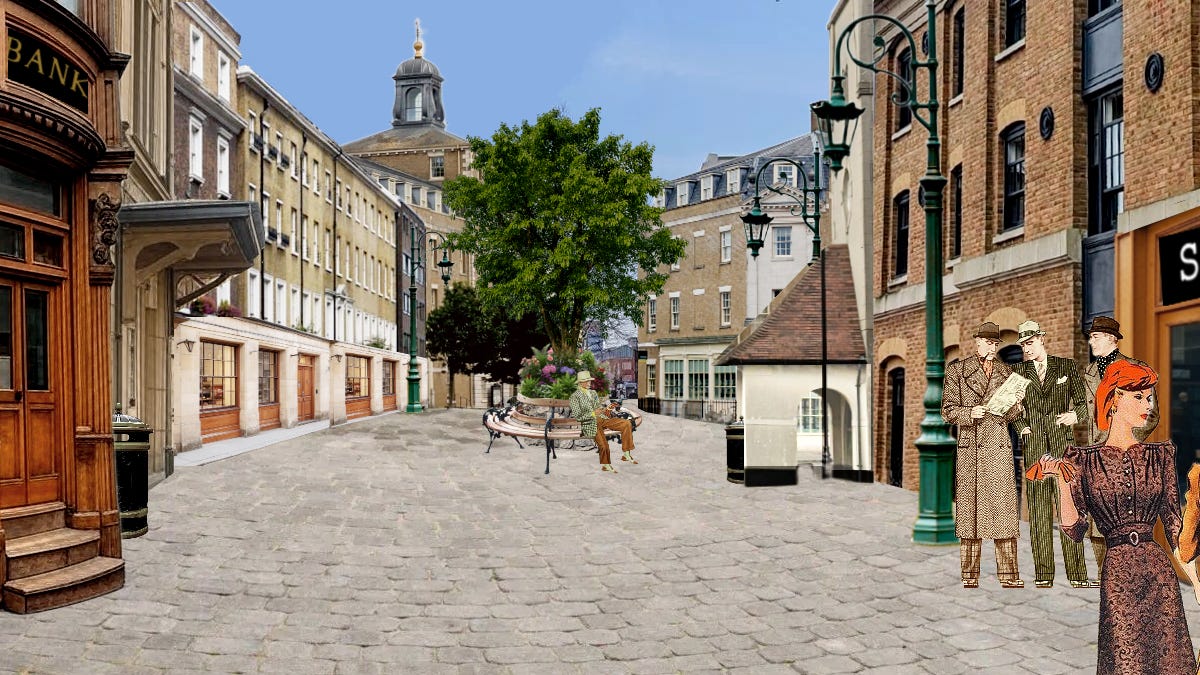
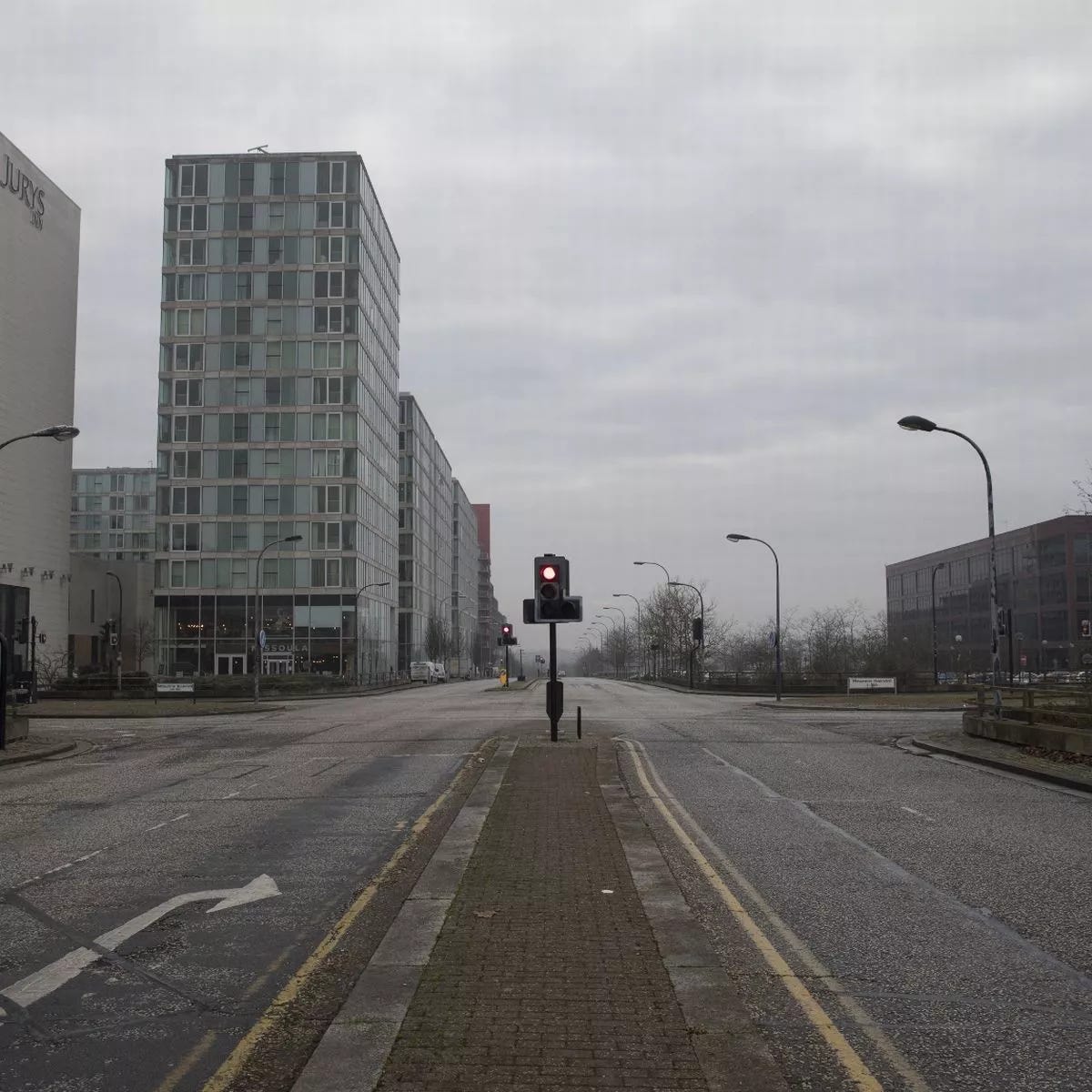
Huge change for Milton Keynes. The long stretches of straight road feel American and instead we have now a traditional British town square layout. There is more greenery and the architecture feels more grounded, organic and warm.
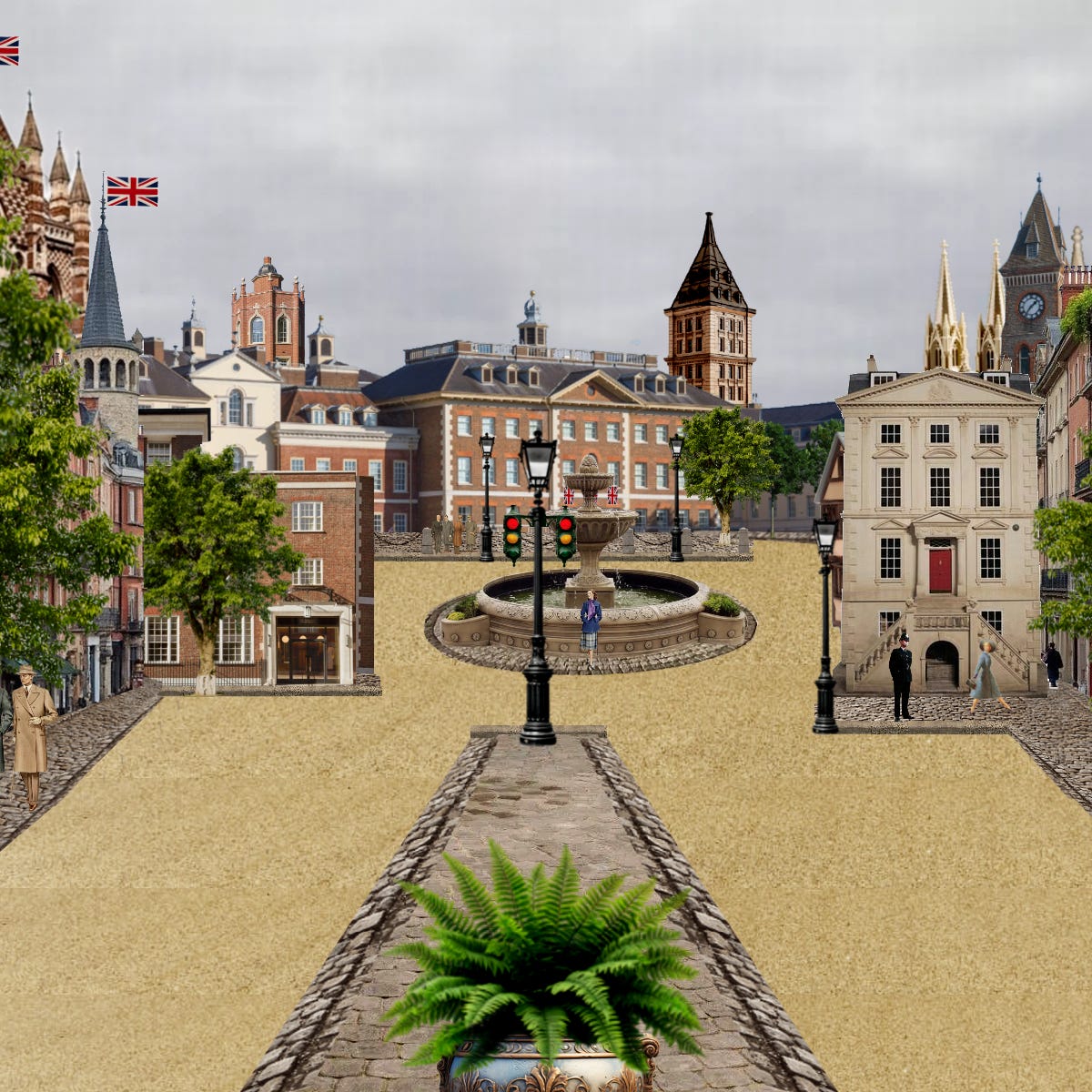
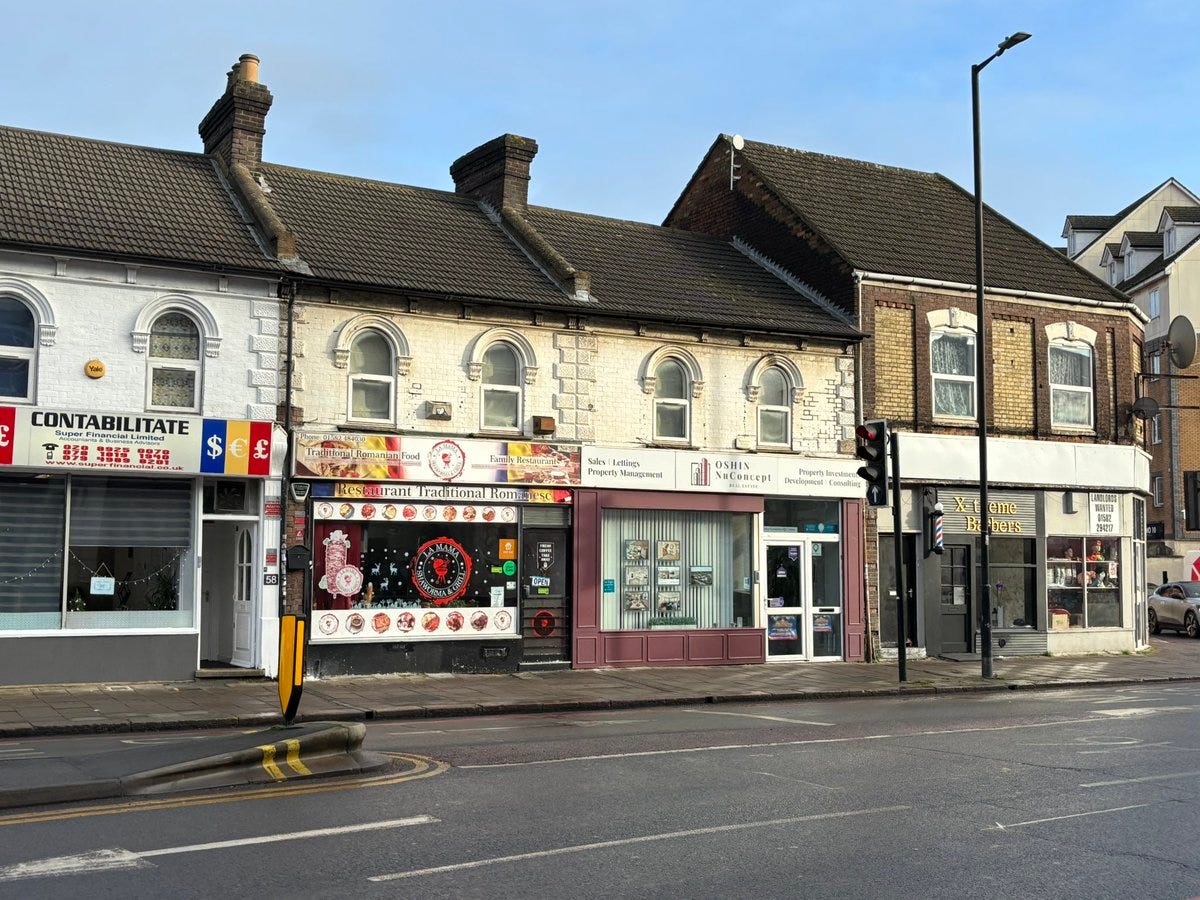
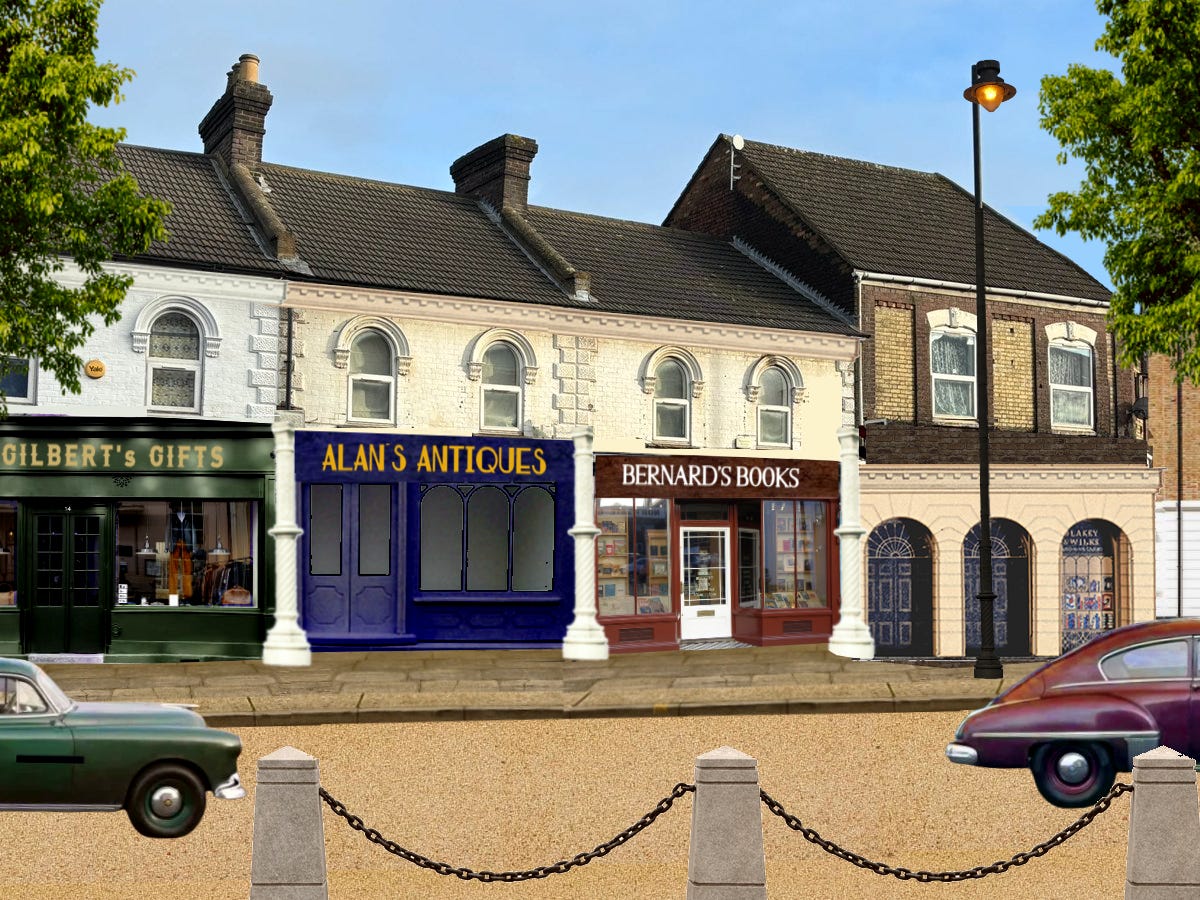
Another street in Luton. Again, these are actually quite nice buildings at the top half but the bottom half ruins them. Here I have put in traditional wooden shop fronts and one of arched stone in a Georgian style on the corner building. The lamppost is more traditional. Trees line the street.
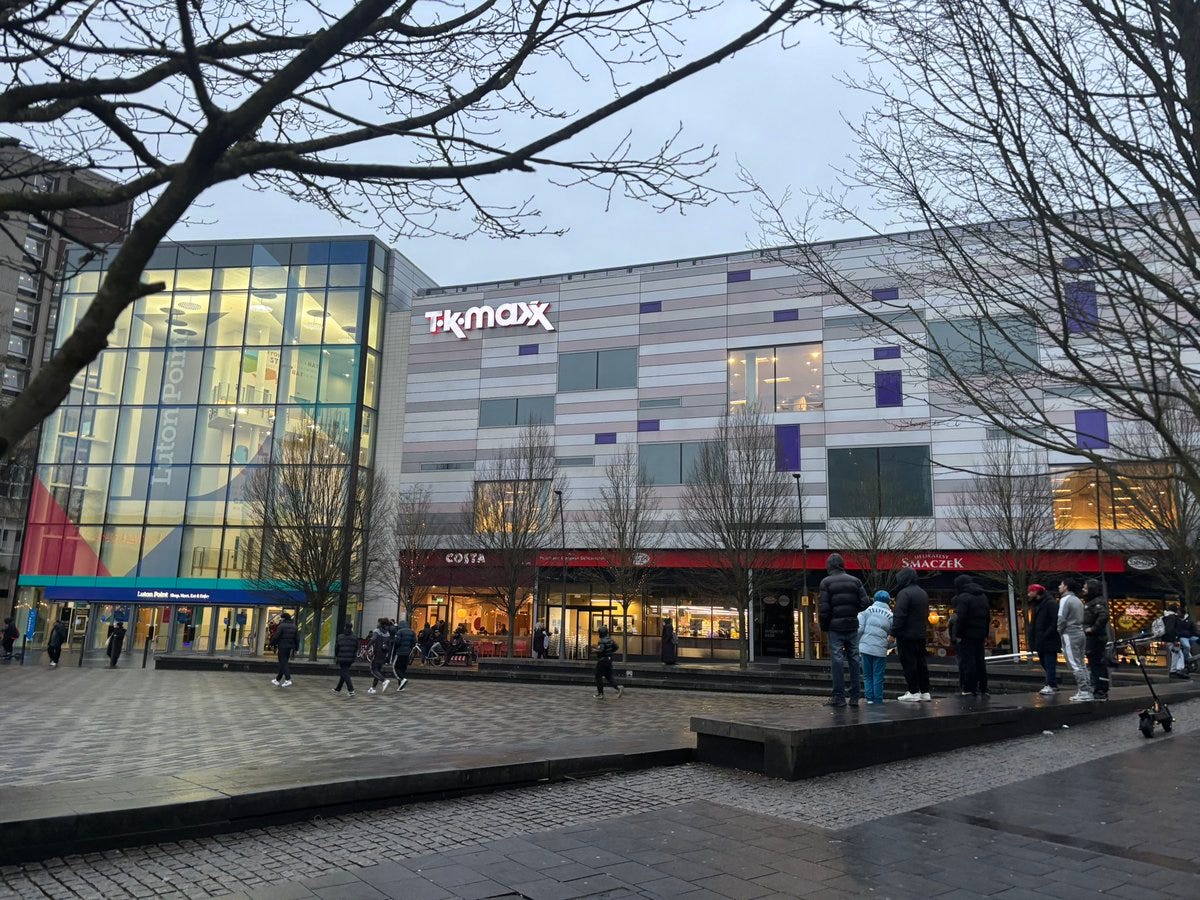
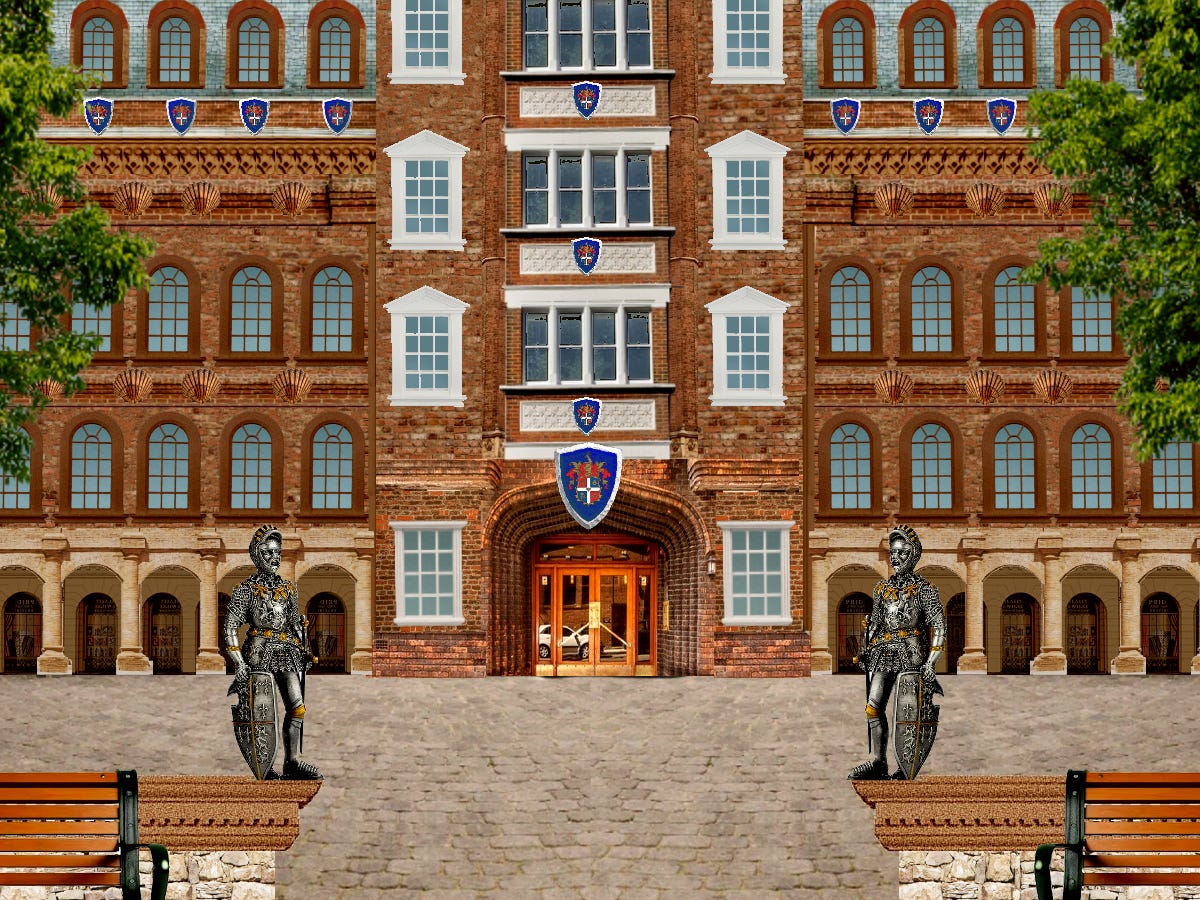
An almost unbelievably awful shopping centre in Luton. I think you should only be allowed to construct such a building if you agree to have yourself buried alive in its foundations. Bafflingly ugly. Unfixable. Bulldoze it completely. I have replaced it with a brick building with the same number of storeys as the original. Arches, columns, decorative brickwork, all adds to a sense of depth and detail. Scallop shells in the terracotta are a nod to the county flag of Bedfordshire and the crest of Luton is also featured heavily to add to a feeling of historic civic identity.
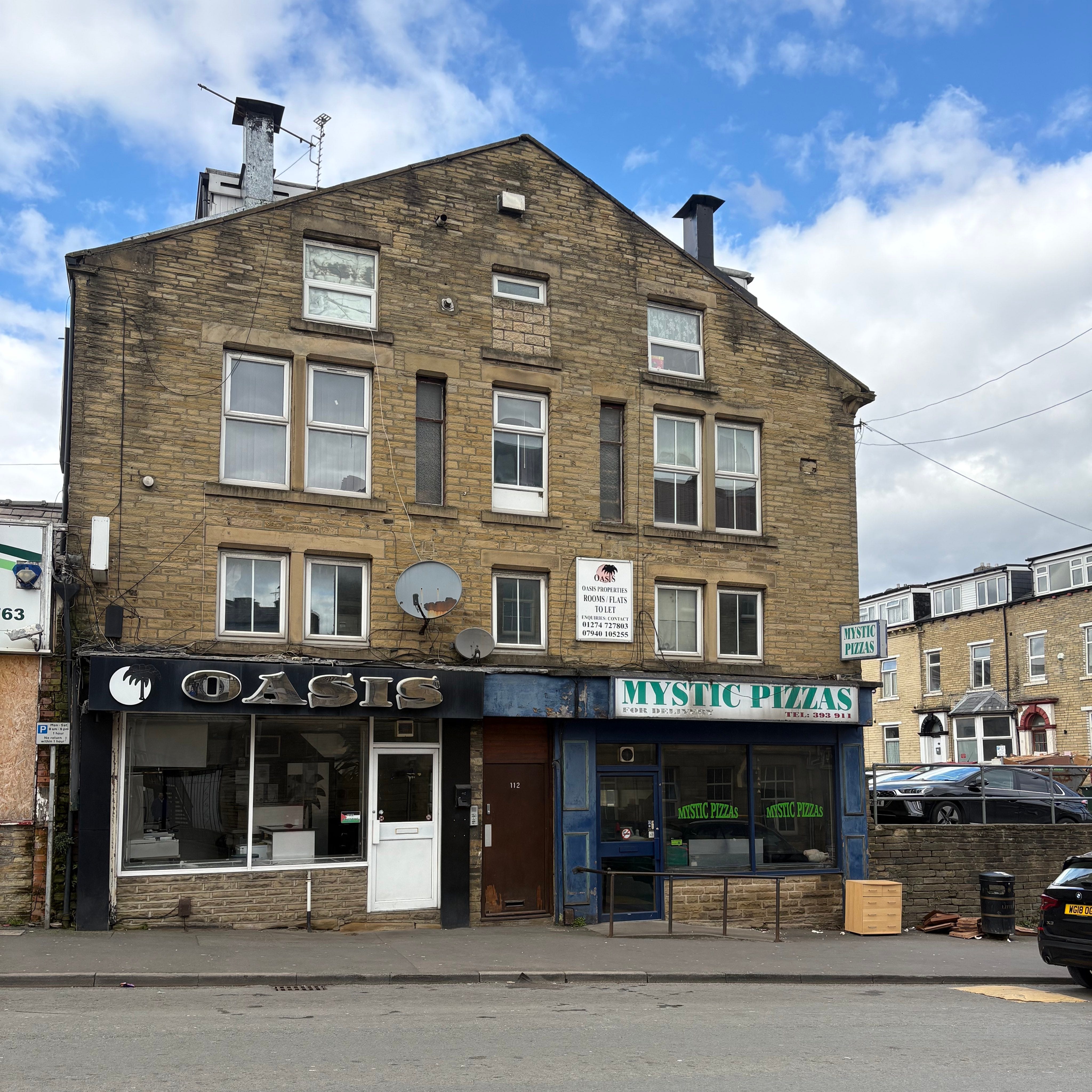
Building in Bradford. Again, not bad per se, but badly utilised. Here it is improved- higher quality shop fronts, better windows, lamps, fun little statuettes sitting in alcoves.
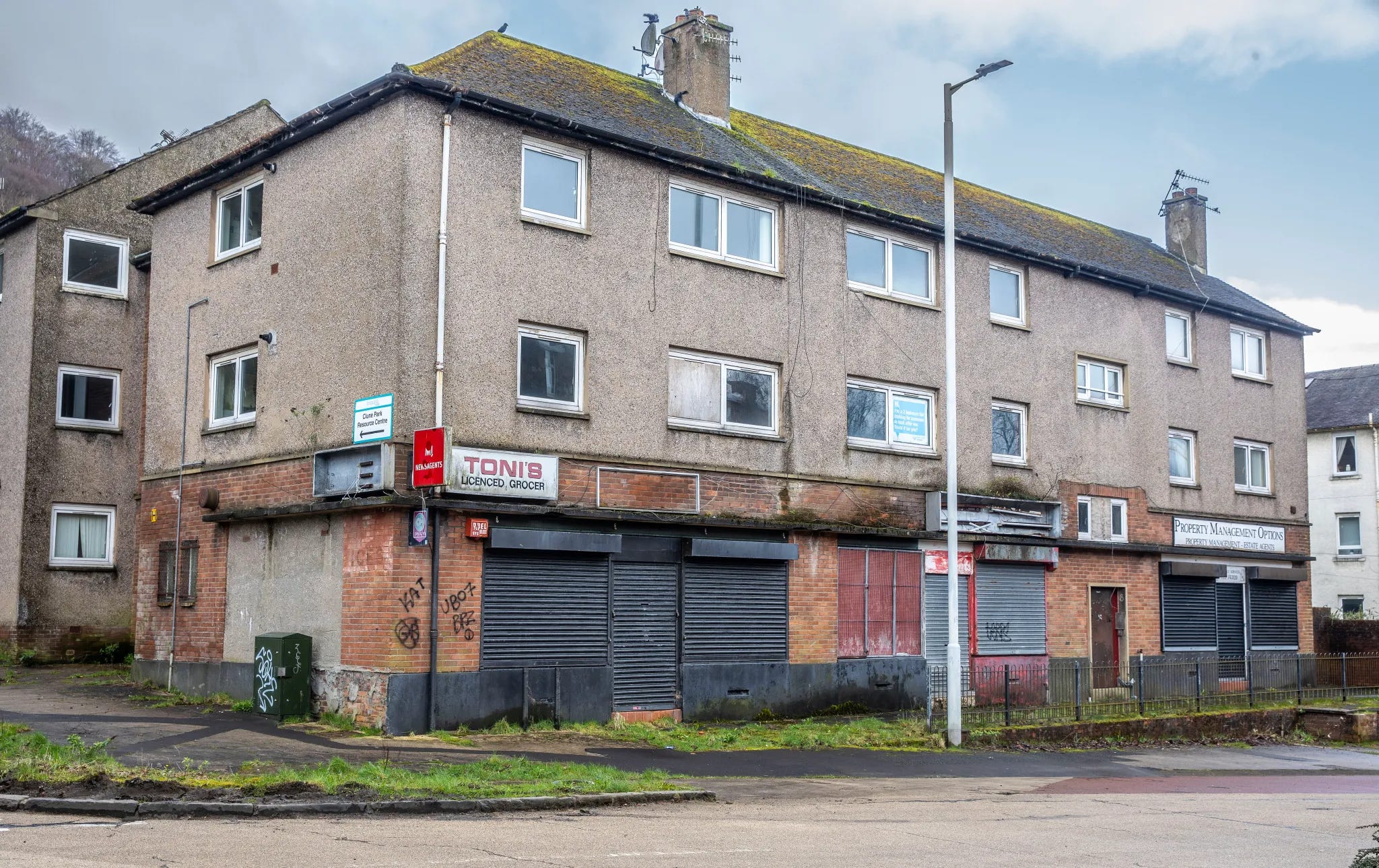
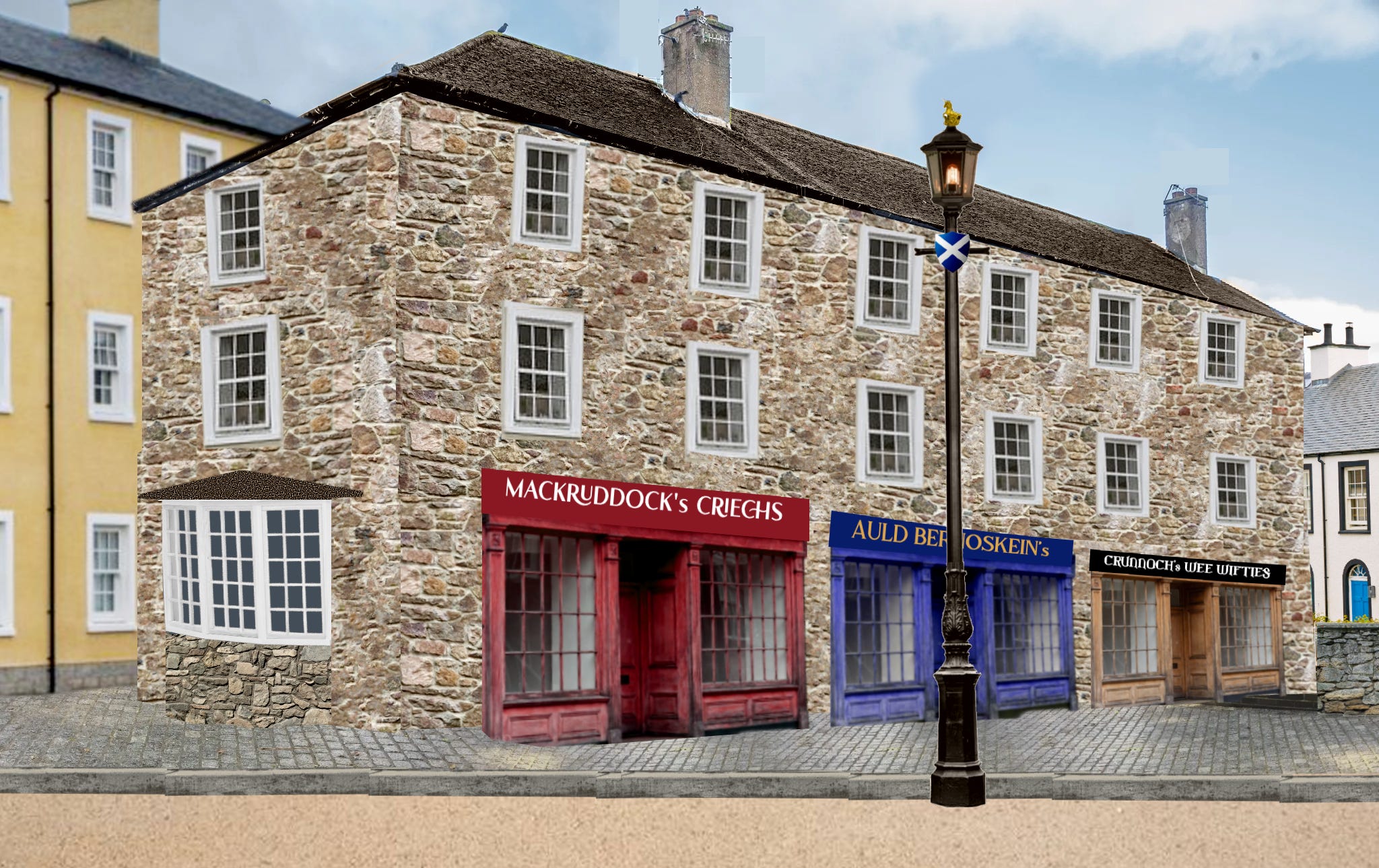
This is a picture from Port Glasgow, named as Scotland’s ugliest town, with the area being described as “Scotland’s Chernobyl”. Here we now have an attractive stone building built on much the same footprint as this current site, with a distinctly Scottish feel to it.
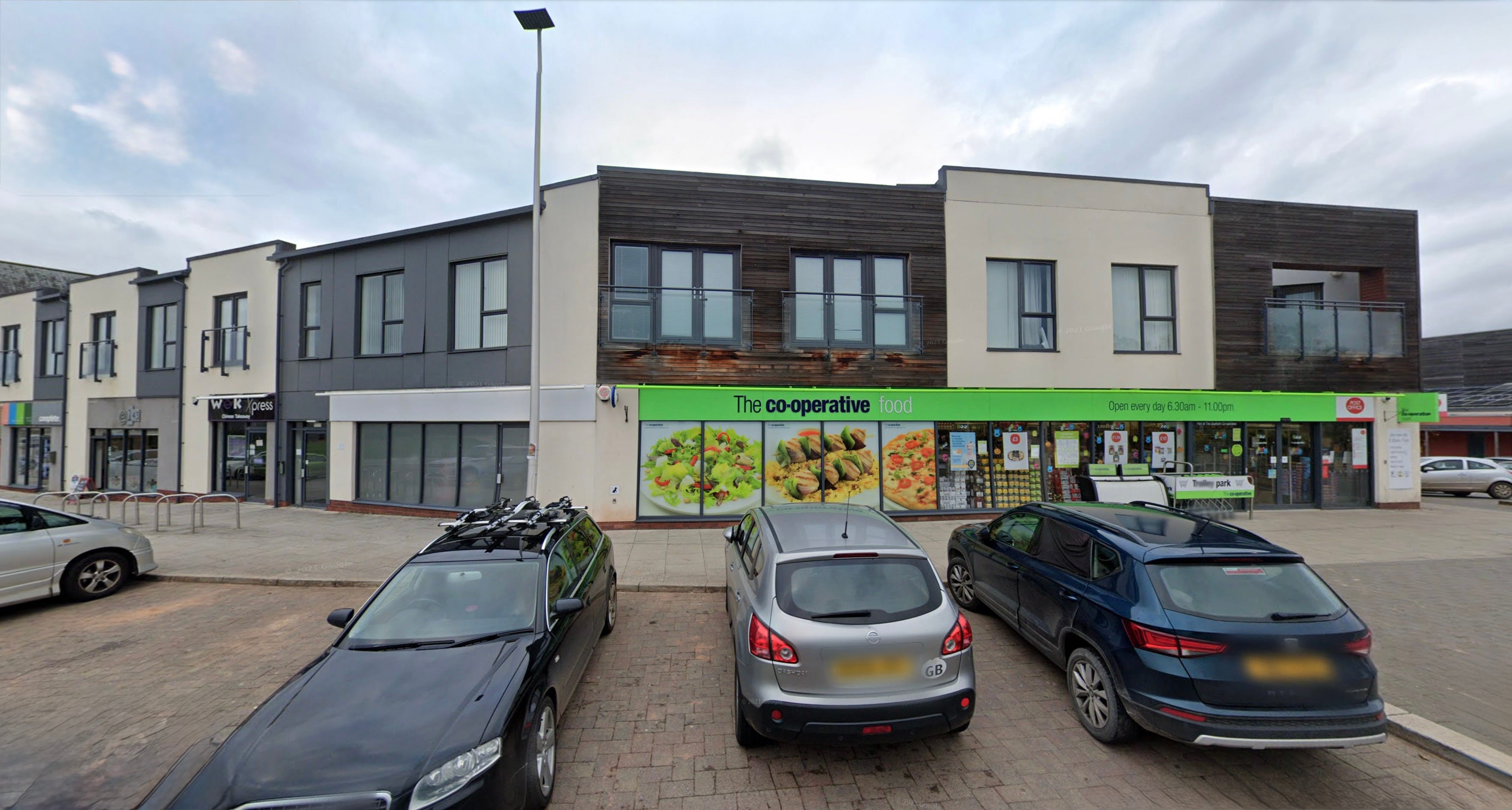
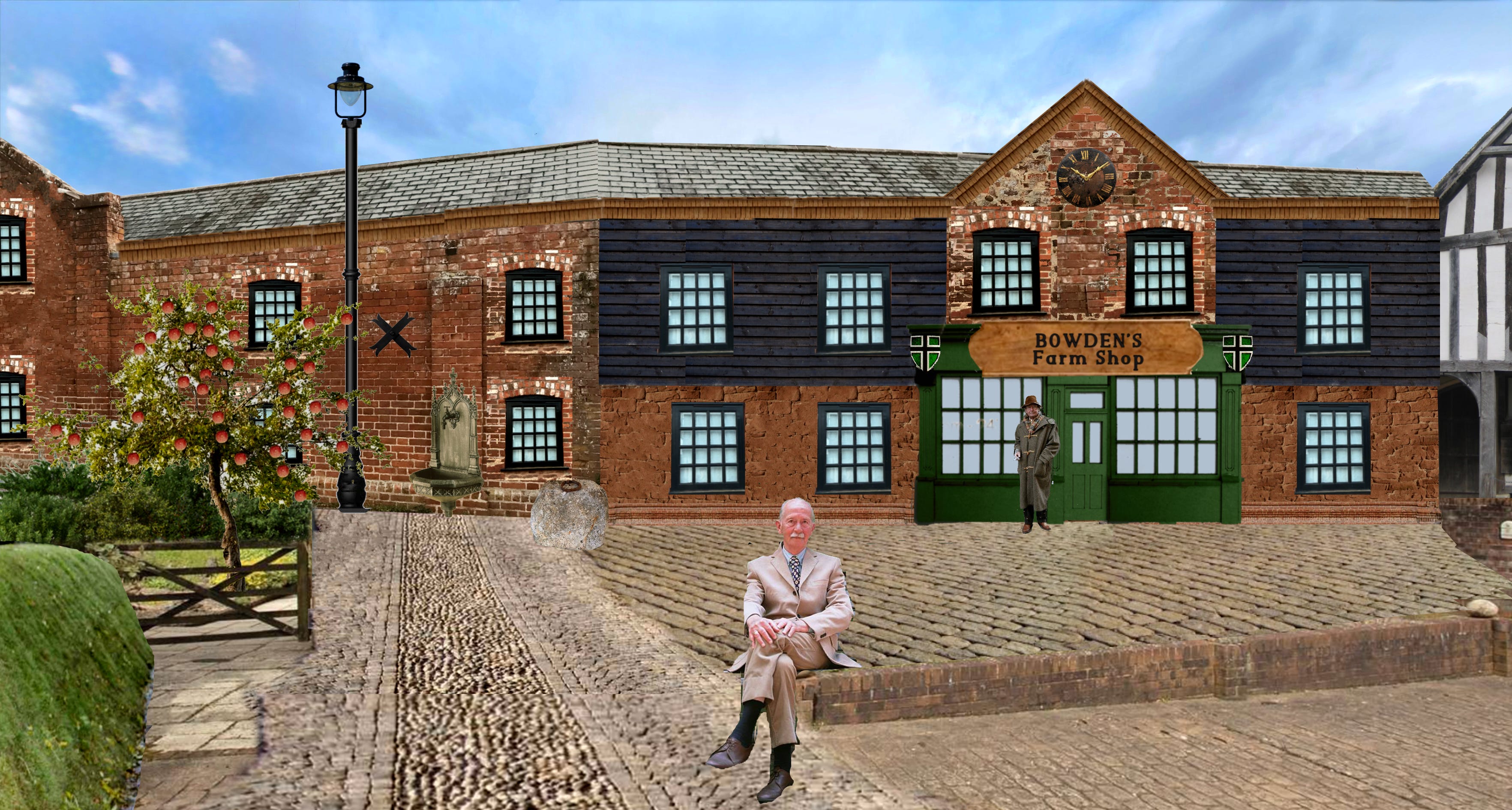
The town of Cranbrook in East Devon was built in the 2010s and it is generally disliked by locals in the surrounding villages for its overcrowded, sprawling nature and its ugly, generic, cookie cutter new build houses. This bitterness stems from the fact that we were promised it would be a new Poundbury, but instead it has been nicknamed a “Poundland Poundbury”. It lacks a sense of warmth, heritage and rural charm that other towns and villages in the area have. It was a real mistake to try and build a suburban development in an area that is deeply rural.
A modest sized, village built in the Devon vernacular style, laid out like a traditional Devon village would’ve worked, not a bland and never ending sprawling suburb of meandering cul de sacs. A real missed opportunity here that I have fixed.
My reimagining of Cranbrook is as a rustic, rural location, where the houses and shops are built to resemble old converted farm buildings, taking parts of buildings from neighbouring villages and collaging them together.
I would say it would also need a proper village green. Now it has gone from being yet another bland and generic mass produced housing estate to a warm, inviting English village rooted in a sense of place- with its Devonian red sandstone farm buildings, Devon banks and apple trees this is unmistakably East Devon in character.
Much of the excess housing is demolished and returned to farmland, which it probably will be eventually given how badly it has been built you can already start to see flaws in the houses. I shall use the same quote from Roger Scruton that I used in the previous article because it rings so true- “There is a deep human need for beauty and if you ignore that need in architecture, your buildings will not last, since people will never feel at home in them"
Planning well, designing beautiful with high quality materials and you design for permanence.